Showing posts with label romance. Show all posts

Friday, October 11, 2024

There is a Door in This Darkness, by Kristin Cashore

I was immediately interested in Kristin Cashore's new novel, because she's a wonderful writer,  and I loved her fantasy novels Graceling, Fire and Bitterblue. (I have not yet read the last two in the series, because Bitterblue was a little heavy, and I've been looking for lighter novels for a few years now. Since 2020, in fact.) 

The title of this one gave me pause, and the premise even more so. Was I ready to read a book set during the pandemic? It turns out the answer was yes, if the book was this one.

The blurb for this book is accurate but doesn't in any way do it justice. It's much more than "magic-tinged," and it's a lot more wise, hopeful and whimsical than it sounds. Wilhelmina is such a real, relatable character, and so are all the members of her family and her friends, and their relationships—all the relationships—make this book glow. I use the word deliberately, because light is a theme and a motif running through the book—if there's a door in the darkness, light is what's coming in.

I'm not sure magical realism is quite the right way to categorize this book. In my own less-than-rigorous definition, magical realism doesn't have any explanation for the fantastical elements. In this book, the fantastical is random and quirky, involving birds and doughnuts and obelisks, [ever-so-slightly spoilery] but there is also mention of tarot, and grandparents who are "practitioners of the craft." I wouldn't say this book is about witches or Wicca or any particular mythology or spiritual tradition—more that it recognizes "there are more things in heaven and earth, Horatio," and the fantastical elements are representative metaphors. (Which kind of aligns with magical realism; I think I'll stop trying to define anything!)

However you define it, the magic was fun: it worked as a beautiful metaphor but also to drive the plot in almost a treasure-hunt-y way. 

This is another book with three aunts (see A Sorceress Comes to Call), and I have to say I won't soon tire of this trope! Wilhelmina's aunts were just lovely. The narration alternates between present day (Oct 2020) and childhood summers spent at the aunts' big house in the country, and it really does feel like "her life was a string of lights, one for every summer she'd spent with them." Then there are the friends, Julie and Bee, and what an exquisite and realistic portrayal of friendship! The dips into the past allow us to watch the friendship form and develop and to fall in love with all three children as they grow up. We even get a romance, which I won't spoil! All the kinds of love (there are siblings and parents too) and all the ways love is hard, and rewarding, and all the ways the pandemic made love both harder and more rewarding.

If you think you might be ready to read a book set during the pandemic, at the time of the 2020 election, then this might be a good book to start with. It acknowledges the stress, fear, frustration, loss and utter weirdness of that time, specifically of being a teenager at that time, and it offers a way to process. It's not a particularly subtle book, but I think the theme of finding light in the darkness, of balancing realism with hope, is one we need to be hit over the head with!


Monday, September 30, 2024

The Spellshop, by Sarah Beth Durst

The Spellshop is an utter delight of a sweet, satisfying girl-finds-friendship-love-community-and-magic story—and it is stressful as all heck! Do not be deceived by that warm, glowing cover (what a gorgeous cover!): this book begins with a library on fire, and the tension doesn’t let up. I was seriously worried, ok?  Because Kiela and Caz and the weird and wonderful inhabitants of Caltrey need to be safe and happy and thriving, and it's touch-and-go there for a while. 

Personally, I think Sarah Beth Durst cheated. Knowing that her readers probably like books, she made her main character a librarian saving books from a fire. So we have to like her! Kiela is actually a really interesting character, because, other than saving the books, she's not particularly likeable. Introverted to the point of shunning all human contact, paranoid and suspicious (for very good reasons, yes), she makes things hard for herself by building walls between her and everyone who could help her. The tension of whether and how those walls will be torn down is added to—and gradually supplants—the tension of is she being chased? will they find her? what will they do to her when they do? And once she starts caring about more people the stakes just keep going up, because now it's not just the books and Caz at risk.

Caz might be the best thing about this book. Durst is excellent at creating magical sidekicks, and Caz is fighting with Monster (from The Girl Who Could Not Dream) for first place in my heart. (Might have to reread Dream and get back to you on that.) Caz certainly wins for most unique; also I love that the talking plant created by a rogue librarian is a spider plant—what library would be with out one!

The romance is possibly a little too perfect, but we didn't come to this book looking for realism, did we? We came because we wanted a guy who builds bookshelves and keeps secrets, respects boundaries but is patient enough to coax Kiela out of her thorn-encased heart.

I thought the resolution was interesting and satisfying—I won't spoil anything, but it was nice to see alternate ways of handling conflict.

Sarah Beth Durst is a wonderfully diverse writer—The Spellshop is different again from anything else she's written—and I look forward to seeing what she comes up with next!

Sunday, September 15, 2024

A Sorceress Comes to Call, by T. Kingfisher

T. Kingfisher has written a Regency romance! Well, sort of. As she says in her Afterword, it "isn't technically a Regency, but it's in the same ballpark, right?" Though most Regencies have "fewer reanimated dead horses."

What she's actually done is a complete reimagining of The Goose Girl—which is such an interesting fairy tale! There have been so many versions, from Shannon Hale's The Goose Girl to Intisar Khanani's Thorn, but there seems always to be something new to say about it, and whoo, boy, does Kingfisher find new things to say!

I don't want to say too much about this novel's relationship to the fairy tale, because part of the fun of reading was figuring out which characters were which and how she transformed some core elements to fit into her "Regency" setting. The juxtaposition of rather terrifying sorcery with ladies taking tea was at times hilarious and at times deeply disturbing!

(Kingfisher likes horror, and she seems to be playing a lot more with it these days. I can't read her novels that are actually horror; this one was fine for me, but be warned, it's serious when it says dark. Not YA, or, at least, not for younger or sensitive readers.)

The ladies taking tea: possibly my favourite part of the story was the friendship between Hester, Penelope and Imogene. Three middle-aged women forging three different paths to independence through the ridiculousness of social mores (and, yeah, Kingfisher is no doubt doing something with the three Fates or whatever, but I was just so delighted to have three completely different characters with important plot roles, none of whom played into any of the older woman stereotypes of the genre, that I didn't care if they symbolized anything!) They were so much fun! (There isn't a female version of the word "avuncular" and there should be: these were aunties of the best sort—and they weren't even defined by their relationship to the young protagonist.) 

Hester is a protagonist in her own right, and isn't that another interesting thing: a fairy tale/Regency romance (sort of) with a young woman protagonist and an older woman with equal protagonismos. Hester has a brother who needs rescuing, and she calls in her friends who come at once, no questions asked. And when they realize that Cordelia (the young protagonist) needs rescuing, there is no hesitation from any of them despite the danger. I love these women!

The sorceress of the title is a heartless villain and Cordelia's mother. Great, great opening scene that defines their relationship and the mother's villainy and creates this undercurrent of fear that runs through the whole book. This isn't a villain who can be defied with impunity. (Have I repeated the word villain too many times? Because she's a doozy of one, just saying!) She's also vain, shallow and greedy, and the juxtaposition of her power with her petty desires is, well, terrifying. (IMHO she didn't need any kind of nuanced backstory: she's what you'd get if all of those conspiring side-characters in Regency romances had vast sorcerous power. Shudder!)

Cordelia could be compared easily to the eponymous heroine of Thorn: she is rendered helpless by her circumstances but she finds tiny ways to fight back, especially when she realizes who else is going to suffer from her mother's all-encompassing selfishness. It's lovely to see her recognize selflessness in others and trust in her own empathy as a power that might be greater than sorcery.

Is there romance? There is, in fact, and it's sweet and lovely and not at all the point of the story. The ending is satisfying on many levels, and the romance is sort of the cherry on top!

No one is as wonderfully weird as T. Kingfisher (well, Ursula Vernon probably is, but she manages to rein it in for her younger audiences!) This one is weird, wonderful, terrifying and hilarious, and you will never look at geese (or horses) the same way again!

Tuesday, June 6, 2023

Emily Wilde's Encylopaedia of Fairies, by Heather Fawcett

Well, this was an utter delight! All the hype I’ve been hearing about Emily Wilde’s Encyclopaedia of Faeries is justified. It’s funny, clever, atmospheric, sweet and beautifully-written. Emily and Wendell are fantastic characters, and their relationship is a treat.

I should start by saying I’m not a huge fan of Faerie. Beautiful but cruel aren’t characteristics I’m interested in, and I find most books about the fae boring or distasteful. Emily’s fairies, though, are fascinating, intriguing, fun—while still often being beautiful and cruel, and fitting in perfectly with familiar legends and lore.

Most of the book’s appeal is down to Emily herself, the “curmudgeonly professor” with her single-minded pursuit of fairy scholarship. I love the idea of “dryadology”! Practical, intelligent, introverted and awkward around people but confident and clever while studying the Fair Folk “in the field,” Emily narrates the story in hilariously academic prose, complete with footnotes. Her ostensibly objective, multisyllabic discourse does nothing to hide her feelings from the reader, however, and she charmed me as completely as she ultimately charms every other character (and, yes, the metaphor of enchantment is intentional!)

Wendell I will not spoil for you; you’ll just have to meet him yourself when he swans in with his minions in tow and upends Emily’s painstaking plans.

I get a grin on my face just thinking about these two and their exasperation with each other!

All the characters jump off the page; every one of the villagers a distinct individual. And the wintry northern landscape is a character in its own right. I am quite convinced that Hrafnsvik is a real place and the Hidden Folk really do live in those mountains.

There's also a great dog!

A satisfying conclusion, with the promise of another book to come. I am hooked on Emily and can’t wait to see what other surprises she has up her sleeve!

Heather Fawcett is Canadian, by the way: I'm happy to claim her as a British Columbian!

Don't forget to tell me about your favourite dragon in the comments on my previous post, and you could win a free e-book. (Contest open until June 30, 2023)


Thursday, March 23, 2023

Mysteries of Thorn Manor, by Margaret Rogerson

Look what just came available on Libby! (I love putting things on hold and then forgetting that they're on hold, and having the notification suddenly pop up that a book I'd forgotten I wanted to read is now ready for me, and realizing that it's exactly the book I want to read right now!) And, since it's a short novella, I'm already finished it. What a treat!

Mysteries of Thorn Manor is a sort of Gratuitous Epilogue (ever since Andrea Höst invented that title, I've been so happy when other authors write them!) to Sorcery of Thorns that Rogerson wrote because her fans begged her for more of Elizabeth and Nathaniel. Because: more Elizabeth and Nathaniel! They're one of my favourite literary pairings and I'm obviously not alone. I need to reread Sorcery of Thorns now. Also, I think I need to buy these two books to have those gorgeous covers on my shelf! 

There is so much of all the things I love packed into this short book: mysterious probably sentient house with disappearing rooms and magic wallpaper and an attic full of cursed things; Elizabeth and Nathaniel and Silas and lots of squee and awww moments among them; Elizabeth taking care of books, because that's what Elizabeth does (and the wonderful magic ways that magical grimoires need to be taken care of); Nathaniel being ridiculously magical in very sexy ways; a ball (the kind with gowns!). And the plot resolution was so funny and appropriate and all the things I want out of fantasy.

If you haven't read Sorcery of Thorns, you really should. Especially if you are a fan of Sophie and Wizard Howl, because there are a lot of similar vibes here. Rogerson is a delightful writer: gorgeous descriptions of magic, characters with unplumbable depths, and lots of kind-hearted humour. And great heroines!

Just finished reading Mysteries of Thorn Manor while eating an apple pistachio strudel with Haagen Daas Vanilla Bean ice cream (I had to go downtown for an errand so I rewarded myself by stopping at a fancy bakery), and that's a good food metaphor: sweet and interesting with layers and delicious complexity. 

Saturday, December 4, 2021

The Darkness Outside Us, by Eliot Schrefer

So, this is one of those I-can't-tell-you-anything-about-the-plot-so-how-am-I-supposed-to-review-this-book books. There's so much I want to tell you about that I can't! I finished this book last week and I'm still thinking about it, going over all the ramifications of what happened in the story and the choices the characters made, and the choices the author made about how to tell the story. It's just so interesting and provocative!

Okay, here: have you ever heard of the philosophy book Gödel, Escher, Bach, by Douglas Hofstadter? Mind blowing stuff about consciousness and computers and stuff that I understood about 1/18th of, maybe, but it was a lot of fun (and made me feel smart every time I understood a sentence!). Reading The Darkness Outside Us makes me want to go back and read that book.

That is not going to convince you to read this novel. Try again.

Trapped in a spaceship with an enemy and an AI that sounds like your mother: how long would it take you to go insane? This book plays with some familiar sci-fi tropes, layers in a life-or-death mystery, adds a sweet, weird love story (can't tell you why it's weird: too spoilery), and sends you on a mind trip of epic twistiness. It's fun, it has feels, it punches you in the gut, it makes you say, "But, wait ... no, hang on a minute: what??!" not just once but probably four or five times, and then it makes you go, "Huh. That's ... huh. There's a metaphor in here; let me think about this for a while."

And so here I am, a week later, still thinking about it and trying to get you to read the book so we can think about it together!


Monday, December 16, 2019

The Ten Thousand Doors of January, by Alix E. Harrow

This book! This book is everything you wanted it to be when you read the synopsis and thought, "Could this possibly be the one? Could this book get it right? Will this be the book that takes me through those doors, that makes me believe in them again?"

Yes. This is that book.

There are portal fantasies—the Narnias, the Walk Out of the the Worlds, the Strays—and then there are the fantasies about portals. Some books are about the world through the door—adventure! talking animals! the chance to be a hero!—and some are about the doors themselves—the possibility of them, how they work, what they mean. And there are some authors who understand portals so well you know they must have experienced them; it's too real for them to have made it up. Diana Wynne Jones was one. Alix E. Harrow is another.

Harrow's writing is so vivid, so gorgeous, so powerful. She opens those doors for us and drags us into January's world, and then we glimpse the next one, and then ... oh, the structure of this novel! So brilliant! Stories within stories, doors beyond doors.

January is awesome. We first see her as a bright, imaginative, willful child, and as she grows up and has to choose if she will be the kind of person who can open doors, her journey is wrenching, nail-biting, infuriating. Oooh, the evil people in this book!

Jane is amazing. Don't want to spoil Jane for you; you'll just have to meet her yourself. Samuel—oh, I love Samuel! Then there are Julian and Adelaide: they squeeze my heart. The fierce women in this story! The character arcs from hesitation and denial to strength and courage. The evil, evil villains!

So, yeah, Harrow can do characters. Also there's a dog named Bad. He is pretty much the best thing in the story. Other than the Doors. And Jane. And Samuel. The book is really just a bunch of best things.

I'm torn between wanting to tell you all of them and not wanting to spoil anything. I'll just say the worlds are fantastic, the magic makes sense, the mystery is spooled out at just the right pace and the revelations are all totally satisfying. Oh, it sounds so bland when I sum it up like that! Somehow I want to convey that I had such high, high expectations of this book, and it didn't disappoint me once. It just kept making me happier!

I know: I can give you quotations.
The Door seemed to be murmuring in a soft, clattering language made of wood rot and peeling paint.
It's an odd feeling, having one's wildest suspicions proved true. It's satisfying to find you aren't insane, of course, but somewhat disheartening to realize you are indeed being hunted by a shadowy organization of apparently infinite reach. 
It was the kind of stillness that makes the hairs on your arms stand up, and makes you think of wolves and snakes waiting in the high grass. 
It felt like donning a suit of armour or sprouting wings, extending past the boundaries of myself; it felt an awful lot like love. 
 There's a really great quotation about destiny that I can't find (one of the limitations of a paper book, I suppose!). You'll just have to read it and let me know when you get to it!

I know I'm supposed to be getting a head start on YA Spec Fic Cybils nominees, and I swear that was my intention when I went to the library, but I can't be sad that this book landed in my hands. (It would make a great YA read, actually, even though it's marketed as adult.) I can't wait to see what magic Alix E. Harrow will unleash on us next! (Apparently it's something to do with suffragettes and witches, so more awesomeness!)(She has a great interview here.)

Also, you must, must read her Hugo-winning short story, A Witch's Guide to Escape: A Practical Compendium of Portal Fantasies. (This story slays me every time I read it.)(Here's a teaser quotation, and this tells you everything you need to know about Alix E. Harrow:
It’s official library policy to report truants to the high school, because the school board felt we were becoming “a haven for unsupervised and illicit teenage activity.” I happen to think that’s exactly what libraries should aspire to be, and suggested we get it engraved on a plaque for the front door.)

Saturday, June 1, 2019

Top Ten books to take travelling right now

Whooosh! That's the sound of May rushing past before I had time to blink. My reading in May was almost exclusively comfort rereading. Things are going on IRL—some good, some not-so-good—and sometimes you just need to fill your head with beloved characters and a plot you know by heart.

Now it's almost June, and I'm leaving on a jet plane next week, which brings me to my annual (or so it seems to be becoming) What Books Am I Going to Put on My Phone For the Trip post. I'm perusing all your blogs for ideas and would love to get more suggestions in the comments.

Travel reading needs to be easy and light; after a few hours on a plane your brain turns to mush, so complex plots and dense prose just aren't going to go down. (Rereading is actually perfect for flights, but I've done enough of that.) You also need to bring a lot of different options, because sometimes travel brain wants one kind of thing and sometimes it just doesn't.

I usually try to find books set in the places I'm going, just to get me all inspired. This time it's Italy—Rome, Florence, Tuscany, Venice—so maybe I should revisit Mary Hoffman's Stravaganza series. Any other suggestions?

What I've got so far:


From the library:


Ghosts of Greenglass House, by Kate Milford: been on my TBR forever!

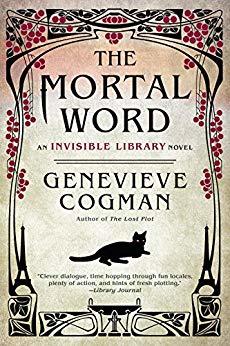
The Mortal Word, by Genevieve Cogman: newest Invisible Library book—so excited! Absolutely perfect airplane reading: fast-paced and funny.

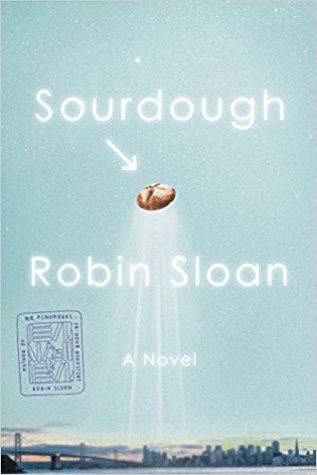
Sourdough, by Robin Sloan: my engineering student son just learned how to make sourdough, so how can I not read a novel about a programmer taking care of a neighbour's sourdough mother. (Also you must listen to the funny Stuart McLean story about taking care of a neighbour's sourdough mother. (story starts at 19:20))


The Lost Girl, by Anne Ursu: I've been looking forward to getting my hands on this one.

The Chocolate Kiss, by Laura Florand: Paris, not Italy, but chocolate. Loved the first one.

Nights of the Round Table, by Tanya Huff: funny short stories are ideal plane fare.

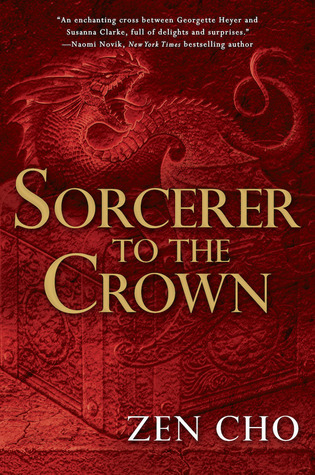
Sorcerer to the Crown, by Zen Cho, audiobook: the new one is out, so I should reread this one, and all the better if I can do it with my eyes closed!

Decided to buy:


Toad Words and Other Stories, by T. Kingfisher: more short stories and I love every word this woman writes, so this was a no-brainer

The Starfighter Invitation, by Andrea K. Host. Always willing to try new Andrea Host.

Kat, Incorrigible, by Stephanie Burgis. Because I haven't actually read this series yet, and why haven't I?

A Sword Named Truth, by Sherwood Smith (preordered; it comes out on June 11): extremely excited about this one. If you've read Crown Duel and A Stranger to Command, you're probably excited, too.

Lent, by Jo Walton: I love her writing, and this is fantasy about Savonarola, a key figure in Florence history. How fortuitous!

By now you can tell there's nothing Top Ten about this list—clearly I can't count, and this is a pretty random collection based on what was available at the library, what I've read about on blogs recently, and fave authors I decided to look up on Amazon. But it would make a great Top Ten list idea, wouldn't it?? What would go on your list?