Showing posts with label MMGM. Show all posts

Friday, November 15, 2024

MMGM: The Demon Sword Asperides, by Sarah Jean Horowitz

First off, this title is the best, isn't it? The catchy rhythm, the intriguing concept. Who doesn't want to read a story about a demon sword? And Asperides does not disappoint. World-weary, hell-weary, bitter and sarcastic—I loved the voice and perspective of a sword wielded for centuries by power-hungry villains.

Particularly when this sword ends up in the hands of a hapless, naive boy. Nack Furnival is desperate to prove himself to his family of brave knights, but he's really no good at sword fighting. It's easy for Asperides to trick Nack into believing he's an angel sword, and off Nack charges on a quest to right wrongs and save the innocent. Meanwhile an evil sorcerer has been resurrected, and he wants his sword back. Shenanigans ensue.

The Demon Sword Asperides is very funny—lots of snarky commentary from the sword, lots of hilarious juxtapositions of assumptions and intentions along with great slapstick and situational comedy. But it's also very—I want to say sweet, but I don't want you to think it's saccharine. Maple syrup sweet—it has depth and complexity. I'm willing to compare it to Terry Pratchett's humour, because there is real character growth and some pointed commentary about the world underlying the shenanigans.

I don't want to spoil anything, but Asperides has his own character arc. His relationship with Nack is the best kind of starts-off-unequal-with-deception-and-trickery turning into genuine care and each changing the other for the better. Nack learns that the heroes he worshipped might not be worthy of him and gets to choose who and what he values, including valuing himself. Satisfying all around.

I picked this one up from the library while waiting for The Dark Lord Clementine, which I am now even more eager to get my hands on. If you like Ursula Vernon and Eva Ibbotsen, Sarah Jean Horowitz will be right up your alley.

Marvelous Middle-Grade Monday is a long-running feature hosted by Greg Pattrige at Always In The Middle. Be sure to check out all the other great middle-grade recommendations this week! (I know, it's a little early for a Monday post. Time is arbitrary, ok?)

Monday, April 22, 2024

MMGM: Duet, by Elise Broach

If you are musical at all, if you like the piano, if you like Chopin—then I have two strong recommendations for you. The first is this wonderful book by Elise Broach about a goldfinch and a young pianist (and a mystery about a piano).

It's been ten years since I posted about the last Elise Broach book I read, Masterpiece, which is about a beetle and a young artist and Albrecht Durer. I was impressed enough by that book that when I saw her name on a book spine at the library, I immediately took it home.


Broach has a wonderful way of introducing young readers to art and music with such compelling storytelling that the reader never realizes how much they are learning! In the case of Duet, we have the characters of Mirabelle, a young goldfinch with a gift for singing, and Michael, a gifted young pianist who doesn't want a new piano teacher. Mirabelle becomes Michael's muse, singing as he plays and inspiring him to play even better. The description of the music is beautiful and inviting: I looked up the Chopin pieces mentioned so that I could hear what they sounded like! Mirabelle and Michael's friendship is believable and sweet—they can't speak to each other, (Mirabelle is a precocious bird, but still just a bird) but they communicate nonetheless, and each fills a void in the other's life

There is a whole cast of engaging supporting characters, both bird and human. Mirabelle's bird family is a delight! Mr. Starek the piano teacher has his own little story arc, and it's lovely to see everyone coming together to help him in different ways. The mystery of a famous lost piano is solved by Mirabelle and her brothers, and Michael has a satisfying journey developing his piano talent.

A beautiful, uplifting story that will send readers out to find out more about Chopin, and might even inspire them to work on their own talent, whatever it is.

Then you can go watch an animated series on Netflix called Forest of Piano. It's the story of two piano students, one privileged and dedicated, the other with a wild, inherent talent but from the wrong side of the tracks. It follows them all the way from boyhood to teenagers competing in the International Chopin competition. It's a story of music, of friendship, of mentorship, of genius, and there is a lot of Chopin music played and explained. It's also a pretty good depiction of the stress of music competitions, which I could relate to! (From Kiwanis Festivals, not Chopin competitions!) The soundtrack was played by Vladimir Ashkenazy, and the animators did a fantastic job of animating the fingers playing the piano!

Marvelous Middle-Grade Monday has been a running feature for more than a decade now, highlighting great middle-grade reads every week. Be sure to head to Greg Pattridge's blog to see this week's collection.


Monday, May 29, 2023

MMGM: The Grace of Wild Things, by Heather Fawcett

The Grace of Wild Things is billed as "a fantastical reimagining of Anne of Green Gables," and that made me jump up and put it on hold at my library immediately. (So: excellent marketing strategy!) But, in retrospect, I wish I hadn't known that going into the story, because it set certain expectations in my mind and then the book kept knocking against those expectations. I would have preferred the experience of reading the book, feeling that it reminded me of something, and then figuring out or finding out at the end that it was Anne of Green Gables with witches.


But if I can get that out of the way, this was a lovely story, a worthy homage to Anne-with-an-E, and an enjoyable read.

I loved Grace: she's proactive, creative, fearless and positive, just like Anne. When she realizes that no one will adopt her because she's a witch, she goes herself to the witch's cottage in the woods and refuses to be intimidated by being shut in the oven.

The witch grew on me, and by the end I was really enjoying her reluctant relationship with Grace. I have a few niggling issues with how she was portrayed: (slight spoiler, you can read it if you highlight it)  I choose to believe she never actually cooked and ate any children, because that seems inconsistent with both her actions in the story and with the way magic seems to work—actually, I think my niggle is that the magic is fun and whimsical but isn't really developed beyond "oh look at all the crazy ingredients we have to gather for this spell."

My favourite part of the book was the friendships, which I don't want to spoil, and I did love the magic and wish there had been more of it. It was quite fun seeing how Fawcett translated many of Anne's escapades into magic spells with unexpected results.

There were a lot of things I wish had been developed further (even though it's a fairly long book), so I felt a little unsatisfied with certain aspects of the plot, but the setting and characters were delightful, and the book has so much heart! The themes of friendship, tolerance, helpfulness and forgiveness—not to mention trusting yourself and a healthy dose of girl power—were true to the spirit of Anne of Green Gables. So for Lucy Maud Montgomery fans, you won't be disappointed. Just check your expectations at the door and let Grace take you into her world.

I would recommend this for an older middle-grade audience, just because of its length and complexity.

Marvelous Middle Grade Monday is hosted by Greg at Always in the Middle, where you can always find great middle-grade recommendations.


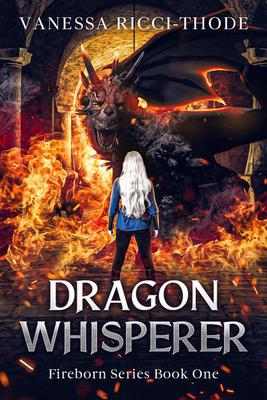
If you like dragons, come back this Friday for an interview with the author of Dragon Whisperer, a New Adult book about fire magic, dragons, and work-life balance when your fire magic means you work a lot with dragons! You could win a free e-book copy for yourself!


Sunday, February 26, 2023

MMGM: Fenris and Mott, by Greg Van Eekhout, and Freddie vs the Family Curse, by Tracy Badua

Here are another couple of books from the Cybils Middle-grade Spec Fic shortlist that I can highly recommend. 

Fenris & Mott is a funny and thought-provoking take on the Norse idea of Ragnarok.

What if Fenris, the wolf in Norse mythology who will consume the world during Ragnarok, was discovered as a little starving wolf-pup in a back-alley in California?

Mott is the highly-engaging character who finds Fenris and really, really wants to adopt him, even though she knows she can't. She vows to keep him safe, despite the mundane and mythical obstacles that spring up at every turn. Various characters from Norse mythology show up, either wanting to kill Fenris to prevent Ragnarok, or set him free to begin it. But Mott cares about Fenris himself. Her single-minded devotion forges a path through the middle of all the prophecies: is it possible to save Fenris and save the world, too? The combination of Mott's compassion, integrity and wry humour with Fenris's adorable puppy nature is irresistible. And Van Eekhout throws in some pointed metaphors about climate change and human shortsightedness as the vehicles for the end of the world, with the empowering message that kids still have a choice and can make a difference.

Freddie vs the Family Curse is a very funny and relatable story about a boy whose notorious bad luck and clumsiness aren't his fault: he's been cursed!

If anything can go wrong for Freddie, it definitely will, leading to all sorts of slapstick and embarrassing scenarios. Freddie isn't a victim, however, and he has a staunch supporter in his cousin, who at least understands about the family curse. When Freddie discovers an amulet inhabited by the spirit of his great-uncle, he learns the origin of the curse and how to break it. This leads to more shenanigans, including a road-trip to a break-dancing competition—nothing could possibly go wrong with that!  All along Freddie is a character with a great deal of agency and cleverness in dealing with his problems.

The best part about this book is Freddie's family and the rich representation of Filipino culture. I loved that everyone in the family has a different attitude toward the idea of the curse, and toward religion and superstition in general. I loved how everyone cares deeply about each other but that doesn't prevent conflict and frustration. Freddie's great-grandmother is a wonderful character, and the glimpses we get into Filipino history are rewarding.

Monday, February 20, 2023

MMGM: Children of the Quicksands, by Efua Tratore

A Middle-Grade Spec Fic finalist for the Cybils, Children of the Quicksands was one of my top choices for winner. (Here is my review of The Mirrorwood, the one we picked.)

We begin in Lagos, Nigeria, with the common middle-grade trope of the city child being sent to stay with a relative in the country. And of course there's going to be something mysterious going on in the forest behind grandmother's cottage. But this isn't Kansas, and these are not the European folk tales we've seen so much of! 

Simi is such a likeable protagonist, and she drew me right into her voice and her world. I loved being immersed in modern-day Nigeria, and then I loved being taken with Simi into a country village, where we gradually learn about her grandmother's Yoruba religion and the mythic dangers hidden in the forest. 

The magical and the real are integrated seamlessly; I loved that this is a story set firmly in the "real" world, and the world under the quicksands that Simi falls into is just one more part of reality. I loved that this is a story about families, about relationships, healing and forgiveness, whether it's within mortal families or relationships between gods.

Every character is rich and rounded; there is convincing conflict without anyone being a villain. I loved how the interplay between religion and politics was represented—simply enough for a middle-grade audience, but nuanced. There are all sorts of interesting themes going on, but the story never bogged down, never faltered from its clear arc of Simi discovering her heritage and reuniting her family.

Have I mentioned how much I love Simi? And her grandmother, and Jay, the son of the chief, who insists on becoming Simi's friend. Lots of humour and very relatable situations.

The writing is excellent, the descriptions vivid, the dialog easy to hear—and I loved the incorporation of Yoruba language into the text (with a helpful glossary).

I can't claim to have eaten authentic Nigerian food, but I am now looking up Nigerian restaurants in Vancouver, and I shall correct that lack with all due haste. I do love peanut soup, which is at least West African in origin—maybe that's what I'll have for dinner tonight!


Marvelous Middle-Grade Monday is hosted by Greg Pattrige at Always in the Middle, and is always an excellent source of middle-grade recommendations.


Tuesday, February 14, 2023

Cybils Winners! The Mirrorwood, by Deva Fagan

Happy Valentine's Day! For those whose greatest love may be books, it is more than appropriate that the winners of the Children's and Young Adult Book Lovers Literary Awards are announced today! Time to update your TBRs!

I'm excited that I finally get to talk about the winner in the Elementary/Midde-grade Speculative Fiction category: The Mirrorwood, by Deva Fagan.

Every one of the judges was impressed by the compelling writing and the imaginative world-building in this one. It starts with a girl who has been cursed with a blight: she has no face of her own, and has to borrow faces from people she touches. What an interesting curse, full of metaphorical possibilities! Appearance, identity, how our relationships with others define us—all the deep stuff!

Our heroine, Fable, escapes from blight hunters through a wall of thorns into an enchanted kingdom caught in time with a sleeping prince in a tower in a castle. 

People, it's a gender-reversed spin on Sleeping Beauty!

This was just such a fun story. Whimsical, likeable characters, a vivid, colourful world with interesting magic, and a lot of examination of fairy tale tropes: fairy godmothers, curses, demons and monsters, quests. Before Fable can end the blight and save the kingdom, she has to figure out who the good guys are, and just what, exactly, the curse is.

Also there's a great talking cat, and the annoyingly loquacious skull of a bad poet! So much to enjoy!

If I were to pick a food analogy for The Mirrorwood, I think I would go with the amazing chocolate chunk salted caramel cookies my sister and brother make, with chunks of Belgian chocolate and homemade caramel in a meal-sized cookie. Sweet and salty deliciousness with hidden depths and a different combination of flavours in every bite.

I will post reviews of the rest of the short-listed books over the next few Mondays, for Marvelous Midde-Grade Monday. Some very cool stories, and I'm excited to share them with you!

Tuesday, July 5, 2022

Kelly Barnhill, new Victoria Goddard, and a few other things I've been reading

It's been three months since my last post: I'm not sure if that's because I've lost interest in blogging, or I haven't read much that made me excited to talk about, or life has just gotten really busy with other interesting things to occupy my mind and time. Or a combination of all three. But I'm not ready to call it quits yet, so here are a few short reviews of a few things!

The Girl Who Drank the Moon was on everyone's blog for a while when it came out, and I finally read it, and it's as awesome as everyone said! Very original: lots of folk-tale elements and the narration has a fairy-tale feeling to it, but there's a modern sensibility behind everything—there are no unexamined tropes here. Very pointed critiques of human behaviour and society. Interesting, complex characters; unusual in that the adult characters are more prominent than the titular girl, and we get lots of different POVs, so I don't know how that will work for younger readers. Felt similar to some of T. Kingfisher's not-exactly-for-young-people novels, like A Wizard's Guide to Defensive Baking and Minor Mage. Whimsical and hopeful while unflinching about the damage people can do to each other. Beautiful writing.

The Troubled Girls of Dragomir Academy, by Anne Ursu, is another middle-grade novel that's been widely raved about that I finally got around to reading. I love Ursu's writing, and this one didn't disappoint. Similar themes to Girl Who Drank the Moon, actually: standing up against evil that persists because of false beliefs deliberately perpetuated by those in power to make sure they stay in power. (Hmm. That doesn't ever happen in the real world; I see no relevance to our current state of affairs. Ahem.) Girl power and friendship. Pretty dark story, actually—misogyny isn't fun to read about—but I promise it has a happy ending!

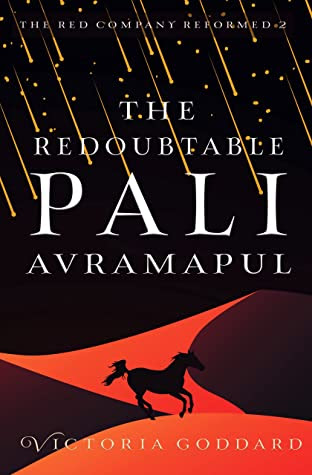
The Redoubtable Pali Avramapul is the next installment in Victoria Goddard's hugely epic Nine Worlds series of series, and I loved it! My second favourite after Hands of the Emperor, I think. It made me go back and reread The Return of Fitzroy Angursell, and with this book (and Petty Treasons, a novella) I have fallen completely in love with Fitzroy. Also Pali! Full review on Goodreads , but the TL;DR is go read this book! (After you read Hands and Return, though.)

And speaking of Victoria Goddard, I also thoroughly enjoyed Portrait of a Wide Seas Islander, which is an event in Hands of the Emperor told from Buru Tovo's point of view.


Nettle and Bone is T. Kingfisher's latest, and it is her trademark dark, funny, weird, folk-tale-ish story of unlikely heroines defeating evil with cleverness, unexpected magic and sheer stubbornness. This one is definitely adult fairytale—trigger warning for abuse—but not horror. (I can't read her horror!) I'm never disappointed in anything this woman writes.

I also read a couple of new novels in Rachel Neumeier's Tuyo world: Keraunani, which is a fun romantic adventure starring Esau, and Suelen, set right after the events of Tuyo and introducing a new character and a new, fascinating magic: the surgeon-dedicate. (I love the covers for this series!) 

Oh, and I don't seem to have mentioned her newest Death's Lady series on my blog (how is she so prolific?? the woman is a writing machine!). It's reverse-portal fantasy starring a psychiatrist and a woman warrior, and it's every bit as good as Tuyo with a different vibe. (My Goodreads reviews here and here.)The latest in that series, Shines Now, and Heretofore is a fun exploration of one of the minor characters in the main trilogy (I love the way she does this in her series: returning to the world we loved and seeing a new perspective on it.)

You may notice that I haven't been very adventurous in my reading: I've been mostly sticking to authors I love. Maybe I'll start exploring outside my box now: is there anything you think I should read that I might not otherwise try?


Monday, March 21, 2022

MMGM: The Barren Grounds, by David Alexander Robertson

I am a sucker for foster child/found family stories—don't know why; I just can't stand the thought of any child not feeling love and belonging. So The Barren Grounds drew me in right away when it introduced Morgan in her new foster family. They are trying so hard to welcome her and honour her aboriginal heritage, and she is rude and prickly because she can't let herself get hurt again. 

The most important relationship in the story is between Morgan and her younger foster brother Eli, whom she both sympathizes with and resents because he at least has memories of his family and his culture, whereas she was given away when she was a baby. Eli's skill at drawing is the magic that creates a portal in the attic, and Morgan has to go through the portal to find Eli and bring him home.

Found family, siblings and portal fantasies are all buttons for me, and the snowy icing on the cake was the wintery setting: in Winnipeg in the real world, and in the trapped-in-winter land of Aski. Robertson's depiction of a winter forest landscape rang very true and familiar to me. This is such a Canadian book! (I was only annoyed at Morgan not wearing enough clothes when she went through the portal: she would know how to dress better than that!)(At least she remembered her mitts.)

The homage to Narnia is genuine, and the integration of aboriginal mythology and values into a Lion Witch and Wardrobe retelling felt both fresh and satisfying. The environmental message (and the metaphor of colonialization) is clear but not, I think, too didactic.

The story itself is fast-paced and fun, a fairly simple adventure quest with enjoyable banter and realistic character development. I liked how Eli's and Morgan's different strengths were acknowledged, and I loved the bickering between Ochek and Arik. (I am embarrassed to be a Canadian who did not know there was such an animal as a fisher: kind of like a really large weasel. You would think I would have learned about them at some point!)

This is a strong beginning to a middle-grade fantasy series for any readers who like wilderness adventures and portal stories, and a book that should become a Canadian classic.

By Douglas H. Domedion - https://bloximages.chicago2.vip.townnews.com/niagara-gazette.com/content/tncms/assets/v3/editorial/1/dc/1dcd1294-0601-5f2d-85e8-70e12364647e/5e62c0efb7979.image.jpg, CC BY-SA 4.0, https://commons.wikimedia.org/w/index.php?curid=107662510


For more great Marvelous Middle Grade Monday reads, check out Greg Pattridge's blog, Always in the Middle


Monday, August 30, 2021

MMGM: The Serpent's Secret, by Sayantani DasGupta

The Serpent's Secret is a fun, colorful middle-grade fantasy similar to the Rick Riordon Presents series, with fascinating mythology, a grumpy heroine and rather a lot of demon snot! 

I've really appreciated the growing number of #OwnVoices fantasies based on non-European folktales, mythologies and histories. It's great that publishers have finally woken up to the fact that kids need to see themselves and their cultures represented in the books they read. It's good for all of our brains to be exposed to different cultures and new ideas. And as a purely selfish reader, it means there are that many more interesting stories I have access to!

DasGupta has a great afterword in which she explains the various sources of her material: everything from Bengali folk tales to a beloved poet to the works of Einstein. The world she creates out of all this is fascinating: an interdimensional fun house of different lands populated by princes and monsters and stars (not to mention annoying talking birds). 

Our heroine, however, is from New Jersey. Kiran doesn't believe in any of the stories her parents tell her, and she definitely doesn't believe that she's a princess. I thought her reaction to a slavering rakkhosh destroying her home and two princes on winged horses showing up to rescue her was realistic and age-appropriate: she's seriously pissed off! Sarcastic and uncommunicative prince Neel doesn't help matters, and the two bicker their way through the Kingdom Beyond Seven Oceans and Thirteen Rivers trying to save Kiran's parents from a black hole and Neel's brother from a Demon Queen's curse.

I liked that there wasn't a single Big Bad to defeat: there are puzzles and riddles and monsters to battle, but the monsters had their own reasons for existing, and both Kiran and Neel have to face monstrous sides of their own natures. Blending mythology with astrophysics was ambitious and a little mind-bending—I didn't think it always worked, but I liked the dimension it added to the story (get it: dimension?).

I often get tired of the gross monsters that appeal to middle-grade readers, but this story had enough going on to keep my interest, and the rakkhosh were actually pretty funny. I cared about the characters and I believed in the awkward friendship between Kiran and Neel. There are two more books in the series, and I'm interested enough in the unique cosmology DasGupta has created and curious enough about what Kiran's going to do next that I will seek them out.

I'd really like to try Bengali food. I think this story resembles a typical Bengali meal, which (according to a quick google search) looks like it's presented very similarly to food I had in Nepal: different curried and fried vegetables and fish with a few chutneys and sauces arranged around plain rice. Many different flavours to cover the whole palate. (I really want to go back to India and eat!)


By Sarmistha Bera - Own work, CC BY-SA 4.0, https://commons.wikimedia.org/w/index.php?curid=40900761

For more great middle-gread reads, every Monday visit Greg Pattridge's Always in the Middle for Marvelous Middle-Grade Monday.

Monday, June 14, 2021

MMGM: The Monster Who Wasn't, by T. C. Shelley


What an odd, sweet, surprisingly deep story! I picked up The Monster Who Wasn't on a random library browse, because that's a great title, with an appealing cover. The cover is not only a lovely piece of art, but it really captures the feel of the book: the boy-shaped imp with his gargoyle friends, perched on a church spire gazing down at the human world he wishes he could belong to. Wistful, whimsical and weird.

Shelley populates her world with a kaleidoscope of monsters and fairies (and an angel): everything in Irish mythology, plus some extra ogres and trolls, plus a few, like the gargoyles, she just made up. Her description of the monsters' underground world is vivid and disgusting: the monsters are definitely the bad guys in this one! The gargoyles rescue the unnamed imp who doesn't look like any other type of monster—because they feel sorry for him, and because his human shape means he can steal chocolate for them! 

The imp—who eventually gets named Sam, so I'll call him that—is delightful as he gains vocabulary and learns about the world. Then his questions start to get more existential: why do I exist? what am I supposed to be? where do I belong? The answers to those questions turn out to be complicated. Shelley has taken elements of the changeling story but given them her own unique spin, and Sam's encounter with the human family who were partially responsible for his creation (this isn't a spoiler: we know that at the beginning) gives the plot some intriguing and poignant twists.

I mentioned that the monsters are the bad guys, and there is some real peril with quite scary creatures. Sam's courage and loyalty are tested, and I was on the edge of my seat rooting for him all the way!

I loved the gargoyles, I loved the Kavanagh family; there's a lot of really great humour to balance out the scary bits. This book warmed the cockles of my heart! (I think that's an Irish saying, isn't it?)

Once again I'm joining the group at Always in the Middle to highlight Marvelous Middle-Grade books on Monday. Lots more great recommendations at Greg's blog.

Monday, May 17, 2021

MMGM: A Wish in the Dark, by Christina Soontornvat

From the moment we meet Pong patiently waiting, listening, for the moment a ripe mango drops from a tree, A Wish in the Dark invites us deep into a rich, believable fantasy world with a truly engaging hero as our guide. Pong is quiet and observant with fierce loyalty to his friend and a strong sense of justice that keeps getting him into trouble. When he escapes the prison where he was born, we find out he is quick-thinking, ingenious and scrappy. He is a delight to travel with as he tries on his own to find freedom from an unfair society. Then he encounters Father Cham, a Buddhist monk, and, oh, my heart!

This is a story inspired by Victor Hugo's Les Miserables, and it is so brilliant (yes, this is a pun) in the way it plays with Hugo's characters and themes, translating them into a middle-grade plot about children who start off believing what society has labeled them. Both protagonists learn not only that they can choose to define themselves, but that they can choose to help each other, and that a lot of people all choosing to stand together can change society. All in a gorgeous Thai-inspired world with magic that cleverly illuminates (can't help myself) the social commentary: the brightest lights are reserved for the rich, and Soontornvat does so much with that simple metaphor.

Nok is harder to like, at first, and I didn't want the narration to keep switching into her point of view. But her rigid self-righteousness is a product of her upbringing, and she is trapped every bit as much as Pong by the lies the Governor tells. The Governor is a well-done villain, scary and believable in his reasonableness.

There are some great friendship and found-family moments, gentle and heartfelt wisdom, and a stirring Les Mis-worthy conclusion. This one was shortlisted for the 2020 Cybils, and deserves all the attention it's getting. (Soontornvat won a Cybil for her non-fiction book about the Thai cave rescue, which I really want to read!)

As sweet and juicy as a perfectly ripe mango! For more delicious middle-grade reads, see what everybody is reviewing at Greg Pattridge's blog, Always in the Middle.


Monday, February 8, 2021

MMGM: Jinxed, by Amy McCullough

 This middle-grade sci-fi adventure has it all:

  • cute talking animal side-kicks ...
  • that are also robots with internet access and hologram projectors and all the cool things your phone could do if it was actually a cute talking animal (don't we all wish our phones could be cute talking animal robots?) ...
  • and they have to fight in robot battles at the tech school where really smart kids learn how to make robot animals, but all that fun violent mayhem is okay because ...
  • the main character is really good at repairing them and making them even better than before ...
  • which is how she gets her mysteriously different robot cat, Jinx, who seems to be able to think for himself (and has the snarkiness to show it!)
The robot sidekicks are called bakus. The clever-with-technology protagonist is Lacey Chu (so you've got your girls in STEM and a pretty diverse cast, so check off some more boxes), and there's a mystery about her absent father, and some questions about the big tech company that makes the bakus and runs the school (all big tech companies have a nefarious plan to take over the world; that's a given!). Plus some exploration of class and elitism and what it feels like to be less rich, less connected, less privileged. And the whole artificial intelligence—free will problem that can't help but come up when dealing with self-aware robots. 

There's lots going on here, and it's fast-paced and exciting while taking time to develop characters and give justice to the themes. None of the elements are original, but Lacey and Jinx, and the team at school, and Lacey's best friend (who didn't get into the special school) make this a fresh, compelling romp through some of the more significant questions kids these days are facing.

I thoroughly enjoyed it and am about to dive into the sequel, Unleashed.

Oh, hey, this is a middle-grade book, so I can contribute to Marvelous Middle-Grade Monday! Haven't joined that group in a long while. Greg at Always in the Middle is still hosting this great weekly round-up of favourite middle-grade books—be sure to check it out.


Wednesday, October 28, 2020

Bloom, by Kenneth Oppel

Kenneth Oppel has done it again. He has to be one of the most versatile writers out there: every book he writes is different from the last, and they are all solidly good to fantastic. Bloom is on the fantastic side of the scale. It's the most entertaining plant-based apocalypse since Little Shop of Horrors.

There has needed to be a book about invasive aliens ever since the gardening world decided that's what they should call introduced plant species that run rampant over native species and become impossible to eradicate. Oppel has obviously had to deal with invasive aliens, because he understands how terrifyingly inimical to human life they can be. I know from personal experience that Himalayan blackberries have an intelligent malice and are actively hostile; so is Scottish broom. In Eastern North America I think it's kudzu. Alien plant species taking over the planet is an entirely plausible scenario! 


I love that Oppel sets Bloom on Salt Spring Island, iconic home to the most down-to-earth, organic, genuine, eccentric collection of farmers and artists in Canada. It just makes the wrongness of the black spiky grass that appears everywhere overnight that much more offensive. (Side note: I read a review that thought the community's swift and organized response to the crisis was unrealistic, but it didn't read that way to me at all. That's kind of how we do things here.)(*Waves Canadian flag a little bit.*)

I liked the variation on the Special Chosen One that Oppel sets up for his three young protagonists, and their different reactions to it, and the reluctant friendship that develops among them because of it.

I love the way he uses allergies: I don't want to say anything spoilery, but I think he also has personal experience of how disabling they can be!

Kudos for all the present, supportive and intelligent parent figures—they're actually involved in solving the problem but there's a plausible reason why the three teen protagonists have a key role.

Bloom is not as creepy as Nest, which was quiet, slow-burn, seriously-mess-up-your-head horror. Bloom is fast and loud and full of peril that can be attacked with chainsaws. (I love that everyone on Salt Spring Island knows how to use a chainsaw!)

Great fun! Hmm. Need a fun vegetarian meal for my food analogy—is that a contradiction in terms?! Maybe veggie pizza! Yes, with those banana peppers to give it some spice. And now I'm going to listen to the Arrogant Worms Vegetable song.


Tuesday, April 7, 2020

Sal and Gabi Break the Universe, by Carlos Hernandez

Based on the cover and title, I came into Sal and Gabi Break the Universe expecting a fun middle-grade romp with a science-fictiony feel. What I got exceeded my expectations by quantum orders of magnitude. (Actually, I don't know enough about the definition of quantum to know if it's actually expressing my meaning in that sentence, but it sounds good, doesn't it?)

There isn't any way to describe the book without spoiling a lot of the fun surprises, but I'll try to tell you what I loved while still being mysterious.

I loved Sal. I loved his voice, his self-depreciating wit (that's the best kind, in my opinion), his bold approach to life and problem-solving, his hilarious sense of humour. I loved that he's a magician (the sleight-of-hand kind). I loved that his dad is a calamity physicist. (A quick google search indicates that there's actually no such thing as calamity physics (google would know about it if there were, right??), but it's such a cool idea: it ought to exist!)

I loved Gabi even more, if that's possible. She's a force of nature, a warrior, the leader everyone didn't know they needed. I loved her quick, incisive mind,  her witty come-backs, her insistence on respect. She and Sal make a brilliant, hugely entertaining pair and I wish they had been my best friends in middle-school. (But I would never have dared!)

I loved their school! I know there are arts-focused schools out there that are probably pretty amazing, but wow, what a wondrously ideal education to imagine! I loved all the teachers and the principal, loved the projects we found out about, loved detention!

I loved, loved, loved Sal and Gabi's families. I cannot say enough about how this book models diverse, loving family relationships—what it looks like when families are there to support one another—gah, I just, I have no words. Brandy pointed out in her review how refreshing it is to have a middle-grade book with present, functioning, loving parents, and I agree. Loved that.

Loved the Cuban food, the language, the culture that came through so strongly. This is a deep, rich book and the specifics of Sal and Gabi's Cuban community were a big part of the depth and texture.

I loved the writing. I had a little scrap of paper with quotations written on it, but I can't find it, alas. You'll just have to read it yourself, I guess! Assured, solid, textured, hilarious.

The themes! I don't even know where to begin. Family, friendship, grief, identity, self-esteem, how to be a decent human being. Dense and meaty stuff, all woven through with humour and insight. Hernandez reminds me very much of William Alexander, another favourite middle-grade writer who doesn't underestimate his audience's capacity for wisdom.

I laughed, I cried, I bought the sequel! I don't know what else to tell you: just read this book!

The book describes a Cuban roast pork dish (the name of which I wrote on that scrap of paper I can't find) that seems like the perfect analogy: flavourful, savoury, hearty, spicy.

And because you are an audience that might appreciate my accomplishment, here are a couple of solitaire Bananagrams I'm particularly proud of! (I find this a soothing, meditative kind of thing to do.)


Saturday, March 21, 2020

Song for a Whale, by Lynne Kelly

Interesting times we live in, interesting times! I hope you're all curled up with a great book from your TBR or having phone or videochat conversations with friends and loved ones. Or going for a walk outside: don't forget to go outside!

I asked my niece how she was occupying herself now that school is cancelled, and she said she just read a really good book, so I asked if she would review it for my blog. Here is 11-year-old Lorelei's take on Song for a Whale.


Song for a Whale is a nice heartwarming story, that involves a smart and brave girl. This girl is named Iris and she is a deaf girl at a normal school, so she doesn't have very many friends. Her deafness is from her grandparents who are also deaf, and so her grandpa’s passing was very hard for Iris and her grandma. Her happy place is with old radios. She is really good with old radios; she can fix an old radio even though she can’t hear if it’s perfect but she can still feel the vibrations. 


And one day she learns about a whale: Blue 55 who sings a song like no other. No other whale can understand Blue 55, so he is very lonely. Iris can relate to that completely, and wants to help. I love how Iris is so brave and courageous that she wants to go and see the whale in real life when a sanctuary tries to tag him. It also takes courage to go with your grandma and sneak away on a cruise ship and set sail to go find what you most desire. Although there were some obstacles in Iris’s way, she uses her intelligence to help her succeed. At the end you will feel almost exactly what she was feeling, and how her success was the greatest gift of all.

Tuesday, October 15, 2019

Spark, by Sarah Beth Durst

What if something that was making your life wonderful was also making someone else's life miserable? If you found out about it, what would you do?

This seems to me one of the central moral questions of our time, and Spark is a lovely, gentle but remorseless engagement with it. This is such an important book; all adults should be required to read it!

It's also a sweet, fun story about following your heart and finding your voice and figuring out where you belong. And it has dragons! (Well, storm beasts. But close enough as makes no mind!)

Durst says she got the idea for this book from the first line: Mina was quiet. "But I didn't want it to be the story of a quiet girl who learns how to be loud. I wanted it to be the story of a quiet girl who discovers she's strong, exactly as she is." I love that.

I loved Mina, I loved her passion, her intelligence, her patience and her frustration. I appreciated the depictions of her boisterous family and the way she loves them and belongs without being like them.

I adored her storm beast Pixit and their relationship, they way they remind each other of their strengths and bring out the best in each other.

I was so happy with the school scenes—Mina is unlike all the other students, but she finds friends and figures out her talents and discovers that she belongs. It's an outcast story without any bullying, and isn't that a good thing to have examples of?

The world of Alorria was fascinating and colourful; simplistic in the way middle-grade fantasies often are, but with enough complexity to be believable and to generate an interesting plot. The concept of storm beasts and the use of them to control weather was a lot of fun. The prime minister is a great character. I thought Mina's solution to her dilemna was brilliant and quite relevant to our own world.

I've consistently been impressed with Sarah Beth Durst's work. She is incredibly imaginative, thoughtful and has a deep understanding of psychology. My copy of Spark had a sample chapter from The Stone Girl's Story,  and I'm now anxious to get my hands on that one!

Since we just celebrated Canadian Thanksgiving, I'll compare Spark to the tasty and very different stuffing my son made for his turkey: it had walnuts and apples and pomegranate seeds, so it was colourful and crunchy and had all the sweet, sour, savoury and salty flavours. (His gravy was great too: had notes of lemon and fennel and white wine.) I love that my kids are all better cooks than I am!

Note that today is your last day to nominate books for the Cybils award. Spark has been nominated in the Elementary/Middle Grade Speculative Fiction category, along with a lot of other great books. If there's one you know of that's missing, hurry and nominate it!

Monday, April 22, 2019

Inkling, by Kenneth Oppel

An ink blot comes to life and makes friends with a boy. I love this idea and I love what Oppel did with it!

Inkling is completely convincing as a character, from the moment he pulls himself out of Ethan's dad's sketchbook, has to run for his life from Rickman the cat, and takes refuge in Ethan's room. He eats ink for sustenance, and gains vocabulary and understanding from the comics and books he ingests. It's brilliant and hilarious the way his writing reflects what he just ate. (The scene after he eats some of Anne of Green Gables is worth buying the book for.)(Oppel is Canadian: he's allowed to poke gentle, loving fun at one of our icons.)

Ethan is terrible at drawing, even though his dad is a famous comic book artist. Inkling's ability to draw anything is an obvious and tempting solution to the art project that is stressing Ethan out. But Inkling has to figure out his own purpose for existence, separate from what everyone else wants from him.

This is a family story, a friendship story, a story about art and consumerism, about trust and loyalty. It's delightful and funny and goes to some really interesting, deep places. Every character is thoughtfully motivated, including all the adults. Moral dilemmas all over the place, treated with the respect they deserve. The right answer isn't always obvious or easy.

I loved Ethan's relationship with his younger sister Sarah; I loved Sarah's relationship with Inkling and her perspective on things. I loved that her Down Syndrome isn't an issue or a problem or noteworthy in any way.

Ethan's family just felt so real. Ethan's dad is believably absent-minded enough that Ethan has to take a lot of responsibility for caring for himself and his sister, but he's not one of those negligent parents that adults hate to read about in middle-grade books! There's sadness because their mom died, but a lot of love and mutual support.

Even Rickman gets his own small but important character arc.

Inkling made me smile on so many different levels: the way the plot played out, the way the characters developed, the cleverness of the ideas, the layers of humour. It may also have gotten me a little teary-eyed at some points, and I was on the edge of my seat in several suspenseful scenes. Definitely no sense of "I'm an adult appreciating a book written for kids": I was immersed.

A highly entertaining and compelling offering from one of Canada's foremost writers. (I've gushed about Kenneth Oppel before. He's just fantastic.)

My Easter breakfast this morning was French toast with 9% lemon yogurt (just as good as whip cream) and blackberries. Sweet and comforting with extra zings of flavour. Just as enjoyable and filling as this book!

Monday, June 25, 2018

MMGM: Hello, Universe, by Erin Entrada Kelly

I have been somewhat lacking in middle-grade reviews this year. As in, it's actually been more than a year since I reviewed a middle-grade book! (This is what you get from a blogger with no plan, no mandate, no way of organizing her reading except purest serendipity.) But I went to the children's section of my library yesterday, just to see what caught my eye, and I came home with a large stack of middle-grade reads, so maybe I can start rectifying that imbalance!

I opened Hello, Universe first, and it pulled me in right away. I loved Virgil, who thinks he's not just a failure but a Grand Failure, and I loved his relationship with his grandmother. Then I loved Valencia as soon as I met her, with her prayers to Saint Rene and her determination that she doesn't need friends. And Kaori the psychic and her little sister Gen were hilarious!

I've been hearing lots of good things about Erin Entrada Kelly for a while now, but her books are realistic fiction and I always think I don't enjoy realism as much, which is ridiculous, because there are books like this out there! The voices of the four characters (the fourth one isn't Gen, actually, but more on that in a minute) are spot on: each insecure in their own way, each with their own stories they tell themselves to explain the world and justify their own actions. Each lovable for the way they are trying to be their best selves, given what they've been taught that should look like.

There's so much going on in this book! Stories within stories: folk-tales Virgil's grandmother tells him, facts Valencia reads about the natural world, tidbits of spiritualism Kaori has gathered from various sources. It's delightful to see how each of them weaves a belief system out of the stories and knowledge they gather plus the values they absorb from their family plus their own interests and weaknesses, and how this belief system both helps and hinders them. All kinds of interesting psychology here!

The fourth POV character is perhaps the most interesting in terms of psychology: Chet is a bully, and his narrative explores some of the reasons why he treats others the way he does, a lot of which come from his father's attitudes and opinions. (In case you were worried, his father isn't abusive.) These chapters will be harder to read, particularly for kids who are bullied, because Chet belittles others in his mind before belittling them with his words. I didn't love Chet, but I came to understand him better: he, too, has stories he believes and insecurities he is trying to get around.

What's wonderful about this book is the way all four narratives interweave with each other, both physically, as the characters cross paths or interact or just miss each other, and thematically, as stories or facts from one narrative become relevant to another narrative. One of the pleasures of reading is making connections, and Kelly does a great job of laying out pieces and letting us put them together. I loved the theme that there are no coincidences: believing something is intended or fated gave these characters the courage to grab the moment, reach out and connect with each other.

I also loved the multiple, realistic diversities—ethnicity, culture, religion, physical ability—and the matter-of-fact way differences are introduced. And diverse parent-child relationships: sometimes loving parents aren't actually supportive, and each character here has a different sort of complicated relationship with their parent figures.

Turns out I really do like realistic books! I will be looking for Kelly's two other books that I've also heard good things about,  Blackbird Fly and The Land of Forgotten Girls.

Hello, Universe is raspberry rhubarb pie: sweet and tangy and complex, and very summery.


Greg Pattridge is now hosting Marvelous Middle-Grade Monday on his blog, Always In The Middle. Head over there every Monday to get loads of middle-grade recommendations.


Monday, April 24, 2017

MMGM: This list should keep my 13-year-old nephew busy all summer!

This started in response to my sister-in-law's request for book recommendations for her 12-year-old son last year, and I've been very (very) slowly fulfilling it, one post at a time. Sorry, Stacey, it's taken me so long to compile this, and this is by no means a complete list, but I think it's long enough now! Be sure to visit my previous posts, here, here and here, and check the comments for more recommendations.

Science Fiction

The Fog Diver, by Joel Ross. Earth is covered in a dangerous nanite fog, so people have to sail around in airships. There are pirates.
Mars Evacuees, by Sophia McDougall. Dangerous adventures on Mars with a hilariously useless robot companion.
Ender's Game, by Orson Scott Card. Classic military academy adventure.
Nomad and Ambassador, by William Alexander. Kid chosen to be ambassador to aliens (because adults just aren't open-minded enough.)

Adventure in non-modern (usually fantasy) settings

Airborn trilogy, by Kenneth Oppel. Straight up adventure with airships. Great series.
Leviathan trilogy, by Scott Westerfield. More adventure on airships, but these ones are whales. No, really, it's awesome.
Sabriel series, by Garth Nix. Really cool magic and necromancy. The Old Kingdom is one of the best created worlds out there.
Graceling trilogy, by Kristen Cashore. Kick-ass heroine who's even better at using her brain.
A Stranger to Command, by Sherwood Smith. Might be hard to find, but if you liked Ender's Game, this is similar (just not in space).
The Thief series, by Megan Whalen Turner. If you like tricky, unpredictable main characters, he's the best. (I don't know what happened to my copy of The Thief, but you can see sequels The Queen of Attolia and The King of Attolia in the photo.)
Jinx trilogy, by Sage Blackwood. Reluctant hero has to save enchanted forest; he's quite grumpy about it. Very fun.
The Floating Islands, by Rachel Neumeier. Flying people, what more do I need to say?

Dragons

Wings of Fire series, by Tui T. Sutherland. Magic, friendship, adventure, finding out what you're good at: Harry Potter except everyone's a dragon.
Dragonhaven, by Robin McKinley. Boy grows up in a natural reserve for dragons, rescues a baby dragon. Turns out dragons are very hard to raise.


Adventure (possibly fantastical) in modern settings

Submarine Outlaw series, by Phillip Roy. Canadian libraries might have this one. Kid builds his own submarine and sails around the world having adventures.
Heir series, by Cinda Williams Chima. For everyone who knows they're really a warrior/wizard/dragon/sorcerer at heart.
Inkheart trilogy, by Cornelia Funke. A classic for a reason: books come to life. Because they do.
100 Cupboards trilogy, by N. D Wilson.  Not just one door to another world, but 100.
The Grimm Legacy trilogy, by Polly Shulman. What if you could borrow fairy tale objects from a library?
The Chronus Chronicles, by Anne Ursu. Looking for more Greek mythology after Riordan? These are really well done, and funny, to boot.

Humour

The True Meaning of Smekday, by Adam Rex. Aliens invade and it's really, really funny.
Terry Pratchett. If you like witches, try the Wee Free Men series. If you loved The Borrowers, try the Bromeliad trilogy.
Skullduggery Pleasant, by Derek Landy. A wisecracking skeleton solves mysteries with a snarky 12-year old.

Intriguing mysteries (fantastical or not)

The Mysterious Benedict Society trilogy, by Trenton Lee Stewart. For geniuses only. (The Society, not the books.)
Any and all of Frances Hardinge's books. They're fantasy, but I'm putting them under mysteries because they all have a certain creepy mysteriousness about them.
Greenglass House, by Kate Milford. A bunch of strangers trapped by a blizzard in an old house with a history of smuggling.

Phew! Isn't it wonderful how many wonderful books there are? Please add more to my list in your comments!

For ongoing recommendations, every Monday you can go to Shannon Messenger's blog for Marvelous Middle-Grade Monday. Also Boys Rule Boys Read! is a great blog aimed at boys: always new books to find there.

Wednesday, April 12, 2017

More books for my now 13-year-old nephew

It's been nearly a year since I wrote a couple of blog posts (here and here) in response to my sister-in-law's request for books to give her 12-year-old after he finished Artemis Fowl, Harry Potter and Percy Jackson, so maybe it's about time I wrote the promised follow-up post on more recently-published books he might like.

For starters, I'm going to send you to 50 Best Books for 11-and 12-year-olds, an excellently useful list by Brightly. I have not read the majority of the books in this list, so I've got some catching up to do! Here are a few quick highlights of the books on this list that I have read (all of which I can heartily recommend.) (Some of which count as classics, but, hey, you can never have enough classics.)

Dealing With Dragons, by Patricia C. Wrede. Cute, funny fairy-tale-type story about an enchanted forest and a girl who, yes, has to deal with a dragon. (There's more in the series, too.)

Eragon, by Christopher Paolini. Brutal honesty here: I thought the first book was great, the second was okay, and the third was unreadable. But if you like dragons, this one's a good pick.

Doll Bones, by Holly Black. She's a great writer with intriguing fantasies that are creepy but not too creepy.

His Dark Materials trilogy, by Philip Pullman. Not sure I'd recommend this fantasy trilogy to 11-year-olds, but sophisticated 13-year-olds will love it. It's pretty mind-blowing.

The Phantom Tollbooth, by Norton Juster. A classic, often imitated, never equalled. Still funny

Escape from Mr. Lemoncello's Library, by Chris Grabenstein. This one's pretty recent! Contemporary puzzle-solving mystery. A library-lover's fantasy.

Hoot, by Carl Hiassen. Contemporary story about saving owls that's really, really funny.

Princess Academy, by Shannon Hale. Okay, probably not something a tween boy would pick up, but honestly, it's got a great story. Anything by Hale is worth reading, but a 13-year-old boy might want to start with the graphic novel Calamity Jack, or the superhero story Dangerous.

The Westing Game, by Ellen Raskin. This is the classic that other puzzle-solving mysteries try to live up to.

When You Reach Me and Goodbye Stranger, by Rebecca Stead. Slightly mind-bending, very honest books about friendship and other stuff tweens worry about. She's an amazing writer. Liar & Spy is also just as good.

Stargirl, by Jerry Spinelli. He writes great contemporary stories about fitting in and standing out. If you liked Wonder, you should try this one.

Okay! I'm going to have to split this one into two posts as well. Do you have any recommendations I should add to my next post on great books for 12-13-year-old boys?