Showing posts with label Lois McMaster Bujold. Show all posts

Monday, August 26, 2019

Novellas get me out of my reading funk! Also dragons.

It helps that the novellas were written by Lois McMaster Bujold, Becky Chambers, and T. Kingfisher.  And the dragons are from Marie Brennan's series that I finally got around to starting, and why did I wait so long (though it's nice that all the books (I think?) are written now) because she is an amazing writer!

There is nothing like putting yourself in a capable writer's hands. Suddenly, the world seems like a more hopeful place.

Becky Chambers is infinitely imaginative and also owns a deep well of hope. I haven't reviewed her Wayfarers series, I guess because it's adult and I'm mostly a YA/Kidslit blog, but I adored it. So, so interesting—her world, her characters, her narrative style. How does she manage to be both thought-provoking and feel-good? When I saw a novella with yet another amazing title (she is hands-down the best title-er out there, just saying), I bought it right away. To Be Taught, if Fortunate is another fascinating exploration of humanity's possible future, while also being a deep character study of science—yes, of scientists, but also of science itself: what it values, what it's good at, why it's a hallmark of our species and the ultimate reason to have hope for where we're headed. By the end of the novella I cared as much about the future of science as I did about the characters—who were all lovely and interesting and maybe they got along a little too well to be believable, but isn't it sometimes nice to read a book where the conflict isn't about people being mean to each other? Just saying.

I have written quite a bit about Lois McMaster Bujold, despite her never writing anything remotely YA—I just love her so much I can't help myself. She's been dropping novellas about Penric and his resident chaos demon, Desdemona, like little surprise fruits for the past several years, and I'm always thrilled to get another one. Penric is getting pretty powerful these days, as he and Desdemona figure out how to work together, and in Orphans of Raspay he gets very pissed off. You shouldn't piss off someone harbouring a chaos demon. Just saying. What I love about this series (and the World of the Five Gods series, same world, same religion) is the way she explores how gods could work in the world without infringing on human agency. I also love the humour. And Penric. I just love Penric. He has to be one of the best depictions of an ethical character—his conflicts are all about how to be ethical when you have the power to do whatever the hell you want, and there's room for a lot of humour there.

Speaking of humour, I can always rely on T. Kingfisher. She understands that all plots are jokes (you have to set up your punchline), and her comedic timing is impeccable. Also she has a deep well of absurdity. Don't be misled by the young protagonist and his armadillo familiar: this is not a children's book. When Ursula Vernon is being T. Kingfisher, she can do pretty horrific violence and some genuinely scary bits. (Some reviewers have pointed out that kids do read scary and violent things. I would recommend reading it yourself before giving it to anyone under 13.) Minor Mage has everything I like about Vernon/Kingfisher: unflinching understanding of the worst of humanity combined with loving depictions of its best; not-particularly-special protagonists who muddle their way into heroism; folktale elements teased apart and turned into very weird, very brilliant world-building. And laugh-out-loud funny scenes juxtaposed with insight and wisdom, in the best Terry Pratchett style.

Speaking of science (we were a few paragraphs ago!), A Natural History of Dragons is another delightful exploration of the scientific method and the characters of people who are obsessed with Finding Things Out. (And if you think "delightful exploration of the scientific method" is an oxymoron, this might not be the book for you.) I loved Isabella, and I loved the narrative style, which pretends to be all distant and objective but actually reveals how deeply Isabella feels. (And is also quite slyly funny a lot of the time.) This first book of The Memoirs of Lady Trent describes a young Isabella desperate to study dragons but destined to lead the restricted life of a Victorian lady. The narrator is older, wildly successful dragonologist Isabella, so we know she succeeds, but the gap between where she begins and where she apparently ends up is a fascinating one to see slowly filled in. These books are gorgeous, with lovely illustrations, and I now have a terrible dilemma: do I buy the discounted e-book collection that has all five books, or do I fork out for the paper editions?

I'm feeling my way back into reading and writing, and authors who know what they're doing and who believe the world, and people, are full of potential and are worth saving are a lifeline to me. Have you read anything lately that has given you hope and confidence? Or just made you laugh?

Sunday, August 16, 2015

Mini reviews: Wexler, Leckie, Walton, Black, Neumeier, Bujold

I'm so behind on my reviewing! I blame summer and my ridiculous tomato plants. I'm going to do a few quickies, mostly of adult stuff I've read this summer, and then list the Middle Grade/YA books that I intend to review very soon.

Django Wexler: The Thousand Names, The Shadow Throne, The Price of Valor. The first three of what looks like five books in The Shadow Campaigns series, these are a lot of fun. The first one is very military—lots of details of battles and strategy—with some interesting fantasy elements mostly at the end. The second one is political manoeuvring and spying, and the third is basically the French Revolution, with demons.

I'm in it for the characters: Winter is my favourite, the girl disguised as a boy who joined the army and proved to have a pretty good knack for soldiering. Raesinia, the princess fomenting revolution, didn't grab me as much at first, but I liked her plot line, I really liked her faithful maid/spy/bodyguard, Sothe, and Raesinia grew on me as she grew as a character. I loved the new person introduced into Winter's life in book 2, and the way that plot plays out. And, of course, how can one not love Marcus; he's just such a nice, competent guy continually being thrown into the deep end and figuring out how not to drown.

So far the books have been good at having their own internal plot arcs, so each book feels finished even though the overall story isn't done. I don't think it's too spoilery to say that by the end of book 3 we still have no idea what Janus is up to!

No content I wouldn't let my 13-yr-old read. I recommended the series to my nephews who have just finished Wheel of Time.

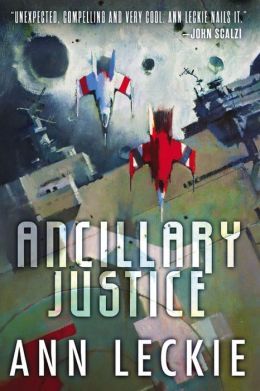
Ann Leckie: Ancillary Justice and Ancillary Sword. Such a great concept, such a wonderful character. I reviewed Justice on Goodreads here. Sword was simpler in structure and didn't have the big emotional reveal of Justice, so wasn't quite as mindblowing, but I was still compelled by Breq's story, I loved the writing, and I am anxiously awaiting Ancillary Mercy.

I think content is okay for teens, but it would take an experienced reader to get through Justice.

Jo Walton: Tooth and Claw. Because, Victorian novel-of-manners starring dragons. How could you not want to read it? The high-society family drama is compelling enough I would have enjoyed it even if they weren't all dragons, but Walton does such a good job of cross-breeding dragon biology, psychology and mythology with British class structure, she simultanously makes you believe completely in the dragons and brilliantly satirizes the British. I was gasping in admiration the whole time I read it. What an accomplished writer. Oh! And she's Canadian! (This makes #2 of 13 Canadian books this year.)

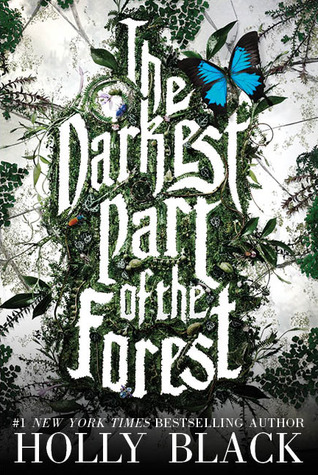
Holly Black: The Darkest Part of the Forest. I read this and enjoyed it, and then two months later when I noticed it on my TBR list, I had completely forgotten reading it. Not sure what that says. Once I jogged my memory I remembered liking the modern setting and the way the Forest and the fey world is integrated into it. I loved the character of Jack, the changeling, and I liked that the prince character's development wasn't predictable. I guess the verdict here is a good read but not as memorable as other Black stories (Coldest Girl in Coldtown still makes me shiver a bit when I think of it.)

Kind of sounds like it might be Middle-Grade, but it's definitely YA.

Rachel Neumeier: Pure Magic. Second book in her Black Dog series, which happily she has decided to continue publishing on her own even though the publisher of the first book went defunct. (I just hope she keeps her promise even though she has like five other books she's working on at the moment: this woman is seriously prolific! Not that I'm complaining; I'll read anything she writes. I just want to maintain a certain level of fan pressure so she knows we want book three of this series. Soon. Please?) Pure Magic is a thoroughly satisfying sequel. More of Natividad, Miguel and Alejandro, more Ezekial and Keziah, more threats to the Dimiloc black dogs, trying to maintain civility and order despite being seriously outnumbered. A great new character: Justin, who is completely new to all this magic and shapeshifting and isn't sure he wants anything to do with it. Everything I loved about Black Dog, lots of action, more character development, and plenty of scope for more story in this world. (Book three? Soon? Pretty please?) I will say I thought Black Dog was tighter; there were times in Pure when I rolled my eyes a bit and thought "we get it already, just get on with it." But I still loved it.

Lois McMaster Bujold: Penric's Demon. A novella that felt like a very long short story, set in the same world as Curse of Chalion, but different country and time period. Great character study. I enjoyed being back in the world, and I loved Penric. I thought the pacing was a bit odd: slow development and then rushed climax. When I got to the end I thought, "Oh, it's the end already?" One reader said he thought it felt like the first third of a novel, and I agree that it does feel like the setup part of her novels. But it's also a complete little arc unto itself, so if she never continues Penric's story, I won't feel cheated. It's like a little unexpected treat.

Coming soon: complete reviews of more books that I really loved:

Naomi Novik: Uprooted

N. K. Wilson: Dandelion Fire and The Chestnut King

Susan Juby: The Truth Comission

Eva Ibbotsen: The Dragonfly Pool


Friday, November 9, 2012

A Surplus of Sequels

I know I'm behind on my Canadian reviews, and I want to do another Marvelous Middle-Grade Monday, but on Tuesday two books came out that I've been waiting forever for, so I had to drop everything and read them! (So I may as well get a blog post out of them.)

Captain Vorpatril's Alliance is book 14 of Lois McMaster Bujold's Vorkosigan series (more accurately, Vorkosiverse, since not all of them star a Vorkosigan. Like this one, for example.) I've raved about Bujold already, so I'll just say that if you've read the other books you won't be disappointed in this one. But if you haven't read any don't start with this one--a lot of the humor and enjoyment comes from in-jokes and from finding out more about characters we already care about. Oh, Ivan! Have to say, the climax scene was incredibly funny.

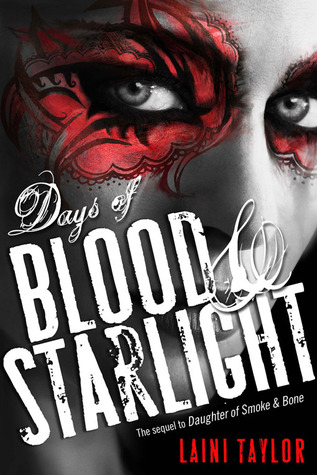
Days of Blood and Starlight is the insanely amazing sequel to Laini Taylor's Daughter of Smoke and Bone, and I can't begin to say enough about this author or this series. Except, Aauuuggghhh! It's a trilogy! (At least it wasn't as horrifically cliffhanger an ending as the first one was.) This book is brutal and bloody* and bleak, but it's so, so beautiful**. Morocco this time, and an abandoned kasbah. And lots more of Eretz. Seriously evil angels. Painfully good monsters. (And scary monsters and good angels, and conflicted both.) The first book was about love. This one is about war, vengeance, retribution. But Karou still means hope. Laini Taylor is a craftswoman of consummate skill, and her stories are both exquisitely written and grippingly page-turning. (Sigh. I will never, ever write as well as she does.) If you loved Daughter of Smoke and Bone you won't be disappointed in this one, though you may wish she hadn't taken it to such a dark place. Just be aware that it's much more violent than the first book. (Think Hunger Games and Chaos Walking, and it's a bit worse.)

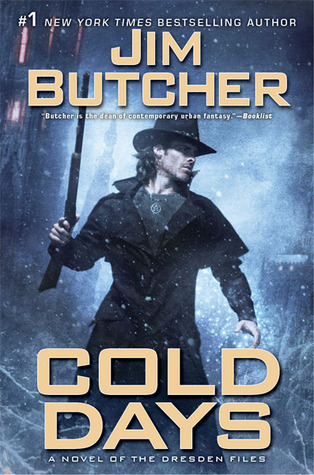
There are a few other sequels coming up to sabotage my attempts to be productive. Jim Butcher's latest Harry Dresden book is due on Nov 27: I'm eagerly awaiting what Dresden will do as the Winter Knight in service to Mab. I already have Orson Scott Card's Ruins, the sequel to Pathfinder, on my iPod, but I have to reread Pathfinder first, so I'm saving them both for a long plane trip I'm taking in a few weeks. And I have Terry Pratchett's latest, which I don't think is a Discworld novel, so doesn't count as a sequel, but I've been looking forward to it as well.


*Literally, in my case: I sliced my finger while chopping vegetables (a fairly regular occurrance, since we have sharp knives and I'm a klutz), and some blood was leaking out of the bandage, and I kept forgetting and putting that finger on the page. So there are authentic bloodstains in various places in my book.

**I really thought I'd gotten over that alliteration virus, sorry.

Sunday, April 10, 2011

A very long post about Lois McMaster Bujold

The short version: go read her books.

I spent a week skiing at Sun Peaks for Spring Break: a lot of enforced down-time, and I didn't bring enough books to read. (Oh, horror!) So I ended up rereading a lot of what was on my iPod. That includes the majority of the Vorkosigan series by Lois McMaster Bujold. I have to say, I love this woman! And I really love her character, Miles Vorkosigan. So, even though it's not YA*, I'm going to devote a post to convincing you to try some Bujold.

First off, you have to know the range of offerings in the Bujold canon. You could start with her most recent fantasy, a 4-book series set in an alternate world that feels American-frontier-ish: The Sharing Knife. It has unique bad guys, (malices that suck the life force from everything around them and gain power and intelligence depending on what life happens to be nearby), fascinating magic (malices can only be destroyed with knives made from the bones of Patrollers who willingly donate them), and a love story (a really good, realistic one).

Or, try her earlier fantasy--three independent books set in a land inspired by Spain in the 15th C. The Curse of Chalion is an amazing book; just reading the plot summary won't tell you nearly enough about it. The character of Cazaril is one of the most complex and most noble fictional people I've ever met. Then Paladin of Souls gives us another character who also seems nothing at first and then rises to unimaginable heights of love and self-sacrifice to save her world. (I think I'll reread those two next.)

The rest of her books are science fiction, perhaps best described as space opera. Character is where Bujold shines, and with Miles Vorkosigan, she has created a brilliantly unique character she can spin endless tales about, along with a wonderful universe in which he can get himself into all kinds of trouble. (The Bujold canon link lists all the Vorkosigan books in helpful chronological order.)

The first books in the Vorkosigan series, Shards of Honor and Barrayar (sometimes published together as Cordelia's Honor), tell the story of Miles' parents--they meet as enemies in the middle of an interplanetary war. (I recommended the books to my father and he emailed me back later: "You never told me it was a love story!")(I don't think he read far enough to get to the scene with the head in a shopping bag--I think that might have redeemed it for him.)

Miles Vorkosigan suffers from the results of the civil war that is the plot of Barrayar: *** very minor spoiler to Barrayar in yellow here***Crippled because his mother was exposed to a toxin during pregnancy, ***okay you're safe now*** he has physical and psychological burdens that would crush anyone else. But Miles is a genius, and he's manic, and he is bound and determined to prove that he is more capable than anyone else (and to live up to his father's towering reputation). So he gets himself into ridiculous situations that only genius and manic determination can get him out of, and in the process he saves the planet, or the wormhole nexus, or the emperor, or his father's honour, or all of the above. He drags/manipulates/coerces/
shanghai's a whole cast of characters--each with their own motivations and burdens--along on his schemes, and one and all they are transformed by the Miles effect into better, greater versions of themselves.
Miles: I may be completely off-base and panicking prematurely.
Ivan: I don't think so. I think you're panicking post-maturely. In fact, if you were panicking any later it would be practically posthumously. I've been panicking for days. 
Miles is staunchly loyal but has a problem with insubordination; overweeningly self-confident but convinced he will never live up to his grandfather's expectations; tactically ruthless but always painfully aware of the cost of his victories. Bujold apparently patterned the Vorkosigan series after C.S. Forester's Horatio Hornblower series (is that why she gave him such a ridiculous last name?), and Miles "Admiral Naismith" Lord Vorkosigan is a worthy successor to Hornblower. (I highly recommend the Hornblower books, by the way.)(And the movies: Ioan Gruffudd being noble. Yum.)

Some of the Vorkosigan books are written as straight-up comedy (In A Civil Campaign, Regency romance meets the Three Stooges, with butter bugs); others are considerably more serious (Memory brought me to tears), but they all have moments of both great humour and dramatic depth. Bujold doesn't do throwaway characters or plot for the sake of plot, nor are her settings ever stock sci-fi backgrounds: her stories are always the intersections of well-rounded people with well-developed societies/circumstances.  Her universe is huge and varied, with all kinds of intriguing societal variations. I would not call her work hard-core sci-fi, because technology is not the main character, (her science may not be rigorous, but it is plausible: no faster-than-light travel or transporters); but she definitely explores the effects of technology on societies and individuals, and, in the best sci-fi tradition, her future empires are extrapolated commentary on our current world.

Okay, now I sound like I'm writing a thesis on Bujold. Just ignore my babblings and go see what your library has. You could start the Vorkosigan series at a few different places, depending on how important it is for you to read things in the order they happened. Each book has a self-contained plot, and she's very good at giving you whatever info you need to understand the current book. Starting with Shards of Honour gives you everything in order; starting with Warrior's Apprentice introduces you to Miles. Komarr is another place to jump into things, particularly if you like romance; it's told from a new character's point of view, so it works as an intro to Miles.** Note that her plots are all like a roller coaster ride: she starts slow, as she introduces the characters and situation, and then when everything gets set in motion you just have to hang on for the ride!

*As far as appropriateness for a YA audience goes, I don't have a problem recommending most of her books. There is a fair bit of violence and some sex, none of it graphic, though some of the sexual options she mentions might be a tad eye-opening for a younger audience (there are genetically engineered hermaphrodites in her future, for example). The books I would hesitate before recommending are Shards of Honour and Mirror Dance: both have disturbing scenes of sexual torture--again, not graphic, but just the idea of it is disturbing.

**Just to confuse you further, all the Miles books are also available in various novel collections (all with "Miles" in the title). If your library doesn't seem to have the book you're looking for, make sure to check these. When in doubt, refer to the Bujold canon link.