Showing posts with label adventure. Show all posts

Tuesday, March 21, 2023

Isle of Blood and Stone, by Makiia Lucier

I picked this one up on a random library browse: I love it when I find an unexpected gem because a librarian set a book face out on the shelf.

Isle of Blood and Stone is about a slightly disreputable royal mapmaker, and that was all I needed to bring the book home! Elias is a great character: he's skilled with maps and navigation and loves his job, but he has no fear of the seedy side of town and doesn't care what anyone thinks of him. But he still tries to live up to the legacy of his father, who disappeared many years ago when two princes were kidnapped. A mystery arrives in the form of two maps with deliberate inaccuracies that are obviously clues—and the maps appear to be drawn by Elias's father. Elias and his childhood friends, who happen to be the young king and his cousin Mercedes, a girl with her own unusual skills, have to decide if they will follow the clues and dig up the truth about an old tragedy that might be best left buried.

The world-building is lovely: an island kingdom with a distinctly Mediterranean feel and the kind of fantastical elements you might find on an old map; sea serpents are a real danger here. I was immersed in the setting, but it was the characters and their relationships that drew me into the story. Eliot, Mercedes and King Ulises are navigating the way their friendship must change as they fill their adult roles in the kingdom, and the tensions and loyalties among them are nuanced and real. I loved watching their interactions. There are a fairly large number of supporting characters, all of whom felt rounded and rich, helping the world feel full and interesting. I particularly liked Elias's family, and Reyna, the girl who wants to be mapmaker but whose future is limited because she's a girl.

The mystery is interesting enough, with adventure and suspense, and the resolution is one of those it-was-obvious-all-along-but-we-just-didn't-see-it solutions that are so satisfying. I wasn't particularly convinced by the bad guys, but it didn't really matter, since their motivations aren't what I was concerned about. I like that the ending isn't all tied up in a bow for us, and that it is true to each character.

The companion novel, Song of the Abyss, is about Reyna when she grows up, and I can't wait to read it!

Sunday, March 27, 2022

Sherwood Smith's Phoenix Feather series solves The Protagonist Problem

 "The Protagonist Problem" is a great essay in Uncanny Magazine by Ada Palmer and Jo Walton, and I think you should read the whole thing, but here's the gist:

Jo Walton coined the word protagonismos in 2010 to mean “the kind of person stories happen to,” but I’m extending that meaning here. We tell a lot of stories in which one special person has the power to save the day, make the difference, solve the problem, and change everything. They might be superhero, a long-lost royal scion, the last of their race, a child of prophecy, or they might—like Frodo—be an everyman who has that special courage or other quality which saves the day. Protagonismos is the protagonist spark, that quality some characters possess which means the plot will not advance until our hero comes to lead the action, be it to victory or defeat.

The authors make the argument that while this kind of hero-centred story is great, it becomes a problem if that's the only kind of story we tell.

When some stories center protagonists, while others center teams, movements, families, etc., that teaches us that there are many ways a world can change, but when almost every story has protagonismos, it teaches us that all worlds work this way, and leads people to see the real world and real history as resting in the hands of real-world protagonists. This is harmful. It’s harmful when people see themselves as not protagonists, and differently harmful when people see themselves as protagonists.

Novels have become more and more protagonist-centred in recent decades, to the point that writing instruction often assumes protagonismos and considers it a flaw if a story lacks it (see writing advice like, "the plot has to be influenced by the protagonist; things can't just happen to her"). I had never thought about it before—and that's their point: we take it as a given, without examining the assumptions behind it. Like I said, read the whole essay; it's great.

I bring it up because I just finished the fourth (and final) book in Sherwood Smith's latest fantasy adventure series, The Phoenix Feather. Although it starts out seeming like a typical hero story (I described the first book as a martial arts hero origin story), it ends up with multiple POV characters, all of whom influence the outcome in essential ways. And it was very satisfying!


I absolutely loved that it's a story of a family—of more than one family, actually. It follows every member of the Afan family as they make their separate ways across an empire, always trying to protect each other no matter what other intrigue or danger or opportunity they are navigating. And in the meantime we get glimpses of the Imperial family—and the difference in the sibling bonds and parent-child relationships almost becomes heartbreaking, because we see genuine love and affection in both cases, even when twisted by ambition and fear.

I loved the conflict that is set up between the two families, and the way it plays out in long threads that tangle with each other and draw everyone inexorably together. I loved the braided nature of the narrative: following first one character, then another; hoping, fearing, knowing that their paths will intersect; watching the repercussions of each intersection ripple out and affect everyone else.

The Phoenix feather of the series title is an interesting plot device—an augur of greatness, it teases us over four books: to whom does this great fate belong? Who will fulfill the promised destiny? At different times you'll think you have it figured out, but you'll likely be wrong! In the meantime, you're rooting for all three Afan children, who pursue greatness in military, artistic and martial arts spheres, not to mention several other characters who befriend and help them and have great potential.

The setting is gorgeous; the magic is fun; the battles and spying and escapes and training montages and intrigue are everything you want from escapist fantasy: stressful enough to keep you engaged while never being in any doubt that everything will all work out somehow. I devoured all four books, and I can see myself rereading them frequently.

(The level of violence is almost middle-grade. It's not aimed at a young audience, but I think sophisticated younger readers would enjoy it. If you've read her earlier work, it's similar to the Inda series but less adult in theme and treatment.)

Monday, March 21, 2022

MMGM: The Barren Grounds, by David Alexander Robertson

I am a sucker for foster child/found family stories—don't know why; I just can't stand the thought of any child not feeling love and belonging. So The Barren Grounds drew me in right away when it introduced Morgan in her new foster family. They are trying so hard to welcome her and honour her aboriginal heritage, and she is rude and prickly because she can't let herself get hurt again. 

The most important relationship in the story is between Morgan and her younger foster brother Eli, whom she both sympathizes with and resents because he at least has memories of his family and his culture, whereas she was given away when she was a baby. Eli's skill at drawing is the magic that creates a portal in the attic, and Morgan has to go through the portal to find Eli and bring him home.

Found family, siblings and portal fantasies are all buttons for me, and the snowy icing on the cake was the wintery setting: in Winnipeg in the real world, and in the trapped-in-winter land of Aski. Robertson's depiction of a winter forest landscape rang very true and familiar to me. This is such a Canadian book! (I was only annoyed at Morgan not wearing enough clothes when she went through the portal: she would know how to dress better than that!)(At least she remembered her mitts.)

The homage to Narnia is genuine, and the integration of aboriginal mythology and values into a Lion Witch and Wardrobe retelling felt both fresh and satisfying. The environmental message (and the metaphor of colonialization) is clear but not, I think, too didactic.

The story itself is fast-paced and fun, a fairly simple adventure quest with enjoyable banter and realistic character development. I liked how Eli's and Morgan's different strengths were acknowledged, and I loved the bickering between Ochek and Arik. (I am embarrassed to be a Canadian who did not know there was such an animal as a fisher: kind of like a really large weasel. You would think I would have learned about them at some point!)

This is a strong beginning to a middle-grade fantasy series for any readers who like wilderness adventures and portal stories, and a book that should become a Canadian classic.

By Douglas H. Domedion - https://bloximages.chicago2.vip.townnews.com/niagara-gazette.com/content/tncms/assets/v3/editorial/1/dc/1dcd1294-0601-5f2d-85e8-70e12364647e/5e62c0efb7979.image.jpg, CC BY-SA 4.0, https://commons.wikimedia.org/w/index.php?curid=107662510


For more great Marvelous Middle Grade Monday reads, check out Greg Pattridge's blog, Always in the Middle


Thursday, January 27, 2022

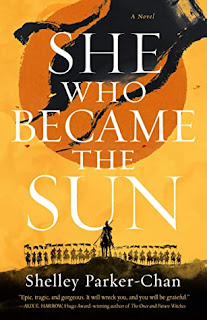
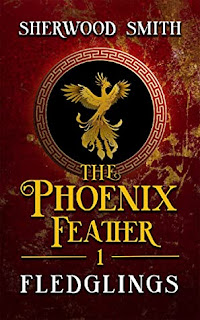
She Who Became the Sun and Phoenix Feather

I read these two novels back-to-back, and it was interesting to compare them, particularly since Iron Widow is still fairly fresh in my mind. All three have the Mulan trope at their heart: peasant girl (in Chinese-inspired world) disguises herself as her brother to go achieve goals in the wider world that involve fighting in battles, and she ends up kicking butt. Great trope! Three great novels with very different takes on it.

She Who Became the Sun, by Shelley Parker-Chan, is a historical fantasy based on the rise to power of the first Ming emperor—who was born a peasant, though was probably not actually a girl in disguise. (Though you never know!)

Fledglings is Book 1 of the Phoenix Feather series by Sherwood Smith, a secondary world fantasy based on the wuxia and xuanhuan traditions of Chinese novels: it follows three extraordinary children as they cultivate their talents and try to avoid the notice of an evil emperor.

Now, I'm going to stop my review right here and state that I am unashamedly biased in favour of the less realistic of these two premises. Because, much as I believe that it is possible to live by principles of justice and kindness, history generally doesn't. So, when I tell you that I enjoyed reading Fledglings more than SWBTS, it's entirely because I want my gentle, unrealistic world-view reinforced, and SWBTS is stuck with history. (Iron Widow is also stuck with history, but it has the advantage of giant fighting robots. Parker-Chan chose not to go that route, and I can't fault her for it, but I'm afraid she loses another few enjoyment points right there.)

Having said all that—She Who Became the Sun is a fabulous novel. We are drawn inexorably into a brutal world through the eyes of an unnamed, unvalued girl fighting for her life; we can't help but root for her as she uses her cleverness and her endurance to avoid starvation. Her decision to take on her brother's identity, Zhu Chongba, and with it his fate, is both terrifying and makes perfect sense. 

I loved the subtlety of the fantasy elements and the way Parker-Chan weaves them into her theme: there really is an external force of fate, and our two main characters take different approaches to their wrestle with its inevitability. Do we choose our destinies? Are the Heavens really watching? 

The writing is vivid with metaphor—I'm not going to say lyrical or poetic, and certainly not purple—Parker-Chan is utterly skilled at choosing the perfect metaphor to convey precisely what she means in every circumstance. (As opposed to those of us who rely too much on adverbs!)

I enjoyed Part I of the novel more, the coming-of-age and figuring out how to stay disguised as a boy part. But Part II starts getting really interesting when it introduces the eunuch general Ouyang, who ends up being Zhu's foil/nemesis character on the opposite side of the war. Parker-Chan kept me interested in all the complicated power dynamics at play by making all the players very real people with believable motivations. I am not a huge fan of revenge plots because I think revenge is dumb, but I was sucked into this one; I really felt for Ouyang.

[Slightly spoilery, except that the title spoils this, as does history!] There were parts of the latter half of the novel that reminded me of Macbeth: in many ways Zhu's rise to power is a tragedy ("I am in blood stepped in so far" is a speech that came to mind). Ambition is another motivation that I don't really get, but Zhu is so convincing; her every choice continued to make perfect sense, even as I wanted to close my eyes and not watch.

I don't know if I'm going to read the second novel. I know how it ends, and it's not with Zhu renouncing the world and achieving inner peace! But what I might do is read more of the history, and rewatch Empress Ki, and then read Parker-Chan's sequel with enough background to be fascinated by how she reimagines this pivotal moment in the history of China. Here's her explanation of the historical figures in the novel: it's quite fascinating!

Fledglings, on the other hand, is all about playing with fun story tropes: it's essentially the origin story of a martial arts hero, and it was just the immersive, familiar-feeling story I needed while I recuperated from whichever virus had me in its grip all week. Everything I love about Sherwood Smith's writing: excellent world-building details, great action scenes, wonderful character interactions. I particularly loved the depiction of the close-knit family, the parents trying to protect the children while the children chafe for the chance to pursue their identities. And of course off they go into the world, not quite the way they thought they would, and they still love and support one another, and it just gives me all the feels. A lighter version of Inda, very similar to A Stranger To Command. I've bought the second book and am going to start reading it now, so that's all I'll say about this one!

Sunday, June 20, 2021

The Legendary Inge, by Kate Stradling


This book was an unexpected gem! I bought the e-book because a gender-reversed, reluctant Beowulf is a premise good enough for 5 of my hard-earned dollars. I would have been happy if The Legendary Inge had followed through in any way on that premise, but what I got was so much more.

Inge herself is a delight. Dragged to the palace as a hero after sort of accidentally killing a terrible monster, she can't believe it when the king mistakes her for a boy and adopts her as his son. "Just roll with it," says her guard, "you can't go against the king, I'm sure everything will be resolved soon." Inge is a practical, common-sense peasant and her horrified bemusement is pretty enjoyable. Then she decides she'd better start asserting herself and we find out there's more to her than everyone thought.

Her guard, Raske, the Demon Scourge of the army, is also a delight. He's unflappable and smart and carries a sword named Mercy (which he is not embarrassed about, thank you very much). We get the measure of his character when he is sent to make sure Inge's younger siblings are going to be okay without her, and I won't spoil the scene that ensues. His reaction to all the siblings is priceless, and I was on Team Raske from that point on. 

Inge's six siblings are my favourite part of the book: each is an individual with a fully-developed personality, and I loved their interactions as a family.

I don't think there is a single character in the novel who is what he or she appears to be at first, and watching people reveal hidden depths is always satisfying. The plot is also surprisingly twisty (I could see most of the twists coming, but they were still fun). It was a fast, enjoyable read—reminded me a bit of T. Kingfisher's A Wizard's Guide to Defensive Baking. (Less finesse in the way everything came together, and Kingfisher is better with magic and overall weirdness (nothing can top sentient sourdough starter), but similar themes of ordinary people stepping up and turning out to be not-so-ordinary.)

A must read if you've ever read Beowulf* and want to poke a little fun at its heroic tropes. Or if you like heroines who care about who is going to keep the children clothed and fed (and stop the twins from pushing over the outhouse again). 

Warm biscuits with butter and honey. And maybe raspberries, because my garden is overflowing with them. Oh, heck, make it a berry shortcake (and now I want to make biscuits to go with my strawberries and raspberries, but I already bought strawberry and ginger yogurt gelato. The biscuits can be for breakfast!)


*I've actually read it in the original Old English, but that was more years ago than I care to reveal, and I don't remember a word of it. Except the opening: "Hwaet!" (And then, I think, "We in yeardagum," but that's as far as I go.)

Friday, April 23, 2021

Digger, by Ursula Vernon


I just finished making my way through all twelve volumes of Ursula Vernon's webcomic Digger, and what a glorious, mind-bending, hilarious ride that was! It's all available now for free online, so you can go become obsessed too!

You know already I'm a rabid Ursula Vernon/T.Kingfisher fan. Well, now I'm rabider. (The vampire squashes may have had something to do with it: you have to keep your eye on those.) I also have an addition to my list of favourite heroines*: she's a practical-as-nails engineer who doesn't truck with magic or gods or prophecies, she's a mean hand with a pickaxe, and she's a wombat.

Yup. A wombat. Do you even know what a wombat is? I had to look them up. They're adorable. Digger-of-Unnecessarily-Convoluted-Tunnels, however, would give you a Look if you called her adorable. (And possibly favour you with a pithy wombat curse: her curses are the best!)

The thing about this comic is that it apparently started on a whim, and Ursula thought it would last for a few panels and be done. She threw together a bunch of random stuff like wombats, the elephant-god Ganesh (or a statue of him, anyway), an exiled hyena, a baby shadow-thing that doesn't know what it is, other awesome creatures I don't want to spoil for you—and if it were only the random juxtaposition of weird things with clever dialog and delightful art, it would be wonderful. But she kept going, and somehow she gathered up all her threads of weird randomness and wove them into a narrative of heartbreaking, breathtaking wisdom about how to be a decent, compassionate being in a world that doesn't make sense.

And because it's Ursula Vernon, the humour is laugh out loud, snort your tea all over the screen funny, and the philosophy can sometimes explode your brain.

Also, this web-archive includes comments from fans that greatly enhance the reading experience, as they reference everything from Star Trek to Terry Pratchett to Lord of the Rings, and debate archeology and geology and mythology and everything else.

Definitely worth a week or two of your life (there are around 800 pages!). It won a Hugo, after all.

Ursula Vernon writes for children, but I would say Digger is more appropriate for her T. Kingfisher readers (that's her pseudonym when she writes for adults). Not because of anything particularly graphic**, but, well, here are a few pages and you can judge for yourself:


And if those few pages don't make you want to read Digger immediately, then it probably isn't for you, and I despair of you, my child, I really do!


*which is going to get a blog post, really, I promise!

** I mean, other than the fact that it's a graphic novel. Get it? Graphic ... never mind.

Wednesday, October 28, 2020

Bloom, by Kenneth Oppel

Kenneth Oppel has done it again. He has to be one of the most versatile writers out there: every book he writes is different from the last, and they are all solidly good to fantastic. Bloom is on the fantastic side of the scale. It's the most entertaining plant-based apocalypse since Little Shop of Horrors.

There has needed to be a book about invasive aliens ever since the gardening world decided that's what they should call introduced plant species that run rampant over native species and become impossible to eradicate. Oppel has obviously had to deal with invasive aliens, because he understands how terrifyingly inimical to human life they can be. I know from personal experience that Himalayan blackberries have an intelligent malice and are actively hostile; so is Scottish broom. In Eastern North America I think it's kudzu. Alien plant species taking over the planet is an entirely plausible scenario! 


I love that Oppel sets Bloom on Salt Spring Island, iconic home to the most down-to-earth, organic, genuine, eccentric collection of farmers and artists in Canada. It just makes the wrongness of the black spiky grass that appears everywhere overnight that much more offensive. (Side note: I read a review that thought the community's swift and organized response to the crisis was unrealistic, but it didn't read that way to me at all. That's kind of how we do things here.)(*Waves Canadian flag a little bit.*)

I liked the variation on the Special Chosen One that Oppel sets up for his three young protagonists, and their different reactions to it, and the reluctant friendship that develops among them because of it.

I love the way he uses allergies: I don't want to say anything spoilery, but I think he also has personal experience of how disabling they can be!

Kudos for all the present, supportive and intelligent parent figures—they're actually involved in solving the problem but there's a plausible reason why the three teen protagonists have a key role.

Bloom is not as creepy as Nest, which was quiet, slow-burn, seriously-mess-up-your-head horror. Bloom is fast and loud and full of peril that can be attacked with chainsaws. (I love that everyone on Salt Spring Island knows how to use a chainsaw!)

Great fun! Hmm. Need a fun vegetarian meal for my food analogy—is that a contradiction in terms?! Maybe veggie pizza! Yes, with those banana peppers to give it some spice. And now I'm going to listen to the Arrogant Worms Vegetable song.


Monday, April 24, 2017

MMGM: This list should keep my 13-year-old nephew busy all summer!

This started in response to my sister-in-law's request for book recommendations for her 12-year-old son last year, and I've been very (very) slowly fulfilling it, one post at a time. Sorry, Stacey, it's taken me so long to compile this, and this is by no means a complete list, but I think it's long enough now! Be sure to visit my previous posts, here, here and here, and check the comments for more recommendations.

Science Fiction

The Fog Diver, by Joel Ross. Earth is covered in a dangerous nanite fog, so people have to sail around in airships. There are pirates.
Mars Evacuees, by Sophia McDougall. Dangerous adventures on Mars with a hilariously useless robot companion.
Ender's Game, by Orson Scott Card. Classic military academy adventure.
Nomad and Ambassador, by William Alexander. Kid chosen to be ambassador to aliens (because adults just aren't open-minded enough.)

Adventure in non-modern (usually fantasy) settings

Airborn trilogy, by Kenneth Oppel. Straight up adventure with airships. Great series.
Leviathan trilogy, by Scott Westerfield. More adventure on airships, but these ones are whales. No, really, it's awesome.
Sabriel series, by Garth Nix. Really cool magic and necromancy. The Old Kingdom is one of the best created worlds out there.
Graceling trilogy, by Kristen Cashore. Kick-ass heroine who's even better at using her brain.
A Stranger to Command, by Sherwood Smith. Might be hard to find, but if you liked Ender's Game, this is similar (just not in space).
The Thief series, by Megan Whalen Turner. If you like tricky, unpredictable main characters, he's the best. (I don't know what happened to my copy of The Thief, but you can see sequels The Queen of Attolia and The King of Attolia in the photo.)
Jinx trilogy, by Sage Blackwood. Reluctant hero has to save enchanted forest; he's quite grumpy about it. Very fun.
The Floating Islands, by Rachel Neumeier. Flying people, what more do I need to say?

Dragons

Wings of Fire series, by Tui T. Sutherland. Magic, friendship, adventure, finding out what you're good at: Harry Potter except everyone's a dragon.
Dragonhaven, by Robin McKinley. Boy grows up in a natural reserve for dragons, rescues a baby dragon. Turns out dragons are very hard to raise.


Adventure (possibly fantastical) in modern settings

Submarine Outlaw series, by Phillip Roy. Canadian libraries might have this one. Kid builds his own submarine and sails around the world having adventures.
Heir series, by Cinda Williams Chima. For everyone who knows they're really a warrior/wizard/dragon/sorcerer at heart.
Inkheart trilogy, by Cornelia Funke. A classic for a reason: books come to life. Because they do.
100 Cupboards trilogy, by N. D Wilson.  Not just one door to another world, but 100.
The Grimm Legacy trilogy, by Polly Shulman. What if you could borrow fairy tale objects from a library?
The Chronus Chronicles, by Anne Ursu. Looking for more Greek mythology after Riordan? These are really well done, and funny, to boot.

Humour

The True Meaning of Smekday, by Adam Rex. Aliens invade and it's really, really funny.
Terry Pratchett. If you like witches, try the Wee Free Men series. If you loved The Borrowers, try the Bromeliad trilogy.
Skullduggery Pleasant, by Derek Landy. A wisecracking skeleton solves mysteries with a snarky 12-year old.

Intriguing mysteries (fantastical or not)

The Mysterious Benedict Society trilogy, by Trenton Lee Stewart. For geniuses only. (The Society, not the books.)
Any and all of Frances Hardinge's books. They're fantasy, but I'm putting them under mysteries because they all have a certain creepy mysteriousness about them.
Greenglass House, by Kate Milford. A bunch of strangers trapped by a blizzard in an old house with a history of smuggling.

Phew! Isn't it wonderful how many wonderful books there are? Please add more to my list in your comments!

For ongoing recommendations, every Monday you can go to Shannon Messenger's blog for Marvelous Middle-Grade Monday. Also Boys Rule Boys Read! is a great blog aimed at boys: always new books to find there.

Monday, September 19, 2016

MMGM: The Boy at the End of the World, by Greg Van Eekhout

This is an awesome middle-grade survival story with a snarky robot, a baby mammoth and the last boy on earth. It's imaginative, action-packed, thoughtful, and has a seriously creepy antagonist. There's just so much to love about this book.

The Boy at the End of the World uses a lot of post-apocalyptic tropes: we've totally screwed up the planet; the solutions we attempted to fix our screw ups just made things worse; we tried to at least preserve some of humanity by sealing them away underground; the legacy of genetic manipulation is seriously freaky and generally wants to kill you. Also, creating robots to protect humanity is never a good idea. (Have we not learned this lesson yet?)

The ideas are familiar, but Eekhout makes them fresh and fun with a likeable protagonist named Fisher (because that's the skill-set he got downloaded into him when he was awakened from cryogenic sleep)(possibly not the most useful skill-set he could have gotten) and the mostly clueless robot Click, who is his only help and companion. The plot is actually pretty dark and intense, since Fisher might be the only human left alive, and earth is now full of things that want to kill him, but the bantering and ultimately affectionate relationship between Fisher and Click, and Fisher's unflinching and sarcastic determination to survive, damn it! (I refuse to be killed by a parrot!) make it quite a warm, funny story. Also there's a baby mammoth, who poops a lot. (And becomes a dear character in his own right.)

It's a story with as many Awww moments as Yikes! moments, interspersed with lots of humour. It reminded me a lot of The Prince Who Fell From the Sky. Yes, there are some very obvious environmental messages, (plus the thing about the dangers of robots taking over the world, which, you know, bears repeating) but the true message is that what makes us human are the connections we make with others, and survival alone isn't survival at all.

Medium-rare steak lightly seasoned with garlic and pepper.

You'll find lots more middle-grade suggestions on Shannon Messenger's awesome blog, which hosts Marvellous Middle-Grade Monday every week!

Monday, August 24, 2015

MMGM: The Dragonfly Pool, by Eva Ibbotson


I've tried to deny it: I claim I'm as modern and ironic as the best of you. But the truth is I'm a Romantic. Not walking in the rain romantic, but Wordsworth, Beethoven, Rousseau, capital R Romantic. Nature as the greatest good (that would be Nature, not nature). Children as innocents who will naturally be kind and generous and noble, if they're only freed from the constraints of a rigid and corrupt society and given the right sort of education. Nobility, not of class but of soul, as something we can all achieve if we follow our heart and are free to express our true inner selves.

Now, I've encountered nature, and I've met the odd child (may have raised a few myself), and I know that this is purest fantasy. But oh, what a wonderful fantasy it is!

Eva Ibbotson does Romantic like nobody's business.

I loved The Dragonfly Pool. There may be readers out there who will be impatient with the unabashedly Romantic storyline. This is not a dark, gritty or realistic book in any way. There's a school where the children are free to do what they like and therefore have all kinds of meaningful, creative learning experiences and all treat each other with respect (apparently this was based on the school Ibbotson attended, so it's not as fantastical as it sounds). There is a small, happy central European country with a benevolent monarch (where does this fantasy come from?? I mean, has anyone ever been to central Europe?? or read history?) under threat from a repressive conquering neighbour (okay, there's historical precedent there)(the Nazis in this case) and treachery within. (No, it's not called Ruritania, but close.) There's a prince who needs rescuing from nasty Gestapo agents who are fairly easily foiled by a group of children, (and who then needs rescuing from his even nastier snobbish British relatives, because true evil is the shallowhearted selfishness of those who only care about their position in society).

I love this stuff. Eat it up with a spoon. Prisoner of Zenda, The Lost Prince (a lesser known book by Frances Hodgson Burnett). Diana Wynne Jones is more subtle about it, but she plays with these tropes too.

Above all else, I love Ibbotson because she makes you care about her characters. Tally, who is fiercely determined to solve other people's problems. Kit, who just wants to play cricket at a normal school. Karil, who desperately wants to trust in friendship but can't. She grounds her characters and action in specific, resonant details that completely pull you in and make you root for the marvellously satisfying conclusion.

The Dragonfly Pool isn't my favourite Ibbotson; it's no Journey to the River Sea. But if you like her writing style, if you want an adventure story about friendship triumphing against all odds, (and if you secretly yearn with all your heart for Truth, Beauty and other capitalized virtues, even if you could never admit it online), then you'll enjoy this one as much as I did.

Chocolate Banana-bread Bread Pudding. Make a loaf of chocolate-chip banana bread. (Actually, make two.) With the stale leftovers (because you made two loaves), make bread pudding. Throw in a few extra chunks of dark chocolate for good measure. Decadent, creamy, comforting, sweet.

More Marvelous Middle-Grade books can be found every Monday on Shannon Messenger's marvelous blog.

Monday, December 8, 2014

MMGM: Whales on Stilts! by M. T. Anderson

I've seen this book several times at the library and almost taken it out, but then put it back because I thought it might be dumb. Then I noticed that one of its sequels was a Kirkus pick for 2014, and I thought maybe I should give the series a try. Well, Whales on Stilts is definitely as silly as it sounds, but it's also smart and funny and, in the end, quite heartfelt.

Anderson obviously has a lot of affection for the type of dime-store serial adventure story he spoofs in M. T. Anderson's Thrilling Tales. Absurdly ridiculous plots, unbelievably competent heroes/heroines, bombastic villains with their evil lairs and plans for taking over the world. (Sounds a lot like James Bond, actually!) Anderson stretches all the incredulity way past its breaking point (I mean, whales on stilts?) and plays it all with a perfectly straight face.

Contender for best opening line ever (and then the second line just tops it off):

On Career Day Lily visited her dad's work with him and discovered he worked for a mad scientist who wanted to rule the earth through destruction and desolation. 
Up until then life hadn't been very interesting for Lily.
Lily makes this book for me. "Most people didn't know that Lily herself was interesting." She has two very interesting friends, Katie Mulligan, real-life star of the Horror Hollow books, and Jasper Dash, Boy Technonaut, but it's Lily who's the heroine of this tale. Quiet, observant Lily is the one who notices there's something fishy about her dad's boss, with his blue, rubbery hands and the bag over his head. And after all of Jasper's inventions and Katie's helpful ideas, it's Lily who figures out how to stop his evil plan for world domination.

I love the completely oblivious adults. There's some satire of corporate culture with Lily's dad and his co-worker Ray, so caught up in minutiae that they miss the blatantly obvious:
"We're a little bit behind schedule. But you know, sometimes it almost makes me curious—why all of the giant, destructive lasers? And why all of the maps of North America?"
"Yeah. Sure. I guess. Oh, Ray, have you seen the memo about the meeting with Paul?"
(Reminds me of the sitcom Better off Ted. Used to be on Netflix. Really weird humour, very pointed satire.)

I was impressed at Anderson's deft handling of tone. Yes, a lot of the humour is over-the-top, but there are subtler layers, and when it comes to Lily's character the writing can be downright lyrical. And don't skip the footnotes or the "Guide to Reading and Thinking" at the end; they're delightful.

I'll be returning to the library to pick up The Clue of the Linoleum Lederhosen, book 2 in the series that will become Pals in Peril!

Salty, buttery popcorn, you can never get enough of it.

It's been a while since I've contributed to Marvelous Middle-Grade Monday, but every Monday there are always a gang of folks with great recommendations on Shannon Messenger's blog.


Monday, February 20, 2012

Canadian Book Week: Philip Roy's Submarine Outlaw series

I haven't forgotten about Canadian books! I review them regularly for CM Magazine (a very useful reference if you're looking for Canadian children's books), and occasionally the books they send me get me very excited. That's the case with the Submarine Outlaw books. I was first sent River Odyssey, the third book in the series, and I just finished Ghosts of the Pacific, the fourth book, and now I want to get the first two books, because these are great stories! They might be difficult to find; I'm not even sure they're available in the States, but they're worth searching out, particularly if you're looking for books for boys.


The Submarine Outlaw series has an original and appealing central concept: young Alfred pilots his unregistered submarine wherever he likes, with a seagull for a first mate and a dog for a second. He gets into trouble because he can’t resist rescuing people (and animals) and so is always barely evading capture by the authorities, who will take his submarine away from him. Thus Alfred is firmly a good guy and yet still an outlaw—an irresistible combination!

In River Odyssey, the third book of the series, Alfred is given a quest by his spiritual mentor: he needs to find the father who abandoned him as a baby. Unwillingly he puts off his planned journey to the Pacific and instead journeys from Newfoundland up the St Lawrence River to Montreal. Along the way he finds people to rescue and dangers (including police) to evade.


In Ghosts of the Pacific, Alfred sails from Newfoundland through the Northwest Passage to the Pacific Ocean. He encounters polar bears and gets trapped in the ice. In the Pacific he gets shot at by a shrimp trawler when he cuts their net to release trapped turtles and dolphins. He rides out a storm, meets a floating circus and sails into a sea of plastic garbage the size of Texas. He visits the Bikini Atoll and dives to see the ships sunk by nuclear testing. Then he ends up on the island of Saipan, where he hides in an underwater cave during a typhoon and discovers the skeletons of Japanese soldiers. Alfred considers an offer to join the circus, but decides he’s not finished sailing alone yet. There will be a sequel!


I think these would be great books for reluctant readers. The language is clear and simple, the plot is full of exciting episodes--and come on: submarines! I usually veer towards fantasy (you may have noticed!), but I found these books completely engaging. Plus I learned stuff!