Showing posts with label mythology. Show all posts

Sunday, February 26, 2023

MMGM: Fenris and Mott, by Greg Van Eekhout, and Freddie vs the Family Curse, by Tracy Badua

Here are another couple of books from the Cybils Middle-grade Spec Fic shortlist that I can highly recommend. 

Fenris & Mott is a funny and thought-provoking take on the Norse idea of Ragnarok.

What if Fenris, the wolf in Norse mythology who will consume the world during Ragnarok, was discovered as a little starving wolf-pup in a back-alley in California?

Mott is the highly-engaging character who finds Fenris and really, really wants to adopt him, even though she knows she can't. She vows to keep him safe, despite the mundane and mythical obstacles that spring up at every turn. Various characters from Norse mythology show up, either wanting to kill Fenris to prevent Ragnarok, or set him free to begin it. But Mott cares about Fenris himself. Her single-minded devotion forges a path through the middle of all the prophecies: is it possible to save Fenris and save the world, too? The combination of Mott's compassion, integrity and wry humour with Fenris's adorable puppy nature is irresistible. And Van Eekhout throws in some pointed metaphors about climate change and human shortsightedness as the vehicles for the end of the world, with the empowering message that kids still have a choice and can make a difference.

Freddie vs the Family Curse is a very funny and relatable story about a boy whose notorious bad luck and clumsiness aren't his fault: he's been cursed!

If anything can go wrong for Freddie, it definitely will, leading to all sorts of slapstick and embarrassing scenarios. Freddie isn't a victim, however, and he has a staunch supporter in his cousin, who at least understands about the family curse. When Freddie discovers an amulet inhabited by the spirit of his great-uncle, he learns the origin of the curse and how to break it. This leads to more shenanigans, including a road-trip to a break-dancing competition—nothing could possibly go wrong with that!  All along Freddie is a character with a great deal of agency and cleverness in dealing with his problems.

The best part about this book is Freddie's family and the rich representation of Filipino culture. I loved that everyone in the family has a different attitude toward the idea of the curse, and toward religion and superstition in general. I loved how everyone cares deeply about each other but that doesn't prevent conflict and frustration. Freddie's great-grandmother is a wonderful character, and the glimpses we get into Filipino history are rewarding.

Monday, February 20, 2023

MMGM: Children of the Quicksands, by Efua Tratore

A Middle-Grade Spec Fic finalist for the Cybils, Children of the Quicksands was one of my top choices for winner. (Here is my review of The Mirrorwood, the one we picked.)

We begin in Lagos, Nigeria, with the common middle-grade trope of the city child being sent to stay with a relative in the country. And of course there's going to be something mysterious going on in the forest behind grandmother's cottage. But this isn't Kansas, and these are not the European folk tales we've seen so much of! 

Simi is such a likeable protagonist, and she drew me right into her voice and her world. I loved being immersed in modern-day Nigeria, and then I loved being taken with Simi into a country village, where we gradually learn about her grandmother's Yoruba religion and the mythic dangers hidden in the forest. 

The magical and the real are integrated seamlessly; I loved that this is a story set firmly in the "real" world, and the world under the quicksands that Simi falls into is just one more part of reality. I loved that this is a story about families, about relationships, healing and forgiveness, whether it's within mortal families or relationships between gods.

Every character is rich and rounded; there is convincing conflict without anyone being a villain. I loved how the interplay between religion and politics was represented—simply enough for a middle-grade audience, but nuanced. There are all sorts of interesting themes going on, but the story never bogged down, never faltered from its clear arc of Simi discovering her heritage and reuniting her family.

Have I mentioned how much I love Simi? And her grandmother, and Jay, the son of the chief, who insists on becoming Simi's friend. Lots of humour and very relatable situations.

The writing is excellent, the descriptions vivid, the dialog easy to hear—and I loved the incorporation of Yoruba language into the text (with a helpful glossary).

I can't claim to have eaten authentic Nigerian food, but I am now looking up Nigerian restaurants in Vancouver, and I shall correct that lack with all due haste. I do love peanut soup, which is at least West African in origin—maybe that's what I'll have for dinner tonight!


Marvelous Middle-Grade Monday is hosted by Greg Pattrige at Always in the Middle, and is always an excellent source of middle-grade recommendations.


Monday, August 30, 2021

MMGM: The Serpent's Secret, by Sayantani DasGupta

The Serpent's Secret is a fun, colorful middle-grade fantasy similar to the Rick Riordon Presents series, with fascinating mythology, a grumpy heroine and rather a lot of demon snot! 

I've really appreciated the growing number of #OwnVoices fantasies based on non-European folktales, mythologies and histories. It's great that publishers have finally woken up to the fact that kids need to see themselves and their cultures represented in the books they read. It's good for all of our brains to be exposed to different cultures and new ideas. And as a purely selfish reader, it means there are that many more interesting stories I have access to!

DasGupta has a great afterword in which she explains the various sources of her material: everything from Bengali folk tales to a beloved poet to the works of Einstein. The world she creates out of all this is fascinating: an interdimensional fun house of different lands populated by princes and monsters and stars (not to mention annoying talking birds). 

Our heroine, however, is from New Jersey. Kiran doesn't believe in any of the stories her parents tell her, and she definitely doesn't believe that she's a princess. I thought her reaction to a slavering rakkhosh destroying her home and two princes on winged horses showing up to rescue her was realistic and age-appropriate: she's seriously pissed off! Sarcastic and uncommunicative prince Neel doesn't help matters, and the two bicker their way through the Kingdom Beyond Seven Oceans and Thirteen Rivers trying to save Kiran's parents from a black hole and Neel's brother from a Demon Queen's curse.

I liked that there wasn't a single Big Bad to defeat: there are puzzles and riddles and monsters to battle, but the monsters had their own reasons for existing, and both Kiran and Neel have to face monstrous sides of their own natures. Blending mythology with astrophysics was ambitious and a little mind-bending—I didn't think it always worked, but I liked the dimension it added to the story (get it: dimension?).

I often get tired of the gross monsters that appeal to middle-grade readers, but this story had enough going on to keep my interest, and the rakkhosh were actually pretty funny. I cared about the characters and I believed in the awkward friendship between Kiran and Neel. There are two more books in the series, and I'm interested enough in the unique cosmology DasGupta has created and curious enough about what Kiran's going to do next that I will seek them out.

I'd really like to try Bengali food. I think this story resembles a typical Bengali meal, which (according to a quick google search) looks like it's presented very similarly to food I had in Nepal: different curried and fried vegetables and fish with a few chutneys and sauces arranged around plain rice. Many different flavours to cover the whole palate. (I really want to go back to India and eat!)


By Sarmistha Bera - Own work, CC BY-SA 4.0, https://commons.wikimedia.org/w/index.php?curid=40900761

For more great middle-gread reads, every Monday visit Greg Pattridge's Always in the Middle for Marvelous Middle-Grade Monday.

Monday, August 23, 2021

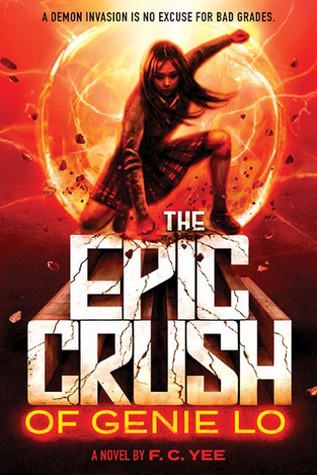
The Iron Will of Genie Lo, by F. C. Yee

I was really excited about The Iron Will of Genie Lo, and I wasn't disappointed. It's every bit as good as The Epic Crush of Genie Lo, and my one disappointment is that it appears to conclude the series—I would have read a lot more adventures of Genie and Quentin! (Though Yee might have decided there was no way he could top the stakes of this one, and I respect walking away from the mike drop!)

The Monkey King is a great trickster character from Chinese mythology, and Yee has so much fun with him and his partner in mayhem, over-achieving California high-school student Genie Lo. I loved Genie's character: she's flawed, she recognizes her flaws, she's trying to do the right thing, and she gets so relateably exasperated with herself, and with everyone else who makes it so hard to figure out what the right thing is. There's enough character development that I would read a book just about Genie trying to figure out college choices and her relationship with her parents and how to communicate with her boyfriend. Throw in demons and a bunch of Chinese gods being petty and manipulative, and Genie doing her best to fulfil a divine mandate while still getting good grades and protecting her best friend Yunie from all the supernatural stuff going down—so much fun! And I cared so much about all of them.

Everyone from the Goddess of Mercy to the ant leader of the demon horde to Yunie's hilariously true-to-life cousin at college was an interesting character that I wanted to know more about. Yee has a way of summing up people and situations in unexpected but perfect metaphors:

How was I supposed to keep my life options open if I didn’t at least double major? The concept was rationally appealing but still unpalatable, like cilantro.

... a wizened, disproportionately deep voice. He could have narrated a nature documentary about himself.

The writing is just really, really funny—sometimes quite sly, always very perceptive. 

it looked like we were having a funny, lighthearted conversation, like women in stock photos. All we needed were some salads.

There are a lot of similarities between this book and Victories Greater Than Death, which I ended up getting bored with and not finishing: colorful, larger-than-life characters, lots of crazy action in imaginative settings, juxtaposition of normal teen-age angst with save-the-universe stakes. So why did Iron Will work for me where Victories fell flat? I think it's in how much Yee respects both his material and his audience. I didn't get the sense that Anders believed in her aliens; they felt more like props to make the story more exciting, and the story was there so that her teen characters could Learn Something. Yee's gods and monsters were every bit as over-the-top weird, but they felt real to me. And Genie wasn't there to learn a lesson: she was there to kick butt and yell at people to stop being stupid. That she figures out how to be true to herself and still live up to everyone's expectations (including her own) is an inevitable result of her character intersecting the story.

The ending felt a bit rushed to me: this could totally have been a trilogy, and I have to respect that Yee didn't drag the story out on purpose to make it three books, but I would have happily read a third one! (Have I hinted strongly enough that I want another book? What about a novella? I'd be happy with a short story: pretty please with a cherry on top?)

Steamed BBQ pork buns, the kind you get at dim sum. Actually, this book is dim sum: so many different delicious things coming around on carts! You might not recognize many of them if this isn't your cultural background, but you'll want to try them all. And it's really sad that there's no way you have room to eat one of everything!

Friday, April 23, 2021

Digger, by Ursula Vernon


I just finished making my way through all twelve volumes of Ursula Vernon's webcomic Digger, and what a glorious, mind-bending, hilarious ride that was! It's all available now for free online, so you can go become obsessed too!

You know already I'm a rabid Ursula Vernon/T.Kingfisher fan. Well, now I'm rabider. (The vampire squashes may have had something to do with it: you have to keep your eye on those.) I also have an addition to my list of favourite heroines*: she's a practical-as-nails engineer who doesn't truck with magic or gods or prophecies, she's a mean hand with a pickaxe, and she's a wombat.

Yup. A wombat. Do you even know what a wombat is? I had to look them up. They're adorable. Digger-of-Unnecessarily-Convoluted-Tunnels, however, would give you a Look if you called her adorable. (And possibly favour you with a pithy wombat curse: her curses are the best!)

The thing about this comic is that it apparently started on a whim, and Ursula thought it would last for a few panels and be done. She threw together a bunch of random stuff like wombats, the elephant-god Ganesh (or a statue of him, anyway), an exiled hyena, a baby shadow-thing that doesn't know what it is, other awesome creatures I don't want to spoil for you—and if it were only the random juxtaposition of weird things with clever dialog and delightful art, it would be wonderful. But she kept going, and somehow she gathered up all her threads of weird randomness and wove them into a narrative of heartbreaking, breathtaking wisdom about how to be a decent, compassionate being in a world that doesn't make sense.

And because it's Ursula Vernon, the humour is laugh out loud, snort your tea all over the screen funny, and the philosophy can sometimes explode your brain.

Also, this web-archive includes comments from fans that greatly enhance the reading experience, as they reference everything from Star Trek to Terry Pratchett to Lord of the Rings, and debate archeology and geology and mythology and everything else.

Definitely worth a week or two of your life (there are around 800 pages!). It won a Hugo, after all.

Ursula Vernon writes for children, but I would say Digger is more appropriate for her T. Kingfisher readers (that's her pseudonym when she writes for adults). Not because of anything particularly graphic**, but, well, here are a few pages and you can judge for yourself:


And if those few pages don't make you want to read Digger immediately, then it probably isn't for you, and I despair of you, my child, I really do!


*which is going to get a blog post, really, I promise!

** I mean, other than the fact that it's a graphic novel. Get it? Graphic ... never mind.

Friday, August 16, 2019

Gods of Jade and Shadow, by Silvia Moreno-Garcia


I don't blog much in the summer anyway, but this year I've been in quite the reading funk and haven't had anything to say about books for a while. It happens, I guess. Sometimes life gets in the way of reading.

But when my friend's book came out I had to read it, of course. And if you need a book to get you out of a slump, have I got a book for you!

Gods of Jade and ShadowGods of Jade and Shadow has to be the sweetest dark fantasy about homicidal death gods ever written! If Jazz Age meets Mayan death god sounds intriguing, I can promise you won't be disappointed: you get Mayan mythology and 1920's Mexico in equally vivid realism. The intersection of Xibalba, the Mayan underworld, with a Mexico on the verge of change is convincing, terrifying, and so much fun. Witches and demons lurk in strange mansions and the streets of Carnival; fancy new hotels can be portals to hell.

The protagonist leading you through both worlds is a clear-headed, no-nonsense dreamer with a temper that gets her in trouble and a dry, self-depreciating wit that gets her through it. Casiopea is named after a Greek myth and knows her stories, and when she accidentally resurrects a death god she takes it all in stride—after all, he's going to get her out of her grandfather's house and the drab town that "scorch[es] out dreams." And maybe, if she survives the vengeful spirits and the Black Roads of Xibalba and her ever-awful cousin Martín, she might get a chance to realize one or two of her own carefully hoarded dreams.

Hun-Kamé, Lord of Shadows and rightful ruler of Xibalba, is an equally delightful travel companion. Arrogant and careless as any god when we first meet him, he becomes more and more human as he journeys with Casiopea (due to a particularly well-done mythical plot twist). Casiopea's relationship with Hun-Kamé is the fascinating, piquant heart of the story: she fears him, stands up to him anyway, serves him, refuses to put up with his crap, chooses to stick with him, and comes to have compassion for him. The impossible romance that blooms ever-so-tentatively between them is entirely believable and beautifully bittersweet.

The writing is lovely and often quite funny. Hun-Kamé is prone to grave utterances that the other characters refuse to take seriously.
"Death enters all dwellings."
"Death has no manners."
But then sometimes he ends up being quite profound.
"Death speaks all languages."
"But I am not death."
"You wear me like a jewel upon your finger, Casiopea."
The plot has the pleasing inevitability of a folktale but the satisfaction of watching characters with agency change their world. "'Very well,'" says Casiopea at the beginning, "and with these two words she accepted her fate, horrid or wonderful as it might be." By the end of her Odyssey, she is defying gods and monsters (and the ever-awful Martín)(but even he gets some compassion, because Casiopea is just that awesome) and it turns out the fate of the world is in her hands. "'I wish you were a coward instead of a hero,'" says Hun-Kamé. But we've known from the start that Casiopea is no coward. Her triumph at the end is earned and fitting. I particularly enjoyed the form her happily-ever-after took!

If you're bored with endlessly replicated fantasy settings, annoyed with heroines whose one characteristic is spunky or kick-ass, have had it up to here with insta-love and angst—this is the book to cleanse your palate and renew your faith in speculative fiction.

Home-made corn tortillas with carnitas, queso fresco and a really spicy pico de gallo. Also a salsa made from blackened habaneros that will scorch your tongue off.

And here's some of what I've been doing instead of reading this summer:


Cross-posted on Goodreads (without the hiking photos!).

Tuesday, February 6, 2018

The Epic Crush of Genie Lo, by F. C. Lee

Coincidentally, I recently started watching a Korean drama and then picked up a library book that both involve a version of the Chinese mythical character the Monkey King. Turns out he is an awesomely fun character to play with, and both the drama (which is halfway through its airing) and the book are hugely entertaining.

I had vaguely heard of the Monkey King before this, but I boned up a little on my Chinese literary history and learned about the 16th C novel, Journey to the West, in which a monk goes on a quest to find sacred manuscripts with the help of three supernatural protectors. The Monkey King is a trickster god; he made a ruckus in heaven and was buried under a mountain for 500 years in punishment, and now he is tasked to help the monk on his journey by protecting him from various monsters and demons. He's ridiculously powerful and not at all trustworthy!

In The Epic Crush of Genie Lo, ohhhhhhh, I want to tell you how The Monkey King shows up in a boring California suburb, but I can't possibly spoil that scene for you, so mmmmblfarg. Aaaannnnnnyway, although he's an important character, the story is really about Genie, and she is a supremely awesome heroine. Demons start showing up all over (in the frozen yogurt place: I mean, come on, that's not fair!) and she has to decide whether to unlock the ancient powers she apparently possesses and save the world. Or, you know, stay normal and get into an Ivy League college. Or try to do both and fit in a little romance on the side. Yes, there are nods to Buffy; there's also a fair bit of spoofing a lot of YA tropes (the gorgeous new transfer student who appears irresistibly attracted to the heroine for no good reason, for example). (I loved the way Genie reacted to him!)

This book is really, really funny. Genie punches lots of demons and has awkward conversations with her mother and gets terribly annoyed at the Monkey King character, and it's pretty much a hoot from start to finish. But it's also got great themes about being true to yourself and discovering your inner strength (because of course those are the themes when a girl discovers she's the reincarnation of mmmblfarg not going to tell you because it's a pretty awesome reveal, even if you're not familiar with the legend).

Remember Pop Rocks (is that what they were called?), those ridiculous candies that popped on your tongue (rather painfully, if I recall). This book reminded me of those: sweet and hilarious and unexpected. With lots of punching.

The Korean drama, if you're interested, is called Hwayugi, and is also very funny, with a romance that I didn't think was going to work at all but is managing to capture me. I'm loving all the plot twists that are possible when you have a bunch of genuinely amoral supernatural characters. (No one can trust anyone!) (But then they start caring about each other, and you're like "awwww, that's so sweet. He'll probably stab you in the back later, but awww!") The best character of all is the zombie girl—serious props to the actress for being utterly convincing. It's not done yet, but I think I'll end up highly recommending this one.

Tuesday, March 22, 2016

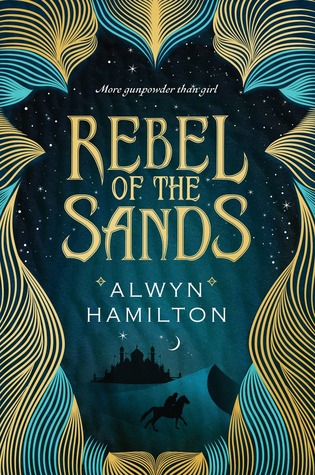
Rebel of the Sands, by Alwyn Hamilton

When I read the blurb for Rebel of the Sands, I confess I was a bit dubious: Hamilton takes the Wild West—a popular setting these days—and plops it down in the Middle-East, to come up with a fantasy land somewhere between Arabia and the American frontier. But she really makes it work. 

Miraji is mostly Arabian: a country ruled by a Sultan where Djinn still walk the earth (occasionally falling in love with mortal women, of course) and camel caravans cross shifting sands. But there are trains and mining towns that sound awfully Western, and some of the human-eating ghouls in the shadows are Skinwalkers. I think what I love about the setting is that Hamilton draws from all kinds of sources to come up with something that has familiar resonances but feels entirely original. 

The heroine, Amani, is a gun-toting hellion who leaves everything behind to gallop off on a magic horse with a rakish foreigner. She's impulsive, ruthless, not a little bit selfish—but I was rooting for her. She doesn't know it, but she's on a journey to find something larger than herself to believe in, and I was with her every step of the way.

It helped that I was entirely in love with Jin. I think Amani and Jin are going to be on top ten lists of great couples: the sparks certainly fly between them! Jin is mysterious, conflicted, has a hidden agenda, can't seem to keep away from Amani–plus he's got awesome cheekbones and a great smile, so, yeah. I'd follow him across a desert.

Not much happens with the magic at first—though there's plenty of action—, but once we meet the magical beings they're very cool. I loved the different powers and limitations everyone had; it was all very evocative and colorful. There's a Rebel Prince, a nasty army commander (who is actually the Rebel Prince's brother), plots and counter plots. Things really start getting interesting at the end, and I'm quite excited to see where the sequel goes.

Reminded me a bit of The Blue Sword and Graceling. Spicy lamb tagine served over couscous.

I was impressed with the writing in this debut novel. Alwyn Hamilton might live in London, but she was born in Toronto, so I'm claiming her as Canadian! I'm now over my goal of 13 Canadian books reviewed between July 1 and June 30: this makes number 14.

For more Canadian choices, you can always check out John Mutford's blog.


Sunday, November 15, 2015

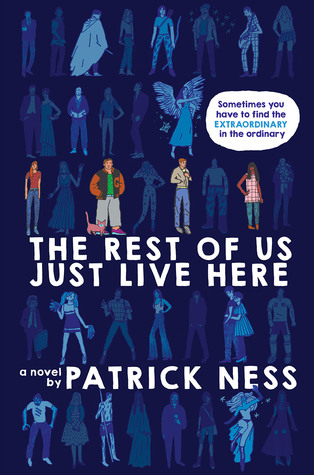
The Rest of Us Just Live Here and Bone Gap

I have to face the facts: I am never going to be able to read all of this year's Cybils nominees. And even if I could, I'd never have time to review them all! So you'll just have to follow the Cybils blog and all the other Cybils judges* to get highlights about all the awesome books I'll never get around to. I'll just review as many as I can, sometimes with shorter reviews so I can fit them all in. Here are a couple from the YA Spec Fic list that I was thrilled to find at my library.

I was so excited to read this new one by Patrick Ness, that I almost forgot what Patrick Ness books are like: they're devastating.

I got sucked into reading The Rest of Us Just Live Here by the fun premise and the engaging characters and . . . fortunately for my state of mind this one isn't quite as soul-wrenching and brain-exploding as some of his past books have been. *cough*Chaos Walking*cough*

But, The Rest of Us Just Live Here has its share of deep insights into relationships, human choices/free will/destiny, self-knowledge, trust. You know, all the big stuff. The reasons we read YA.

Plus awesome characters: Mikey and his sisters who take care of each other because their parents are so messed up; Mikey's best friend Jared (Jared is so awesome I love Jared but no spoilers so I can't tell you why!); Henna, the girl Mikey loves who thinks she loves someone else but isn't sure. And they're all just trying to navigate the last year of high school and figure out what to do with their lives, while in the background the indie kids battle the latest supernatural menace.

I love the chapter headings ("Chapter the Fifth, in which indie kid Kerouac opens the Gate of the Immortals, allowing the Royal Family and its Court a fissure through which to temporarily enter this world; then Kerouac discovers that the Messenger lied to him; he dies, alone"), and the way the indie kids' story starts out seeming completely irrelevant, but then gradually starts to impact Mikey and his friends, but the real drama and excitement is still friendship and love and saying what you feel and trusting your friends. It's spoofy and funny and heartwarming and just very, very real. (And a tiny bit devastating, but in a good way.)

Apple cake, moist and dense, the kind your grandma used to make, but with a bit of ginger and cardamom along with the cinnamon in the streusel topping. (Your grandma didn't use a streusel topping? Everything should have a streusel topping. Especially apple cake.)

Bone Gap, by Laura Ruby, is a weird, wonderful book. Seriously weird. It's not a book you can come into with any expectations, particularly genre expectations, because it isn't like anything else. People are calling it magic realism, but it's not quite that. There's mythology of different kinds woven through it, (what is it about cornfields??) but it's not exactly retelling a myth. Except that it's about myths, and how the stories we tell ourselves and each other matter; the stories that we believe matter and we can change them.

I loved the writing and the characters, but about halfway through I was starting to get worried. There were some disturbing stories being told, and I was afraid that maybe Laura Ruby has a big chip on her shoulder about the way men and women interact with one another and this book is her way of disturbing us into realizing how wrong things are. Yes, men can be nasty and ignorant and treat women as objects, and people do judge and label women in unfair, hurtful ways. I was afraid that was going to be the message of the book, and I wasn't sure I wanted to keep reading.

I should have trusted Ruby. She knows what she's doing. Bone Gap is a story about stories, and you can't change the stories other people tell but you can change your own story. And you can save yourself, and you can save other people, too.  I loved Finn and Rosa and Petey, each with their strengths and hurts and different kinds of courage.

There were some seriously creepy scenes, and some wonderfully magical ones, and the most magical scenes were maybe the most realistic ones, because what is more magical than people choosing to trust each other?

I don't know if I would have tried this one just based on its blurb: just read it, it's the only way to know if you'll like it!

Sweet potato pie. (Unless sweet potato pie is your familiar comfort food, in which case choose a pie that isn't familiar but if you tried it you'd probably like it.)

*I hope this link takes you to the right page of the blog, but if not, the judges are announced in blog entries in late September, so just keep navigating through to find them.

Tuesday, October 16, 2012

The Scorpio Races and Grave Mercy

Carnivorous horses and assassin nuns: what's not to like! (I'm actually very mild-mannered and I hate conflict. Really, truly.)

I have to start by confessing that I'm not a huge Maggie Stiefvater fan. At least, I wasn't until now. The Scorpio Races grabbed me with its sharp teeth and carried me out to drown into a stormy sea. Everything about this book was vivid and compelling. The island, with its scent and its storms and its modern mask over an ancient culture revolving around the water horses. The capaill uisce themselves, terrifying, unpredictable, horse-like but so not horses. (They were so convincingly frightening that I had trouble believing that Puck would actually race them--my one quibble about the plot.) I loved the two characters who alternate telling the story: mysterious, skilled, respected-but-not-liked Sean, and fierce, desperate, angry Puck. I loved the romance, nicely understated and full of conflict, because they both really need to win.

The Scorpio Races is about carnivorous horses who come ashore only on this island and are captured for the annual race, which has mythic significance beyond what the tourists recognize. But really it's about the people, their relationship to the horses, to the island, and to each other. No, that sounds boring. It's about  dreaming, longing for something that is denied. It's about taking huge risks and making huge sacrifices. No, that doesn't adequately convey it. I can't really explain what it's about. It just oozes with atmosphere and intensity. Maggie Stiefvater writes beautifully. Her previous novels (about werewolves and fairies) just weren't that interesting to me, but this one was meaty and satisfying. Steak and mushroom pie.

Assassin nuns. I have to say it again, because, really. Why has no one else come up with this concept? (Maybe they have and I just don't know about it: if so you have to tell me what I've been missing!) Grave Mercy is Robin LaFevers first book about girls from the convent of St. Mortain, otherwise known as Death. They are trained to be His Fair Assassins and carry out his will, which appears to be saving Bretony from those treacherous French, so once Ismae is trained in all the cool ways there are to kill people she gets to dress all pretty and sneak around court looking for spies to assassinate. I liked the idea of Mortain. I liked the spying, the girl kicking the butt of arrogant men, the romantic tension between Ismae and the guy she doesn't know if she can trust. Grave Mercy was entertaining--not as good as Sherwood Smith or Megan Whalen Turner, but along the same lines. I think there is a lot of potential in the premise that LaFevers can still explore, so I'm going to read the next book in hopes that she does more with the depths that Grave Mercy hints at. This book was a mocha cream puff.

In the meantime, I had to go and reread Sherwood Smith's Crown Duel, because she does such a good job of the romance between people who don't trust each other. And because it's just so good. And then I had to read more Sherwood Smith, so I downloaded the Inda books. When I emerge, gasping, into the real world again, I'm going to devote a whole post to Sartorias-delas.

Wednesday, February 16, 2011

The Lost Conspiracy, by Frances Hardinge


This is a really, really good book, and you must read it. Go see if your library has a copy. Even quicker, it's on Kindle and it's cheap (by its original title, Gullstruck Island). (No, I don't get a cut of every sale!)

I don't want to tell you anything about the plot, because I don't want to give anything away. This is a book about secrets and lies, conspiracies and betrayals, murder and revenge. It's also about family and loyalty and myth and redemption. It's dark but it has a light heart.

Here is our first glimpse of our heroine:


As it happened, the girl supporting Arilou had a name too. It was designed to sound like the settling of dust, a name that was meant to go unnoticed. She was as anonymous as dust, and Skein gave her not the slightest thought.
Neither would you. In fact, you have already met her, or somebody very like her, and you cannot remember her at all.
If that doesn't give you a frisson of anticipation about the coming story, then I give up on you entirely!

The Lost Conspiracy is set on a marvelous volcanic tropical island. On this island and nowhere else, some children are born with the ability to send their senses out of their body independently, so they can see, hear, taste, touch, and smell things at a far distance. Before they learn to control this ability, they are often absent from their bodies, so a child who has trouble walking or talking or who doesn't seem to connect with their surroundings might be disabled or they might be Lost. Arilou is one such child. She and her younger sister (oh, have I not mentioned her name yet? I must have forgotten. Hardinger doesn't even tell us until Chapter 2) get caught up in an island-wide plot masterminded by a man with no face, that threatens all of the Lost and all of Arilou's kin.

The richness of Hardinge's fantasy setting reminds me a lot of Laini Taylor. Flitterbirds peck at your shadow and when they fly away they unravel your soul with them. The volcanoes King Fan and Lord Spearhead are rivals for the affection of a third volcano, Lady Sorrow. Implacable bounty hunters, called Ashwalkers, gain strength and protection by dyeing their clothes in the cremation ashes of the criminals they catch. The original inhabitants of the island, the Lace, have become outcasts, because when settlers first built a town in the valley between two volcanoes, the Lace kidnapped townspeople and sacrificed them to turn away the volcanoes' wrath (and save the town). The Reckoning is a secret group of Lace who have sworn to take revenge for murderd kin: they get a half a butterfly tattoo on one arm when they take the oath, and the other half of the tattoo on the other arm when they complete their vengeance.

It's not always easy to tell the good guys from the bad guys; in fact, not a single character is what he or she first appears to be. But at the end, right and wrong are clear and everyone gets their true name. (Oh, right. The heroine's name. It's Hathin.)

Hardinge's prose is jungle-lush and full of imagery: "they swung into battle like leaves on a water eddy"; "the king of tricks hatched in Hathin's brain like a baby dragon"; "a young child's despairing cry drew its serrated edge across Hathin's soul." All the strands of myth and symbol come together in a very satisfying way when the nameless girl defeats the faceless man.

Have I convinced you yet? I've read one other book by Hardinge: Fly By Night. It was pretty good, too; also had an interesting fantasy world with conspiracies and secret organizations and a nobody heroine (named after a housefly). I'm going back to the library to pick up Verdigris Deep, also known as Well Witched. And I just checked out Hardinge's amusing webpage.

The Lost Conspiracy is like a dish I had in Hawaii: mahi-mahi crusted with macademia nuts in a lime/coconut-milk sauce served with mango-pineapple salsa. (Oh, I really want to go back to Hawaii!)

Sunday, September 19, 2010

Anne Ursu, The Shadow Thieves and The Siren Song

These are the first two books in a new trilogy that I hadn't heard of: I came across The Shadow Thieves while browsing my local library. The cover isn't very appealing, but the title was intriguing, and as soon as I read the first page I knew I'd like this author. She's funny, snarky, and her characters are very real. Here's a sample:

So, sometimes really bad things happen and, for reasons that are rather complicated, you're the only one who can stop them. And sometimes, in order to do so, you have to sneak out of the house late at night to get to the Underworld. And on those occasions, you, because you are a conscientious person, leave your parents a note explaining that you know what's making everyone sick and you have to go save the world. Helpfully, you also tell them you love them and not to worry.
The problem is, your parents don't really listen to this last part, and when you finally get back the next morning . . . after Philonecron tried to throw you in the Styx, a few monsters tried to eat you, you met up with the Lord of the Underworld, and a whole shadow army tried to bring his palace down on your head--well, you find out that they have, in fact, worried. A lot.

That's from the second book, The Siren Song, when we discover that after Charlotte and her cousin Zee successfully save the world from the evil Philonecron (who is stealing children's shadows to create an army to defeat Hades), her parents ground her forever.

Yes, this is another book using Greek mythology in a modern setting. The difference between The Chronus Chronicles and the Percy Jackson series is that Charlotte and Zee are not demigods. They don't suddenly develop magical powers, and when they get thrown into the world of myth they have to defeat the bad guys with courage, luck, and stubbornness. And their parents don't understand. The plots are fairly original, the mythological people are fun (Poseidon sails around the Mediterranean on a very tacky luxury yacht), and there's enough action and adventure to keep the pages turning, but what I loved about these books was how convincing the main characters were. Plus the voice: loved the voice. (But then I'm a sucker for snarky humour.)

These books are like chocolate- and peanut butter- covered pretzels: sweet and salty and addictive. Worth being better known. Now I have to convince my library to get the third book.