Showing posts with label animals. Show all posts

Monday, April 22, 2024

MMGM: Duet, by Elise Broach

If you are musical at all, if you like the piano, if you like Chopin—then I have two strong recommendations for you. The first is this wonderful book by Elise Broach about a goldfinch and a young pianist (and a mystery about a piano).

It's been ten years since I posted about the last Elise Broach book I read, Masterpiece, which is about a beetle and a young artist and Albrecht Durer. I was impressed enough by that book that when I saw her name on a book spine at the library, I immediately took it home.


Broach has a wonderful way of introducing young readers to art and music with such compelling storytelling that the reader never realizes how much they are learning! In the case of Duet, we have the characters of Mirabelle, a young goldfinch with a gift for singing, and Michael, a gifted young pianist who doesn't want a new piano teacher. Mirabelle becomes Michael's muse, singing as he plays and inspiring him to play even better. The description of the music is beautiful and inviting: I looked up the Chopin pieces mentioned so that I could hear what they sounded like! Mirabelle and Michael's friendship is believable and sweet—they can't speak to each other, (Mirabelle is a precocious bird, but still just a bird) but they communicate nonetheless, and each fills a void in the other's life

There is a whole cast of engaging supporting characters, both bird and human. Mirabelle's bird family is a delight! Mr. Starek the piano teacher has his own little story arc, and it's lovely to see everyone coming together to help him in different ways. The mystery of a famous lost piano is solved by Mirabelle and her brothers, and Michael has a satisfying journey developing his piano talent.

A beautiful, uplifting story that will send readers out to find out more about Chopin, and might even inspire them to work on their own talent, whatever it is.

Then you can go watch an animated series on Netflix called Forest of Piano. It's the story of two piano students, one privileged and dedicated, the other with a wild, inherent talent but from the wrong side of the tracks. It follows them all the way from boyhood to teenagers competing in the International Chopin competition. It's a story of music, of friendship, of mentorship, of genius, and there is a lot of Chopin music played and explained. It's also a pretty good depiction of the stress of music competitions, which I could relate to! (From Kiwanis Festivals, not Chopin competitions!) The soundtrack was played by Vladimir Ashkenazy, and the animators did a fantastic job of animating the fingers playing the piano!

Marvelous Middle-Grade Monday has been a running feature for more than a decade now, highlighting great middle-grade reads every week. Be sure to head to Greg Pattridge's blog to see this week's collection.


Tuesday, June 6, 2023

Emily Wilde's Encylopaedia of Fairies, by Heather Fawcett

Well, this was an utter delight! All the hype I’ve been hearing about Emily Wilde’s Encyclopaedia of Faeries is justified. It’s funny, clever, atmospheric, sweet and beautifully-written. Emily and Wendell are fantastic characters, and their relationship is a treat.

I should start by saying I’m not a huge fan of Faerie. Beautiful but cruel aren’t characteristics I’m interested in, and I find most books about the fae boring or distasteful. Emily’s fairies, though, are fascinating, intriguing, fun—while still often being beautiful and cruel, and fitting in perfectly with familiar legends and lore.

Most of the book’s appeal is down to Emily herself, the “curmudgeonly professor” with her single-minded pursuit of fairy scholarship. I love the idea of “dryadology”! Practical, intelligent, introverted and awkward around people but confident and clever while studying the Fair Folk “in the field,” Emily narrates the story in hilariously academic prose, complete with footnotes. Her ostensibly objective, multisyllabic discourse does nothing to hide her feelings from the reader, however, and she charmed me as completely as she ultimately charms every other character (and, yes, the metaphor of enchantment is intentional!)

Wendell I will not spoil for you; you’ll just have to meet him yourself when he swans in with his minions in tow and upends Emily’s painstaking plans.

I get a grin on my face just thinking about these two and their exasperation with each other!

All the characters jump off the page; every one of the villagers a distinct individual. And the wintry northern landscape is a character in its own right. I am quite convinced that Hrafnsvik is a real place and the Hidden Folk really do live in those mountains.

There's also a great dog!

A satisfying conclusion, with the promise of another book to come. I am hooked on Emily and can’t wait to see what other surprises she has up her sleeve!

Heather Fawcett is Canadian, by the way: I'm happy to claim her as a British Columbian!

Don't forget to tell me about your favourite dragon in the comments on my previous post, and you could win a free e-book. (Contest open until June 30, 2023)


Friday, April 7, 2023

Author Interview: Michael Roth and River's New Friend

I'm excited for you all to meet Michael Roth, picture book author! I met Michael at a writer's conference, and I've been privileged to watch the development of his very cute book, River's New Friend. Michael kindly agreed to answer a few questions about dogs, llamas and writing picture books.

Did you grow up owning dogs? Do you have a favourite childhood memory of a dog?

As a kid, I had asthma and a dog allergy. As a result, I grew up afraid of dogs. 

Then, one summer, when I was 16, my father (who also did not like dogs) and I took a trip out of town together. While we were gone, the rest of the family held a vote and with the two dissenting votes absent, unanimously decided to get a dog. When we returned home, we were greeted by the new family dog, a miniature schnauzer named Hans Von Schnauzer.

It took me a while to warm up to Hans. Fortunately, schnauzers were a breed of dog that I was less allergic to. Somehow, I was appointed the head dog trainer of the family, which helped me get over my fear and discomfort with dogs. By the time I left for University, I had grown to love Hans quite a lot.

At the time, the moment of getting out of a car and being greeted by a surprise puppy was upsetting, but now looking back and thinking of the good times I had with Hans and with all the dogs in my life that he paved the way for me to love, my first meeting with Hans is now one of my favourite childhood dog memories.

I understand this story was inspired by your own dogs. Tell us about the real River and Willow. How much of your story was based on Willow's actual behaviour?


River (age 7) and Willow (age 4) are both 65-pound goldendoodles. They are half-sisters, so they share many of the same physical features and mannerisms, but at the same time manage to be completely different dogs. 

River is calmer, more dignified (a bit uppity even), loves people but is “meh” about other dogs, and enjoys sitting outside in the yard for hours watching the birds. Willow is a mischief maker, loves sneaking food from countertops and hunting for used Kleenex tissues in the trash, is over-eager and a bit anxious, and loves all the attention.

In the story, “River’s New Friend”, River is excited when Mom and Dad bring home a new sister, but very quickly realizes that sisters can be challenging when they eat your food, play with your toys, make messes, and take away from your time with Mom and Dad. This is all true to what happened in real life. River was initially very excited, but then learned that having a puppy disrupted her routines and meant sharing food, toys, and attention, which she was displeased with to say the least.

Four years later, River and Willow aren’t really what I would call friends, but they peacefully coexist. They play together occasionally and every once and a while I will even catch them snuggling. To me, they are a good representation of many human sibling relationships where there is “love” but not always “like”. 

Part of my inspiration for writing the story was to present a sincere and honest look at this type of sibling relationship and let kids know that the mixed feelings they may have for a sibling are normal and that they are not “bad” for feeling sad, frustrated, or lonely when a new sibling arrives.

Do you have siblings? Are any of them monsters?
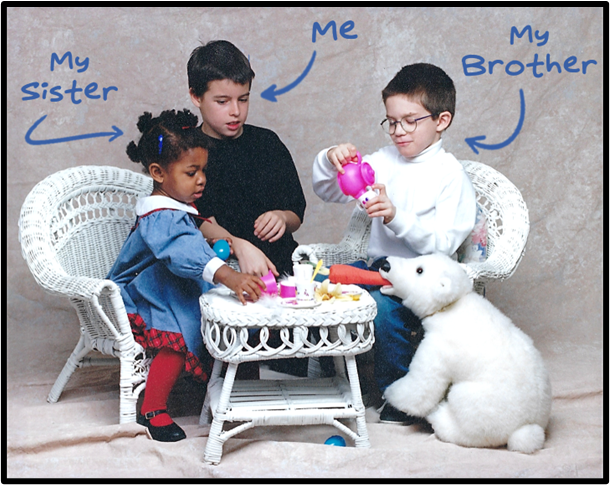
I have two, a younger brother and a younger sister. In the story of “River’s New Friend”, River describes Willow as a monster because Willow steals food and toys and takes away from River’s time with her parents. Based on this definition, yes, my siblings were both monsters. My brother especially, who is the older of my siblings and four years younger than me, struggled with health issues and learning disabilities, which meant he required a significant amount of my parents’ attention as a child. This was a difficult adjustment for me.

Funny enough, even though “River’s New Friend” is all about the challenges involved with the arrival of a new sibling, my own experience as an older brother and my relationship with my siblings never once crossed my mind as I was writing it. This was a story about River and Willow, not me. It was only as the story was nearly finished that I realized I had written a story that spoke to many of my own struggles and feelings as a child. This discovery was strangely cathartic and actually helped me process some of my childhood experiences in a new way.

I think that is the cool thing about art, whether we recognize it or not, we are pouring ourselves into it and it becomes a reflection of us. It is one of the reasons I am not overly concerned about artificial intelligence replacing artists as storytellers.

Have you ever met a llama?

I have! My wife had a coworker who lived on a llama farm. Every year, they would throw a giant party called “Llamapalooza”, where you could come and hang out with the llamas. We attended one year and met many llamas.

Did you have any idea how hard it is to write a picture book when you started? How long did this one take you, from first concept to finished book?

I wrote the first draft of “River’s New Friend” in an afternoon. I shared it with a few family members and friends who said, “hey, this is pretty good!” I could have stopped there and said I had written a picture book. Based on my experience reading many self-published picture books, I think this is where a good number of people fall into the trap of calling the book “done” and move ahead with publishing. But I wasn’t happy with it yet. 

After writing the first draft, I decided I wanted to improve as a writer before continuing, so I started taking online writing classes, reading books on craft, and watching countless YouTube videos on how to write. I joined a critique group to get honest, unbiased feedback on my writing. I revised the story again and again. Hired a professional editor and revised it some more. By the time the story was finished, I had been working on it for a year and a half, not including the year off I took to level up as a writer.

Did you write stories when you were a kid? What were your favourite kids books?

Nope. Not at all. I didn’t start writing until I was 34 years old, which makes me quite an outlier as a professional writer.

My favorite kid’s books were a series of middle grade sports mysteries written by Matt Christopher. The protagonists were always some young athlete investigating a strange happening that was impacting their team. Sometimes the stories were even a bit supernatural, like a magic goal-scoring hockey stick or a batter who could only hit home runs. As a kid who loved sports, I read these books over and over again.

What's one thing you wished you had known before you started the self-publishing process?

Don’t worry so much about social media. I spent a year trying to develop Instagram and TikTok accounts in advance of my book launch, hoping it would be helpful in marketing the book. But social media algorithms are fickle, the sites are unreliable ways to reach your target audience, and just because you have “followers” it doesn’t mean you have potential customers. 

At this point, after a year of work and the lucky break of having a video go viral, I have 4,200 Instagram followers. But I can only point to a couple of book sales that have come from my Instagram marketing.

If you enjoy social media and do it well, then by all means, lean into it and use it to your advantage. But if it isn’t something you enjoy or that comes naturally to you, your time and energy will be better spent writing books than composing social media posts. And most importantly, never feel guilty for not doing social media if it isn’t something you want to do, your writing career will go on just fine without it, I promise.

Why do you think llamas are so appealing?

First of all, they are fluffy and humans, in general, are a big fan of fluffiness. Second, they have a comical appearance. They look like sheep doing a giraffe impression. And their faces have a dopey cuteness that makes them look like they are perpetually in a state of having just woken up from a nap. Third, we have all fallen for the pro-llama propaganda pushed on us by Disney’s “Emperor’s New Groove” which depicts llamas as a vehicle for spiritual redemption of the morally bankrupt, when in reality, not a single Incan emperor was ever redeemed through llama transformation (a seldom known fact).

What did you love most about the whole writing-publishing process? What was the hardest thing?

There were several moments in the writing and illustration process where things felt like they just clicked into place. During writing, my story was feeling broken, but then I tried moving a piece from the end to the beginning and suddenly everything worked. That shift from “it’s not working” to “that’s it!” was the coolest moment of my writing career to date. There were similar moments during illustration where my illustrator, Zoe, would send me a character sketch or an storyboard for a page and I would have a sense of, “yep, that’s exactly it.” Those were the moments I loved the most.

The hardest thing about publishing was overcoming some of the self-doubt, much of which is tied to my decision to self-publish the book. When you traditionally publish a book, your work passes through several gatekeepers: a literary agent, editor, the publisher’s internal marketing team, etc. and each time you pass one of these gatekeepers, it can serve as a validation of your writing. An industry expert gave it their stamp of approval as being “good enough”. But when you are self-publishing, you don’t receive that same validation. To compensate, I surrounded myself with critique partners, beta readers, and a professional editor so that I would receive honest feedback and hopefully, once the book was good enough, validation that it was ready for publishing. 

Honestly, even now with the book completed, I still struggle with self-doubt. I worry if the story is good enough and how readers will respond. But I tell myself that I put in the work, listened to and incorporated feedback from smart and knowledgeable sources, and made the best book I could make, and I can feel proud of what I created.

Would you consider writing a spin-off series starring Rhama the llama?

One of the things that has surprised me about the early response to the picture book is the degree to which readers are enthralled with River’s friends in the story. The list of friends includes Basanti the shy bunny, Kameko the hungry cat, Earl the overwhelmed squirrel, Gustavo the grumpy goose, and Rhama the sleepy llama. Already, I have had requests for spinoff stories about the goose, the squirrel, and the llama. Spin-off books were never a consideration when I was writing the story, and the fact that people are asking for them (even if jokingly) is a testament to the incredible job my illustrator did bringing these side characters to life. Who knows, in the future there may be an extended River-verse with spinoff stories for everyone, including the llama.

Michael currently has a Kickstarter running to fund publishing River's New Friend. If you're interested in the book, or just interested in what a picture book Kickstarter looks like, check it out here. (It ends on April 15, so you have a week left!)

As part of the Kickstarter, Michael has organized a book donation drive to get donated copies of "River's New Friend" into the hands of kids and teachers in low-income communities. In addition to being able to pre-order a copy of "River's New Friend" for yourself, there is an option on the Kickstarter page to purchase copies of the book when will then be donated to a preschool or childcare center. If you would like to contribute, look for reward tiers on the Kickstarter page that mention a "Donation Book" in the description."

Monday, February 8, 2021

MMGM: Jinxed, by Amy McCullough

 This middle-grade sci-fi adventure has it all:

  • cute talking animal side-kicks ...
  • that are also robots with internet access and hologram projectors and all the cool things your phone could do if it was actually a cute talking animal (don't we all wish our phones could be cute talking animal robots?) ...
  • and they have to fight in robot battles at the tech school where really smart kids learn how to make robot animals, but all that fun violent mayhem is okay because ...
  • the main character is really good at repairing them and making them even better than before ...
  • which is how she gets her mysteriously different robot cat, Jinx, who seems to be able to think for himself (and has the snarkiness to show it!)
The robot sidekicks are called bakus. The clever-with-technology protagonist is Lacey Chu (so you've got your girls in STEM and a pretty diverse cast, so check off some more boxes), and there's a mystery about her absent father, and some questions about the big tech company that makes the bakus and runs the school (all big tech companies have a nefarious plan to take over the world; that's a given!). Plus some exploration of class and elitism and what it feels like to be less rich, less connected, less privileged. And the whole artificial intelligence—free will problem that can't help but come up when dealing with self-aware robots. 

There's lots going on here, and it's fast-paced and exciting while taking time to develop characters and give justice to the themes. None of the elements are original, but Lacey and Jinx, and the team at school, and Lacey's best friend (who didn't get into the special school) make this a fresh, compelling romp through some of the more significant questions kids these days are facing.

I thoroughly enjoyed it and am about to dive into the sequel, Unleashed.

Oh, hey, this is a middle-grade book, so I can contribute to Marvelous Middle-Grade Monday! Haven't joined that group in a long while. Greg at Always in the Middle is still hosting this great weekly round-up of favourite middle-grade books—be sure to check it out.


Saturday, March 21, 2020

Song for a Whale, by Lynne Kelly

Interesting times we live in, interesting times! I hope you're all curled up with a great book from your TBR or having phone or videochat conversations with friends and loved ones. Or going for a walk outside: don't forget to go outside!

I asked my niece how she was occupying herself now that school is cancelled, and she said she just read a really good book, so I asked if she would review it for my blog. Here is 11-year-old Lorelei's take on Song for a Whale.


Song for a Whale is a nice heartwarming story, that involves a smart and brave girl. This girl is named Iris and she is a deaf girl at a normal school, so she doesn't have very many friends. Her deafness is from her grandparents who are also deaf, and so her grandpa’s passing was very hard for Iris and her grandma. Her happy place is with old radios. She is really good with old radios; she can fix an old radio even though she can’t hear if it’s perfect but she can still feel the vibrations. 


And one day she learns about a whale: Blue 55 who sings a song like no other. No other whale can understand Blue 55, so he is very lonely. Iris can relate to that completely, and wants to help. I love how Iris is so brave and courageous that she wants to go and see the whale in real life when a sanctuary tries to tag him. It also takes courage to go with your grandma and sneak away on a cruise ship and set sail to go find what you most desire. Although there were some obstacles in Iris’s way, she uses her intelligence to help her succeed. At the end you will feel almost exactly what she was feeling, and how her success was the greatest gift of all.

Monday, May 4, 2015

A Turn of Light and A Play of Shadow by Julie Czerneda

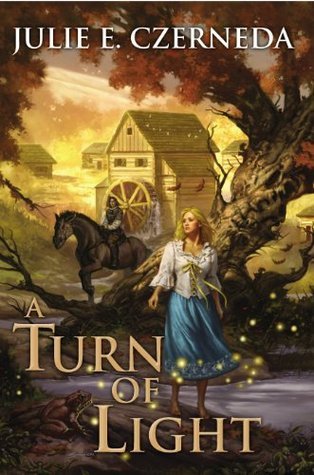
A Turn of Light is a hefty (but complete in one volume) fantasy tome from Canadian Sci Fi writer Julie Czerneda. It's thoroughly original, delightfully quirky and edgily sweet. And not just because of the magic carnivorous toads, though they are a significant part of the appeal!

The cover of A Turn of Light is very indicative of the content: pastoral, magical, a bit mysterious. I would call it a magic kingdom book, but, though there are kingdoms in this world, the whole novel takes place in one little village in an out-of-the way corner of the map. No grand quests or battles, no princes or wizards or grand high viziers. Just a small group of farmers who have been cast out of the rest of the world but have been accepted by Marrodell.

Marrodell is not an ordinary valley. There are the toads, for example. They lay eggs big enough for people to eat (there are no chickens in Marrodell). They're also great at keeping houses safe from dangerous mice. Then there's the self-harvesting grain (not dangerous at all as long as you don't go into the field until the harvest is done). And the path that goes up the mountain that no one ever takes (and no one knows why). And the terrible nightmares that drive everyone away if Marrodell doesn't think they belong.

I thought the world-building here was marvelous. All the little details build upon each other to make this small geographical setting fascinating enough to support an entire novel. The characters are lovingly drawn: Jenn Nalynn, the innocent who longs to see the world; Bannan, the weary soldier who wants to escape the world, and Wisp, the—let's just say he's not human—who doesn't belong in the world at all.

It's a slow-paced book, not a lot of action, lots of description. The tension is in the slowly unfolding mystery of Jenn's identity and the danger of Marrowdell's magic. There's a love triangle, of sorts, but not an angsty romantic one (mostly funny, actually). Lots of family, friendship, trust and loyalty. There's evil in the world, but there are also good-hearted people who care about each other.

A Turn of Light held my interest over 600 pages because the magic is fun and different, because I cared greatly about the characters, because I like stories about people making choices and facing the consequences. Also because it's quite funny a lot of the time. And because I believe the care of good-hearted people is strong enough to defeat any evil and that's what this book is about.

My mom's meringues: crispy on the outside, chewy on the inside, so, so sweet.

And having told you that this is a stand-alone, I now have to admit that there is a sequel! I thought the story came to a satisfactory conclusion, but when I saw A Play of Shadow I bought it right away, eager to return to Marrowdell and find out what Jenn Nalynn is going to do with her newly discovered magic. Bannan, Wisp, and Scourge are back (and there's a toad with a starring role!), and we meet two new characters who I really love: Bannan's nephews. Very realistically drawn boys with their own troubles, and Bannan's difficulties parenting them are true to life and quite hilarious.

I will say I found A Play of Shadow to be slower and a little more frustrating than A Turn of Light. The plot doesn't really get going until the last third of the book; I thought too much time was spent learning all the doings of the villagers—and I wasn't interested enough in them to remember who was who, so I just skimmed a lot of those bits. Maybe it's because the mystery is gone that I wasn't as patient with Jenn slowly discovering her powers, and the romance felt somewhat repetitive: yes! they love each other! we get it! So I'm not as crazy about the second book, but I still loved the world, and the characters, and if she writes more about them I will happily read more.

Brownies with nuts in them (because I don't like nuts in brownies, but I'll eat brownies with nuts if they're the only brownies to be had).

These are books 9 and 10 toward my Canadian Book Challenge, a great idea hosted by John Mutford on his blog The Book Mine Set. Head over there to find lots of reviews of Canadian books of all genres. (All sorts of hidden treasures you'll never hear about otherwise!)

Monday, April 28, 2014

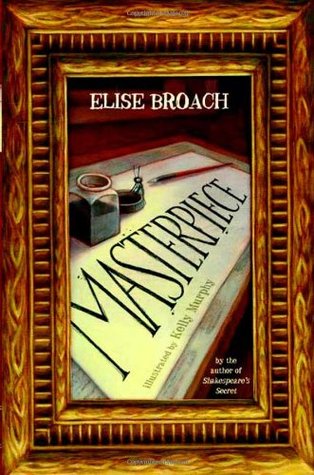
MMGM: Masterpiece, by Elise Broach

Many years ago I encountered the cockroach poet Archy, author of Archy and Mehitabel, and the image of a bug jumping from key to key on a typewriter caught on a hook in my imagination and hangs there still. I don't know what it is about artistic insects, but the narrator of Masterpiece joins an illustrious line of literary invertebrates (think of Charlotte's Web) that are irresistible.

Marvin is a beetle who lives under the kitchen sink. We are introduced to him when he rescues Mrs. Pompaday's contact lens from down the bathroom sink drain. (How to make a character instantly lovable! (At least for those of us who have ever worn contacts!)) Of course Mrs. Pompaday doesn't realize her day was saved by a beetle: staying out of humans' sight is the most important beetle rule, and Marvin has a large beetle family to remind him not to do anything to jeopardize his family's comfortable life in the Pompaday's walls.

But then young James Pompaday gets art supplies for his birthday, and Marvin discovers a remarkable, un-beetle-like talent.

This book appeals on so many levels. Like The Borrowers, it plays with the notion of small people living on the scraps of human life. I loved the description of the beetles' food, and their beetle-eye perspective on human activities.

Then there's the art heist story: everyone loves a good art heist, and this one has action and suspense and also manages to introduce readers to Albrecht Durer without ever seeming didactic. I loved the passion for art that comes across in different ways from the different characters.

But perhaps what's best about Masterpiece is the beautiful friendship story. I loved the characters of James and Marvin, and the way they were able to communicate without words and trust each other without reservation.

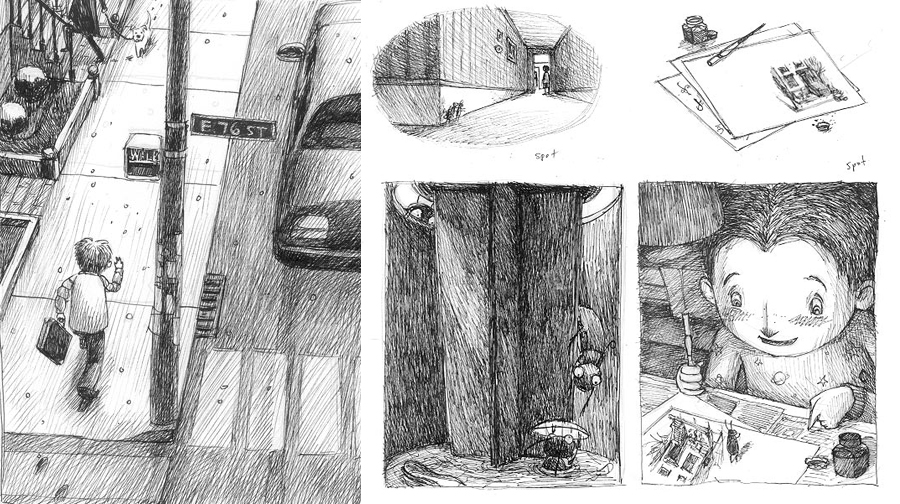
Kelly Murphy's illustrations were perfect.

http://www.kelmurphy.com/masterpiece.html


Masterpiece is your favourite picnic food: maybe a really good potato salad, or cold roast chicken. Hearty and fun.

Check out Shannon Messenger for more great MMGM reads, every week.

Monday, March 10, 2014

The Prince Who Fell from the Sky, by John Claude Bemis


I have a Marveous Middle-Grade Monday selection this week! It's a post-apocalyptic novel for younger readers, with an intriguing premise: humans have managed to wipe themselves out completely, and nature has reclaimed planet Earth. A bear named Casseomae lives in a Forest ruled by wolves—who claim they are the ones to get rid of the Skinless Ones* many years ago. Then a sky ship crashes in Casseomae's meadow, and a Skinless cub climbs out of the wreckage. Casseomae has never had a cub of her own, and against her better judgement she protects the young Skinless One from the wolves.

The Prince Who Fell from the Sky could have been trite, heavy-handed and cartoonish, but instead it is nuanced and believable, with great character interactions. The animal characters are brilliantly drawn: Casseomae reluctantly teams up with a rat named Dumpster—a viand, that a vora like Casseomae would normally never speak to—and Dumpster's attitudes, speech patterns, beliefs, quirks are all definitively rat-like, just as Casseomae sounds and thinks like a bear, and the wolves, coyotes and dogs are all equally distinct in their culture and characteristics. It's also wonderful how the character of the Skinless One comes across without him ever saying a word that we can understand (he, of course, can't speak vora).

Casseomae's quest to find a place her adopted cub can be safe is a fascinating journey through a convincing world. The animal enmities and alliances are well crafted; their understanding (or misunderstanding) of the Old Devils* and their relics is both humorous and telling. Each character has sympathetic motivations: even the wolf Ogeema is only trying to protect the Forest, and Cassaomae herself is conflicted about the wisdom of protecting one who could turn out to be as dangerous and destructive as the rest of his kind.

Bemis does have a message to convey, but he is subtle and thoughtful about it. There is no easy right and wrong; there are only the choices each character makes based on what they value most.

This was a fun read with humour and adventure that was also deeply moving and beautiful. Cassaomae gets added to my list of favourite characters, and Bemis is an author I want to read more of.

My grandmother's crispy-chewy oatmeal coconut cookies.

*That would be us humans. (It's always salutary to see one's kind from a different perspective. One of the great uses of sci fi.)

For more marvelous middle-grade books to choose from, head to Shannon Messenger's lovely blog every Monday.

Friday, November 22, 2013

Shadows, by Robin McKinley

A new Robin McKinley! Break out the chocolate and get comfy!

If you're familiar with Robin McKinley from her earlier books, like Beauty, or The Blue Sword, and think of her as the queen of YA fairy-tale/high fantasy, you may not know what to make of her more recent work. There's Sunshine: awesomely scary vampires and an unusually talented coffeehouse baker (gives Death by Chocolate a whole other meaning), in a world that's sort of like ours but not. So, kind of urban fantasy/paranormal, but not really. Then there's Dragonhaven, with dragons, but real ones, in a reserve, where park rangers collect dragon poop and orphaned baby dragons are a bit of a problem to care for. So, not your typical dragon story at all. Pegasus is closer to vintage McKinley, with a princess and a flying horse and a world reminiscent of Damar. (Still waiting eagerly for Pegasus II, which is coming.)

The only thing you can definitively say about McKinley is that she's incredibly imaginative and original, and whatever world she creates she drags you into it and makes you never want to leave.

Which brings us to Shadows. I'm not sure this is a world I'd like to visit, because it's pretty scary. It's most similar to Sunshine (Sunshine's world is scary too: it's the coffeehouse I wish were real): it looks a lot like our modern world, but with weird stuff. Like cohesion breaks: rips in reality that pop up occasionally and if you get too close you disappear forever. But it's okay, the army has cobey units with all sorts of scientific devices to deal with them. Move along now, folks, nothing to see here. In Newworld science can deal with everything; it's not like Oldworld with all those suspicious, creepy magic-users; there's gene-splicing to make sure no one in Newworld has magic anymore.  And if anyone wants to immigrate, they'd better have left their magic behind. There are monitoring devices at the border to make sure.

So when Maggie's mom remarries a guy with an Oldworld accent, and there's something weird about Val (and it's not just his fashion sense), Maggie is seriously freaked out. Val's shadow has too many legs. In fact, he has too many shadows. With legs. Or possibly tentacles. "Have you ever thought about the darkness between a row of books and the top of the shelf? Of course not. You don't, until it goes all loopy, and little things like legs or tails or tongues hang down over the spines."

Shadows is the spookiest book McKinley has written, and she's just as good at creating spooky as she is at heroic and magical. The version of magic in Shadows is completely different from any other kind of magic I've ever read about--it's so interesting. I love that origami is magic. And algebra (or, at least, algebra books). And animals: more than anything else I think Shadows is a paeon of praise for dogs and other loyal animals who take care of their humans no matter the cost to themselves. The gruuaa are wonderful. (Not going to tell you what they are!)

There are also a couple of seriously hot guys and a great best friend with a Mammothmobile (the better to fit all the dogs). Quite a bit of humour, a lot of it dog-related (which you'll be familiar with if you read McKinley's blog). And a lot of possibilities for sequels, not that it will do any good to hint about it. (McKinley's quite insistent she can't write the stories she wants to write, only the ones she's given. And she hasn't yet been given any Damar sequels, despite all of our begging.)

If your reality could use a little warping, I highly recommend the particular warped version of it in Shadows.

This one has to be caterpillar rolls from your favourite sushi place (it's okay if you don't like raw fish: caterpillar rolls have cooked crabmeat. And avocado. But if you really don't like sushi, then you can have the beef teriyaki. So long as it's really good, and comes on one of those sizzling hot cast iron trays.)

Monday, October 7, 2013

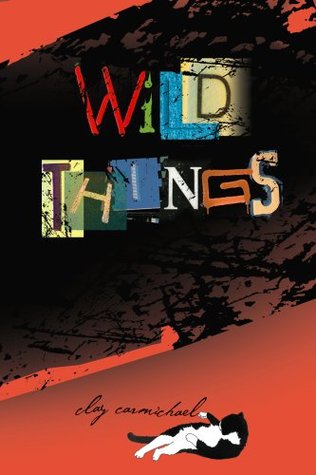
Wild Things, by Clay Carmichael

From my Goodreads review: I'm a sucker for stories about orphans who go live with an eccentric and/or curmudgeonly distant relation/foster parent and both parties soften their hearts and learn to trust each other. Anne of Green Gables was possibly the first (though I think Dickens probably invented the genre), and The Great Gilly Hopkins is another classic.

Wild Things is a particularly good rendition of exactly that plot line: when Zoe's mentally unstable mother commits suicide, she is sent to live with her paternal uncle Henry, a cardiologist-turned-sculptor who withdrew from the world when his wife died. There's a cat who Zoe slowly tames, a wild boy who lives in the forest with an albino deer, and various small-town characters, both nice and not-so-nice, to add interesting plot complications. But the essential story of Zoe and Henry learning to open their scarred hearts to one another is colorful and touching and beautifully written.

The cat is a particularly appealing character who gets to narrate little snippets between the chapters. I also loved the setting, which is lovingly and vividly rendered.

Wild Things is like homemade apple pie with a sort-of messy-looking crust that's the flakiest you've ever tasted.


For more great middle-grade reads, check out Shannon Messenger's blog.

Thursday, November 3, 2011

Canadian Book Week: Kenneth Oppel

It's day three of Novel Writing Month, and so far so good: I have written something every day. Not much (I'm at about 4 pages longhand), but I'm getting to know my characters and setting and getting closer to figuring out my plot. (I think.)

This blog post has been sitting half-finished for weeks, now, so I figured I could procrastinate today's writing and finish it.

I have not forgotten my promise to focus on a Canadian author once a month, and this month it just has to be Kenneth Oppel, because his latest book has just come out, and it's awesome!

 That is an amazing cover, is it not? It gives you setting, mood, character; it reaches out and sucks you in; it promises you will be transported into the world beyond the keyhole. But really, all you have to read is the subtitle and you know you have to read this book. I mean, "The Apprentiship of Victor Frankenstein": how audacious is that?

But if anyone can tell a convincing story about fiction's most famous monster-maker, it's Kenneth Oppel. He's a versatile writer with a sure sense of story. He's written picture books, early readers, middle-grade and YA novels, all with strong characters and lots of action but also thematic depth and real emotion.

Does This Dark Endeavor live up to its cover? Yes. I had my reservations, because I wasn't sure I would like the character of Victor, but by the end of the novel I was convinced. If you have any interest in the Frankenstein story, if you love secret libraries and alchemy and finding impossible ingredients for the elixir of life, (and who doesn't?) then you have to read this book.


The Silverwing trilogy could be thought of as a middle-grade Watership Down, starring bats. It has animals that behave like animals, a mythology that makes sense and resonates with the story (Camazotz, the vampire bat-god, and an underworld, and possible apocalypse), and a very cool bat super-power that allows Shade to save the day more than once.  I'm making it sound more like fantasy than it is: most of the adventures are real-world/real-bat encounters with owls and humans and big nasty bats and suchlike. But the fantasy elements add that extra zing. I haven't read them in a while,  but these are books I reread happily because there's so much to them. A good choice for boy readers. I haven't read Guardians of Ga'hoole, but I'm betting if you liked those books you'll like these.


The Airborn series is for slightly older readers, and the airships and goggles on the covers do not lie: this is classic steampunk: an alternative history in which zepplins become the transportation of choice. (To be perfectly correct, I'm not sure it is steampunk, because I think the airships are powered with combustion engines, but I don't really care.) This is great fun: adventure, romance, pirates, young man proving himself, hitherto undiscovered flying creatures, ghost ships, a ladder into space. All that good stuff. Fast-paced and imaginative with characters you really care about. Highly recommended.


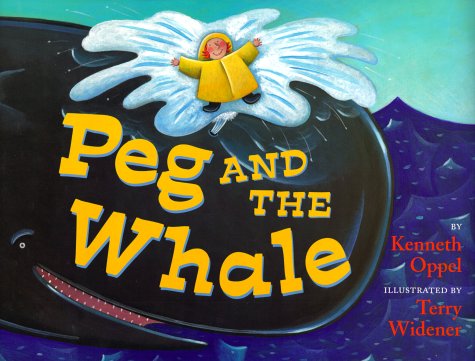
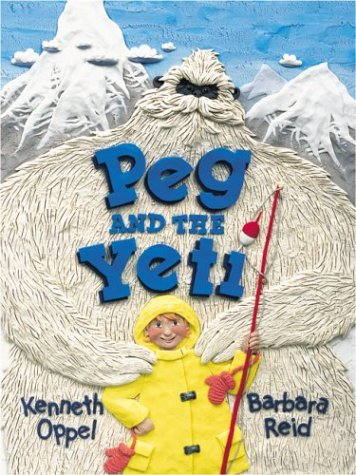
I also have to mention Oppel's two picture books about Peg. Peg and the Whale and Peg and the Yeti are so cute and upbeat and Peg is such an awesome heroine. Every young girl should have these books on her shelf. (And note the illustrations for Peg and the Yeti: Barbara Reid is so cool!)