Friday, October 4, 2013

Princess of the Midnight Ball, by Jessica Day George

I'm always up for another fairy tale retelling, and the story of the Twelve Dancing Princesses has always been one of my favourites. Maybe it's the little details, like the worn out slippers, or the snap of a branch that almost gives away the invisible soldier. Maybe it's the old soldier himself, such a departure from typical fairy-tale heroes, and the youngest princess who is perceptive enough to recognize his value.

In Princess of the Midnight Ball, Jessica Day George takes everything I like about this fairy tale and makes it better! Galen, the soldier, is completely swoon-worthy. He's not so old, but he started young so he has lots of soldierly experience and the world-weariness that comes of it. He's capable, but humble, but stands up for himself. He's funny. And he knits! (George points out in an afterword that knitting used to be an exclusively male activity: who knew?!)

The princesses in this version of the story have a realistic age range from seventeen to seven years old, so we get some nice family dynamics, and it's Rose, the oldest, who has the burden of dealing with all her sisters and the curse they are under. So it's Rose that Galen feels impelled to cheer up, and it's Rose he's willing to risk his life for to solve the mystery that's tearing the kingdom apart.

Great characters, intriguing explanation for the dancing, some nice plot twists thrown in to up the stakes--a thoroughly satisfying read. I'm going to look for the next two Princess books from George.

Like chewy homemade condensed-milk caramels: sweet but with substance.

Monday, September 16, 2013

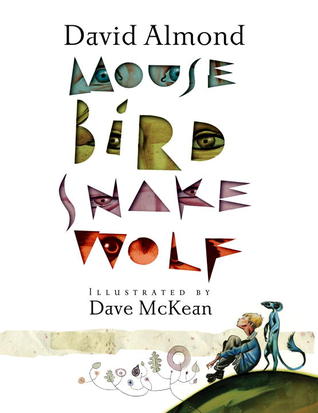
Mouse, Bird, Snake, Wolf, by David Almond, illustrated by Dave McKean

I'm going to count this book as middle-grade, because it's not really for younger readers. Mouse, Bird, Snake, Wolf is halfway between a picture book and a graphic novel. You could read it to a child (not a very young one: there's a pretty scary bit); you could also study it in a literature class. It's part parable, part satire, part folk tale, and it's quite beautiful. Dave McKean's illustrations are perfect. I got it from the library, but I want to own it. Isn't it a gorgeous cover?


What if the world wasn't quite finished? What if three kids notice that some things seem to be missing: what would they decide to create? 

David Almond is an interesting and disquieting children's author. I don't always like his books; I'm not sure I like to see the side of human nature he sees. But this book veers more toward the sweet of bittersweet:  still edgy but maybe a bit more hopeful. (Or maybe that's just me.) 

I have no idea how to sum it up: a funny cautionary tale about the power of creation; a sweet meditation on the importance of imagination; a scary adventure into the psyche of children. If you liked Gaiman/McKean's The Wolves in the Walls, if you like Shaun Tan, you will very much enjoy this. And middle-grade readers I think will simply enjoy the story of three kids and what they create and what happens next.

This is just like the Honey Ginger Plum scones I just invented: familiar, yet original, sweet, but with a bite.

For this week's round up of great Middle-Grade reads, go no further than Shannon Messenger's excellent blog.


Monday, September 9, 2013

The Great Partnership: Science, Religion, and the Search for Meaning, by Rabbi Jonathan Sacks

I do occasionally read non-fiction. I picked up this book on a random library browse (it was on the librarians' recommendation shelf), started reading it that afternoon, and immediately wanted to write down all the wonderful quotations I wanted to remember. I could use random scraps of paper that I would later lose, or a word doc that would get forgotten in my Documents folder, or I could put them all in a blog post that would be easy to find, and also make it easy to share.

So I'll break with my blog mandate (I can do that; it's my blog!) and use this post to share direct quotations from Rabbi Jonathan Sacks. It's a really long post; if you're interested enough to get to the end you will have made it through the entire book with me! From now on all words are Rabbi Sacks'; bold is my highlighting.

Science is about explanation. Religion is about meaning. Science analyses, religion integrates. Science breaks things down to their component parts. Religion binds people together in relationships of trust. Science tells us what is. Religion tells us what ought to be. Science describes. Religion beckons, summons, calls. Science sees objects. Religion speaks to us as subjects. Science practises detachment. Religion is the art of attachment, self to self, soul to soul. (p. 6)

Love, trust, family, community, giving as integral to living, study as a scared task, argument as a sacred duty, forgiveness, atonement, gratitude, prayer: these things work whether you believe in them or not. (p. 15)

I never understood why it should be considered more courageous to despair than to hope. Freud said that religious faith was the comforting illusion that there is a father figure. A religious believer might say that atheism is the comforting illusion that there is no father figure. ... Why should one be considered escapist and not the other? Why should God's call to responsibility be considered an easy option? (p. 17)

[For "wisdom" read "science" and for "Torah" read "religion"]: Wisdom tells us how the world is. Torah tells us how the world ought to be. Wisdom is about nature. Torah is about will. It is about human freedom and choice and the way we are called on to behave. Wisdom is about the world God makes. Torah is about the world God calls on us to make, honouring others as bearers of God's image, exercising our freedom in such a way as not to rob others of theirs. (p. 70-71)

Religious knowledge as understood by the Hebrew bible is not to be construed on the model of philosophy and science, both left-brain activities. God is to be found in relationship, and in the meanings we construct when, out of our experience of the presence of God in our lives, we create bonds of loyalty and mutual responsibility known as covenants. People have sought in the religious life the kind of certainty that belongs to philosophy and science. But it is not to be found. Between God and man there is moral loyalty, not scientific certainty. (p. 73)


Science takes things apart to see how they work. Religion puts things together to see what they mean. They speak different languages and use different powers of the brain. ... Once we recognize their difference we can move on, no longer thinking of science and religion as friends who became enemies, but as our unique, bicameral, twin perspective on the difference between things and people, objects and subjects, enabling us to create within a world of blind forces a home for a humanity that is neither blind nor deaf to the beauty of the other as the living trace of the living God. (p. 77)

Faith is about seeing the miraculous in the everyday, not about waiting every day for the miraculous. (p. 81)

Politicians value us for how we vote, economists for how we earn, advertisers for how we buy, people in the arts and entertainment for how we spend our leisure. Outside religion there is no secure alternative base for the unconditional source of worth that [comes] from the idea that we are each in God's image. (p. 102)

Human goodness is widely distributed, and I have no respect for religious people who cannot see this. (p. 104)

Science cannot, in and of itself, give an account of human dignity, because dignity is based on human freedom. ... Freedom is a concept that lies outside the scope of science. Science cannot locate freedom, because its world is one of causal relationships. A stone is not free to fall or not to fall. ... A scientific law is one that links one physical phenomenon to another without the intervention of will and choice. To the extent that there is a science of human behaviour, to that extent there is an implicit denial of the freedom of human behaviour. ... But if freedom is an illusion, then so is the human dignity based on that freedom. (p. 124)

The supreme irony of contemporary secular ethics is that humans are treated as possessors of rights because they have autonomy, the ability to choose, while at the same time evolutionary psychology and neuroscience are undermining the very idea that we freely choose anything at all. The contradiction at the heart of this secularised view of humanity cannot be sustained for ever. (p.126)

If we lose freedom in theory, eventually we will lose it in practice, as happened in Nazi Germany and Stalinist Russia. (p. 127)

There are three ways of getting individuals to act in a way that is beneficial to the group. One is power: we force them to. The second is wealth: we pay them to. The disadvantage of both is that they leave selfishness untouched. They use external incentives. ... The third alternative is to educate them to see that the welfare of others matters as much as their own. No system has done this more effectively than religion, for an obvious reason. Religion teaches us that we are part of the whole, a thread in the fabric of God's creation, a note in the symphony of life. Faith is the ability to see ourselves as joined to others by God's love.
     Not only does it teach us this, through story and ritual, celebration and prayer, it weaves it into our personalities, affecting all parts of the almost infinitely complex labyrinth of the human brain. No wonder then that religion has survived, and that we need it if we are to survive. (p.156)

Social cohesion is precisely what religion sustains and much else undermines. When societies grow affluent, when the burden of law-abidingness falls on the state and its institutions, when people define right and wrong in terms of externalities--punishments and rewards--and in terms of what other people do and are seen to get away with, when people focus, as they naturally do, on immediate benefits not long-term sustainability, then society begins to erode from within and there is little anyone can do to halt it. (p. 161)

The faith of Abraham makes two monumental claims: first, that the relationship between God and humanity is a matter of love, not power: second, that you can build a society on the basis of love, love of neighbour and stranger, that leads us to care for their welfare as if it were our own. These remain, even now, astonishing ideas, and one would say that they were wildly utopian were it not for the fact that the faith of Abraham has lasted longer than any other known civilization. (p.164)

What made marriage unique was the way it brought together in a single institution a whole series of essential human activities: sex, reproduction, companionship, love, responsibility for the welfare and nurture of those we have brought into being, and responsibility for their education. ... When marriage breaks down, ... human bonds splinter and fragment into a myriad component parts, so that we can have sex without reproduction and reproduction without sex. We can have both without love, love without companionship, and children without responsibility for their nurture. (p. 167)

What are in danger of being lost are the linked qualities of loyalty, fidelity, duty, trust and the sharing of a pledge by which both partners promised not to walk away, the very things that make love a glimpse of eternity in the midst of time, and parenthood the closest any of us can come to God: love bringing new life into the world. What is lost when faith is lost is marriage as the supreme moral commitment that lifts humanity from biology to poetry. (p. 168)

Faith is about relationship sustained without the use of power. If any relationship, whether between husband and wife, parent and child, siblings, neighbours, strangers and friends, is dependent on power, faith has broken down. God does not live in such relationships. (p. 169)

Emunah, the biblical word for faith, really means 'covenant loyalty.' It means being true to the bond you have made with another, honouring your word and trusting them to honour theirs. God makes promises to us. We make promises to God. At the deepest level of metaphor and meaning, faith is a marriage, a bond entered into in love and honoured in life.
     Faith lives, breathes and has its being in the world of relationships, in the respect we pay our marriage partner, the steadfastness with which we bring up our children, and the way we extend the feeling of family to embrace neighbours and strangers in acts of hospitality and kindness. (p.172)

The meaning of life is the realisation that you are held in the arms of a vast presence; that you are not abandoned; that you are here because you were meant to be. It is the sense that life is something you have been given, so that you live with a feeling of gratitude and you seek to give back, to 'pay it forward,' to be a blessing to others. This presence in which you live knows you better than you know yourself, so it is no use pretending to be what you are not, or denying your shortcomings, or justifying your mistakes, or engaging in self-pity, or blaming others. It is a loving, forgiving but challenging presence, demanding much but never more than you can do. It asks you to give your best, not for the sake of reward, but because that is what you are here on Earth to do.
     This is not a testable proposition. There is no scientific experiment that would establish it to be true or false. (p 188)

Religion is a sustained process of using the deep power of joy to see into the life of things. (p. 199)

Simchah is something we cannot experience alone. Simchah is joy shared. (p. 204)

Science is not religion; religion is not science. Each has its own logic, its own way of asking questions and searching for the answers. The way of testing a scientific hypothesis is to do science, not read Scripture. The way of testing religion is to do religion. (p. 214)

Belief in God is an assertion of human dignity in the face of humiliation, and of hope in the midst of the dark night of despair. It is a refusal to accept evil as inevitable, but at the same time an acknowledgement that we cannot leave redemption entirely to God. ... God is not the solution of a contradiction, but a call to become his partners in the work of redemption. (p. 247)

The most significant determinants of happiness are strong and rewarding personal relationships, a sense of belonging to a community, being valued by others and living a meaningful life. These are precisely the things in which religion specializes. (p. 280)

At their best, science and religion are both instances of the human passion to decode mysteries, constantly travelling in search of a destination that continues to elude us, that is always over the furthermost horizon. It is that willingness to search, ask, question, that makes us what we are. ... When all the scientific explanations are in, the great questions still remain. (p. 285)

Monotheism expects great things from us, and by doing so makes us great. It calls us the image of God, the children of God, God's covenantal partners. It challenges us to become co-builders with God of a gracious society and a more just world. It tells us that each of us is unique, irreplaceable, precious in God's sight. (p. 287)

In an age of fear, moderation is hard to find and harder to sustain. Who wants to listen to a nuanced argument, when what we want is someone to relieve us from the burden of thought and convince us that we were right all along? So people mock. They blame they caricature. They demonise. In an age of anxiety, few can hear the still small voice that the Bible tells us is the voice of God. (p. 295)

Monday, August 26, 2013

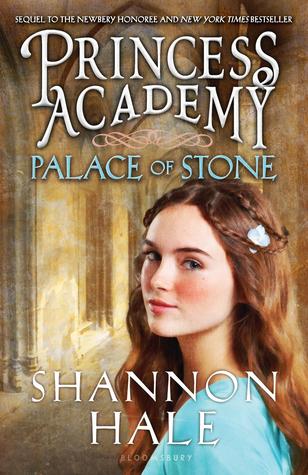
MMGM: Palace of Stone, by Shannon Hale

Hey! I'm back with a Marvelous Middle Grade Monday selection. This was on the New shelf at the library, and I'm like, "Oh, right: Princess Academy has a sequel. I've been meaning to read that!"

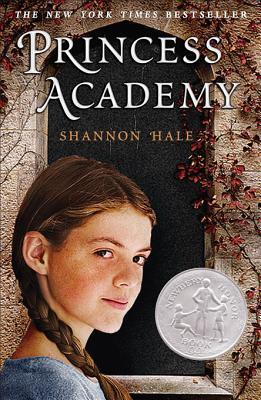
Palace of Stone is the sequel to Princess Academy, which I read quite a while ago and really enjoyed, like I enjoy all Shannon Hale books. My memory of Princess Academy is a little vague, so I can say that Palace of Stone works as a stand-alone, though I think you'd want to read the first one just to get to know the characters, because they're all so great.


Shannon Hale is excellent at her genre: I'll call it upper-middle-grade. She writes stories that could be sweeping and epic and take 600 pages if she were an adult fantasy writer, and she condenses them down into perfectly plotted, simple-seeming character studies that still have all the epic themes and ideas, just in a neat little pre-teen-appropriate package.

Palace of Stone has a kingdom on the brink of revolution, a love triangle, betrayal, impossible choices, magic--I honestly don't know how she fits it all in! If I had one complaint it would be that there's so much more development she could have done--in fact, she could have written an adult fantasy. But Palace of Stone has exactly what it needs and not a word extra, and somehow she uses story to convey the most complex of ideas (it's really a story about politics and ethics) in a form a twelve-year-old can easily grasp.

The other characteristic of a Shannon Hale book is that she genuinely believes in the potential for good in everyone. If you want dark, edgy and violent, this is not the author for you. But if you want all your characters to have believable motivations, including the villains, if you like heart-wrenching dilemmas that don't have easy, good-vs-evil answers, and if you like stories in which people can redeem themselves even after screwing up, then you'll like Hale.

I really liked Miri, and I really felt her struggle to reconcile who she thought she was with who she might become. I also thought the romance was just right: realistic and sweet (and age-appropriate!).

Palace of Stone is a fresh, crisp, in-season apple (right now we have Sunrise apples, the first of the season: a bit tangy, very juicy and fragrant) cut up on a plate with some nice mild cheese like Red Leicester or Jarlsburg and thick slices of a really hearty bread.

I also highly recommend Hale's Books of Bayern series, and definitely check out her graphic novels, Rapunzel's Revenge and Calamity Jack.

For other wonderful Middle-grade choices, head to Shannon Messenger's blog, where she collects all the MMGM-ers every Monday.

Thursday, August 22, 2013

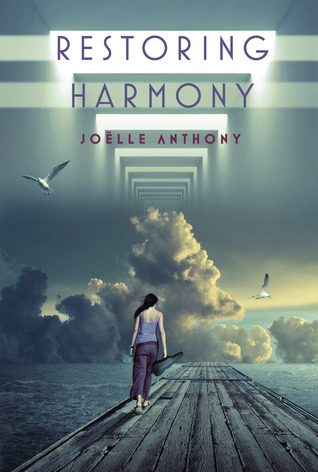
Restoring Harmony, by Joelle Anthony

A friend of mine on the Sunshine Coast lent me this book by a local BC author. She thought I would enjoy Restoring Harmony because I'm also writing a post-apocalyptic novel set in the Pacific Northwest. If by "enjoy" she meant "be freakishly envious because Joelle Anthony did such a good job I may as well just quit now," then she was right! Here's what I said on Goodreads:

Not your typical dystopian YA: this one is actually plausible. Set in the near future in the Pacific Northwest, it isn't an epic save-the-world story; it's about characters trying to live their lives while the society we know slowly crumbles around them. What makes it a four-star book is that I cared about the characters. All of them. They had believable motivations and did the right things for the wrong reasons or the wrong things for the right reasons, like real people. The plot hangs together well, too: starts out simple but builds on realistic complexities to an exciting finish.

The premise seems quiet enough: Molly goes to Oregon to bring her grandfather back to her home on a Gulf Island, but she runs out of money so once she gets there she can't get home. And her grandfather isn't very happy to see her. The interest of the book is in the character development. Molly is an engaging narrator, practical and competent, but way out of her sphere of experience. The world beyond her pastoral island isn't a particularly nice place, and she trusts people she shouldn't trust. Her grandparents are running out of food, and their neighbour is in deep with organized crime. There's a good-looking guy who wants to help but he won't even tell her his name.

I loved the music in the book (Molly brings her violin with her); I liked the tentative, problematic romance; I liked the way the collapsing society brings out the best and worst in everyone. I also loved the humour. The final escape-to-the-border scene is quite delicious.

This is a post-apocalyptic story for those who like Anne of Green Gables and family drama and heroines who don't have to kick anyone's butts in order to be kick-butt.

A fresh blueberry tart with a dollop of whipped cream.

Also, my first Canadian book in this year's Canadian Book Challenge. (I'm going to do much better this year . . . I'm off to such a great start . . .) Check out John Mutford's blog for tons of Canadian book recommendations.

Tuesday, August 20, 2013

Ocean at the End of the Lane, by Neil Gaiman

I usually try to review less well-known books, but if I don't occasionally get fan-girly about my favourite authors, you'll never know who my favourite authors are, right? So here's a little bit about Neil Gaiman's latest, though nothing I say will do it justice. (It's actually kind of hilarious to read the Goodread reviews of this book, because everyone tries to wax lyrical just to convey how much the book meant to them. Some of the reviews are works of literature themselves!)


If I had to sum it up for you quickly, I'd say The Ocean at the End of the Lane is Coraline for grown-ups. (Of course, "there aren't any grown ups. Not one, in the whole wide world.")(Ocean is an eminently quotable book, you'll find.) Coraline is one of the most perfect, beautiful, scary books I've ever read. Gaiman knows exactly what children are afraid of and why. Ocean is narrated by an adult remembering an event from his childhood, so Gaiman can play with childhood fears that are also adult fears, for slightly different reasons. It's so interesting watching him dissect human psychology using only story to do it, because that's what story is for, and no one writing today understands story better than Gaiman. The book has layers like the ocean has salt.

I'm starting to blather. It's impossible not to. Never mind. Just read the darn book. It will get its little hook in your heart and you'll be blathering with the rest of us.

One thing I noticed about the reviews is that people who didn't like the book were disappointed that it wasn't something else. You can't come to a Gaiman book expecting anything, or assuming it's like anything else. He doesn't do categories. Ocean is a story, that's all. It's lovely and prickly and heartstopping and

I'm blathering again. Sorry.

The Ocean at the End of the Lane is the salad my daughter made the other night: fresh greens, peaches, strawberries, avocados and grilled bison, with a blackberry vinaigrette I could eat with a spoon it was so good. Complex, with flavours and textures that interact and enhance each other with their contrasts of

Sorry. I'll stop now.

Saturday, August 10, 2013

The Lost Code, by Kevin Emerson

A quickie review I did for Goodreads, of a book I read on vacation:


I picked up The Lost Code on a random library browse, because I was intrigued by "Atlanteans." I was immediately drawn in by the narrator, Owen, who is drowning when we first meet him. He's not snarky and self-confident, like so many of the heroes we love, but he's self-aware, and his awkwardness is so familiar to those of us who weren't snarky and self-confident when we were teenagers. He's not particularly heroic at the beginning, which makes his journey to heroism more believable, in my opinion.

This is a fun read in the Percy Jackson vein, a summer-camp-turns-sci-fi/magical adventure. I liked the slow build-up of things-are-not-what-they-seem, what's-really-going-on-here, isn't-that-super-nice-camp-director-kindof-creepy. I liked the swimming scenes. I liked the Atlantean technology and the futuristic dome technology. There were a few things I would like to have been more developed, and this isn't one of those jump-up-and-down amazing books I'll reread a dozen times, but it was page-turning and engaging and I'll look for the next one.