Friday, March 21, 2014

Unraveling Isobel, by Eileen Cook

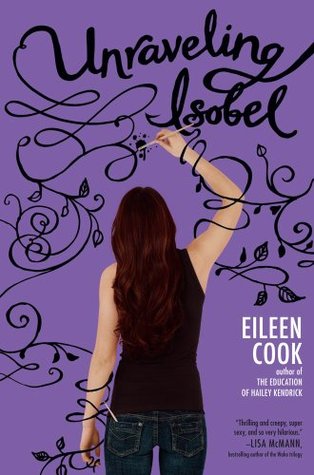
Haunted house on an island. There's a trope that never gets old. And even if it could, Eileen Cook would be able to shake it up. I went looking for another Cook novel after being pleasantly surprised by The Education of Hailey Kendrick (surprised because I don't usually enjoy realistic "I'm having problems with my social life" novels, but this one really worked for me). Unraveling Isobel sounded like it had the potential to be a fun ghost story (and I was in ghost mode after In the Shadow of Blackbirds and The Time of the Ghost).

The opening hooked me:
When the minister asked if anyone knew any reason why these two shouldn't be married, I should have said something. I could think of at least five reasons off the top of my head why my mom shouldn't have married Richard Wickham.
We've got a potentially evil stepfather ('cause he's a stepfather: they're always potentially evil), a good-looking but brooding stepbrother, and the mystery of what happened to the first wife and daughter. Plus the rumours about the big house they're moving into being haunted. And the west wing of the house is closed (cue Twilight Zone theme).  It's all there, and Cook does fun things with it.

She's a very funny writer. There are spooky bits, and a great spooky twist, but this is a lighthearted, laugh-out loud book. It also managed to deal sensitively with a number of issues, like having a disabled sister, what to think when you have a parent with a mental illness, whether to completely suppress your personality and join the cheerleading squad just to fit in. And whether it's okay to make out with your stepbrother. (Not such a serious issue, I suppose! But you never know: it might come up!)

Unraveling Isobel is Mayan Hot Chocolate: rich and creamy with a spicy kick (depending on where you get it, could be cinnamon, could be cayenne).

I am proud to say Eileen Cook is not only Canadian, but Vancouverian. For more Canadian books, John Mutford has a great blog and a challenge. This is my fourth Canadian book I've reviewed since last July 1. I've got to triple my efforts to reach 13 by June 30!


Thursday, March 13, 2014

DWJ Month: Let's celebrate Diana Wynne Jones!

It's Diana Wynne Jones month, you say? Who says? Who decides these things? Well, in this case it's Kristen at We Be Reading, who is going to have a DWJ post EVERY DAY this month. I salute her boundless energy and ambition! My ambitious plan is to read all Kristen's posts so that I can be reminded of DWJ books I haven't read for a while (or at all), and then read as many of those books as I can this month. And I might post once or twice about them.

This is great fun because I love rereading books when it's been long enough that I don't remember what happens in them. That was the case with Time of the Ghost and House of Many Ways.

House of Many Ways is a sequel to Howl's Moving Castle. Sophie and Howl show up as supporting characters in several very amusing scenes, but the heroine is the quietly stubborn Charmain, who would really rather be reading a book, thank you very much, but if she absolutely has to go take care of her great uncle's house while he is being treated by elves for a strange illness, then fine, at least it gets her away from her annoying parents. Little does she know what she's getting herself in for! I love the house, which similar to Howl's castle in its space-bending magic, but with its own personality and rules. I love Charmain's relationship with the unexpected apprentice who is rubbish at magic. (Charmain echoes Sophie's way of dealing with magical disasters: you just have to tell things very firmly what you want them to do!) I have a special spot of affection for the well-meaning King and Princess, who are doing their very best even though they have no idea what's going on under their very noses. I don't think it's too spoilery to say that the villains get a very satisfying comeuppance at the end!  A bit quieter and lighter than Howl's Moving Castle, but the same world, the same magic, the same fun.

Time of the Ghost has an entirely different feel to it: spooky and twisty, more like Fire and Hemlock or Hexwood, except for a slightly younger audience. It's a book that I don't want to spoil by revealing anything about the plot, because nothing is as it seems and you figure things out at the same time as the narrator does. I will say that DWJ gets the experience of being a ghost down perfect.* And I'll also say that this book convinced me never to participate in a seance or pretend to worship an imaginary ancient being: you never know what you might inadvertently awaken! (Reminds me of Verdigris Deep, by Francis Hardinge: better not wish on a wishing well, either!) There's some beautiful landscape description in this book, and it's also very interesting to read it after reading DWJ's autobiography, since many aspects of the family are taken from her own childhood (a rather terrifying thought).

*Because I totally know what that's like.

Monday, March 10, 2014

The Prince Who Fell from the Sky, by John Claude Bemis


I have a Marveous Middle-Grade Monday selection this week! It's a post-apocalyptic novel for younger readers, with an intriguing premise: humans have managed to wipe themselves out completely, and nature has reclaimed planet Earth. A bear named Casseomae lives in a Forest ruled by wolves—who claim they are the ones to get rid of the Skinless Ones* many years ago. Then a sky ship crashes in Casseomae's meadow, and a Skinless cub climbs out of the wreckage. Casseomae has never had a cub of her own, and against her better judgement she protects the young Skinless One from the wolves.

The Prince Who Fell from the Sky could have been trite, heavy-handed and cartoonish, but instead it is nuanced and believable, with great character interactions. The animal characters are brilliantly drawn: Casseomae reluctantly teams up with a rat named Dumpster—a viand, that a vora like Casseomae would normally never speak to—and Dumpster's attitudes, speech patterns, beliefs, quirks are all definitively rat-like, just as Casseomae sounds and thinks like a bear, and the wolves, coyotes and dogs are all equally distinct in their culture and characteristics. It's also wonderful how the character of the Skinless One comes across without him ever saying a word that we can understand (he, of course, can't speak vora).

Casseomae's quest to find a place her adopted cub can be safe is a fascinating journey through a convincing world. The animal enmities and alliances are well crafted; their understanding (or misunderstanding) of the Old Devils* and their relics is both humorous and telling. Each character has sympathetic motivations: even the wolf Ogeema is only trying to protect the Forest, and Cassaomae herself is conflicted about the wisdom of protecting one who could turn out to be as dangerous and destructive as the rest of his kind.

Bemis does have a message to convey, but he is subtle and thoughtful about it. There is no easy right and wrong; there are only the choices each character makes based on what they value most.

This was a fun read with humour and adventure that was also deeply moving and beautiful. Cassaomae gets added to my list of favourite characters, and Bemis is an author I want to read more of.

My grandmother's crispy-chewy oatmeal coconut cookies.

*That would be us humans. (It's always salutary to see one's kind from a different perspective. One of the great uses of sci fi.)

For more marvelous middle-grade books to choose from, head to Shannon Messenger's lovely blog every Monday.

Wednesday, March 5, 2014

In The Shadow of Blackbirds, by Cat Winters, The Oathbreaker's Shadow, by Amy McCulloch, The Floating Islands, by Rachel Neumeier

I had three half-finished posts in my post list (actually four, but one of them is a MMGM, so look for it next Monday), and I decided to throw them all together and do another quick Wrap-up of Recent Books Read (I just decided to make that a thing), because it's DWJ March over at We Be Reading and I'm missing out on Diana Wynne Jones fan opportunities! So, moving right along:

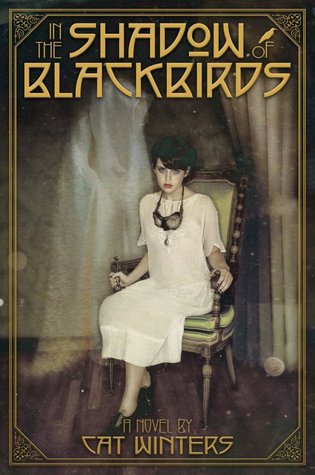
I hope Cat Winters negotiated a good deal on the movie rights to this book, because it's going to make an excellent movie. One that I will never watch, because it will be too scary! (I can deal with spooky-scary in books, just barely.) Yes, In the Shadow of Blackbirds is all about spirits and seances, but the spookiest part is the very real historical setting: 1918, in the middle of World War I and the Spanish Flu epidemic. Everyone is wearing medical masks and eating onions in a panicked attempt to keep themselves safe from a disease no one can escape. Dead bodies piled up beside the street. Maimed soldiers coming home from war. Creepy! (There are awesome photos from the period throughout the book which add to the atmosphere.) The plot was interesting, kept me guessing, and I really liked Mary Shelly Black: she goes through a convincing coming-of-age while solving a mystery and coming to terms with change and loss. Quite sophisticated writing for a debut novel, I thought.

I've got another Canadian author for you! The Oathbreaker's Shadow is an ambitious first novel with a very different fantasy scenario and a desert/steppe Mongol-inspired setting.

I don't want to give away too much, but the underlying idea of oaths being bound by magic so that an oath breaker is magically punished has a lot of potential. And the story starts with two boyhood friends who swear an oath of loyalty to each other . . . well, you can see where this is going.*

Raim is a pretty swoon-worthy main character, and I liked the potential love interest (no spoilers here!). I loved the hidden city of Lazar.

There were some first-novel awkward bits, and the magic system hasn't been explained well enough yet, but I'm engaged enough by the story to want to read the second book.

I went looking in my library for Rachel Neumeier because I'd heard a lot about House of Shadows. When I found The Floating Islands, the title and cover convinced me I'd love this book even if I hadn't been interested in the author. I was right.

Loss, betrayal, longing, choices, mistakes, consequences. Noble sacrifices, humility, generosity. These are a few of my favourite things in books, and The Floating Islands has them all. Dramatic scenes where characters challenge each other and reveal their true essence. Characters who desperately want something, and find out they can have it, and then learn the cost. People who can fly. Then there's the titular floating islands. Awesome setting! (What is it about that concept that's so compelling? It makes no sense, but do you remember the ones in Avatar? Amazing.) Loved the islands, loved the relationship between cousins Trei and Araene, loved Araene's taste/scent-based magic, loved Trei's friend Ceirfei (swoon!). (Wasn't a huge fan of all the unpronounceable names!) I would have read a lot more description and explanation, but I liked the fast pace—it was efficient; it gave me everything I needed. I'm definitely reading more of Neumeier!

*Coincidentally enough, I just read Wolfskin by Juliet Marillier, which centers around a similar plot point. Wonderful adult fantasy; my first by Marilllier, though I've been intending to try her for a while. It's in my TBReviewed pile now.

Thursday, February 13, 2014

Diana Wynne Jones' Magid Series

I'm doling out the Diana Wynne Jones books I haven't read yet, saving them as treats for myself, knowing there won't be any more. (Although there is one coming out this year, The Islands of Chaldea, which she had left unfinished on her death and was finished by her sister.)(It's an interesting story—the story of its completion, I mean. I look forward to reading the book.)

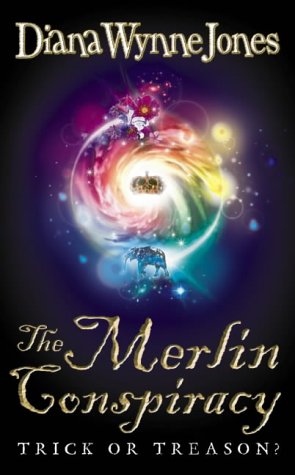
I read The Merlin Conspiracy when it first came out (in 2003), not realizing that it had a prequel. (They call it a companion novel: the plots are entirely separate, but the events in Deep Secret happen first, and the character of Nick Mallory makes a lot more sense in Merlin if you get to know him first in Secret.) Deep Secret (1997) was re-released last year by Harper Collins with a cover to match the rest of their Diana Wynne Jones editions, and I bought it for myself at Christmas, happy to discover another book set in the Magid universe. (They'll probably come out with a matching paperback of Merlin, which I'll want but won't be able to justify, since I already have the hardcover. Sigh.)


Deep Secret was a lot of fun. I'd say the universe of the Magids is a grown-up version of the Chrestomanci universe. The Magids are like a bunch of Chrestomancis trying to maintain the balance of magic among the worlds, only they're a little less omniscient and more hapless. Deep Secret is told from the point-of-view of the youngest Magid, Rupert, who, of course, is given the least pleasant magid tasks, and he keeps screwing them up. His attempts to get things unravelled end him up at the Hotel Babylon where a sci fi convention is going on, and doesn't Jones just have fun skewering that world! (Very lovingly, though!) As with the Chrestomanci books, the forces of good in the universe work through the bungled messes everyone makes of things and the tangled plot threads get tied up very neatly despite Rupert's worst efforts. (If you enjoyed Gaiman's Stardust, you'll appreciate this different take on the How Many Miles to Babylon nursery rhyme.)

The Merlin Conspiracy is set in an alternate British Isles, with a lot more magic than our world. There are some nasty people conspiring against the King, and only Roddy, Grundo and Nick (and the really annoying twins Isadora and Ilsabil) have any chance of stopping them. First they each have to learn how their own magic works (a common theme for Jones: if you think you're not talented, it's because your talent doesn't work the way everyone expects it to, so be patient and don't listen to them. Your talent might just be what saves the world.) It's a book crowded with magic, myth, elephants and salamanders, and a confusing number of plot threads that all affect each other in weird ways (that's what it has most in common with Deep Secret). (They also both have really odious bad people—but then all Diana Wynne Jones books have really odious bad people. She doesn't do grand villains like Sauron or Voldemort, which are actually easier to defeat because of how grandly villainous they are. Odious people are another matter entirely.)

I liked Deep Secret better than I liked The Merlin Conspiracy, but when I reread Merlin after reading Secret, I enjoyed it a lot more than my first reading. I had always felt that I was missing something about Merlin, and Secret gave me the background I needed to put it in context. (Plus, you never get all of a Diana Wynne Jones book on one read—I should know that by now!) Deep Secret is considered an adult book (I guess because the protagonist is an adult, and she mentions sex one or two times), and The Merlin Conspiracy is a children's book (because it has children protagonists), but that didn't make a difference to me. I would say Secret is funnier—it's more overtly satirizing our own world—, whereas Merlin is more absurd: funny because it juxtaposes more and more random things, but potentially annoying if you want everything to just line up and make sense.

Deep Secret is one of those layered desserts people like to call Sex in a Pan, where you basically pick all your favourite desserty things like pudding and whip cream and nuts and cakey bits and caramel and shortbread and layer them on top of each other. Or, better yet, throw them all in a bowl and call it trifle. And Merlin Conspiracy is a one-pot meal where all your favourite vegetables and meat cook together to make some sort of delicious soup or stew. They both have lots of the best ingredients, apparently randomly thrown together, and they're both more than the sum of their parts.

These might not be the first books I'd recommend if you've never read Diana Wynne Jones. (Start with Howl's Moving Castle, Charmed Life, or The Dark Lord of Derkholm.) But they are satisfying meals for fans who want to spend more time in a DWJ universe.
Monday, February 10, 2014

The Cabinet of Wonders, by Marie Rutkoski

All you have to do to get me to read a book is set it in Prague. There's something so . . . storied about the city: mysterious and old and intricate and artistic and layered . . . Endlessly fascinating!

When I visited Prague several years ago, we went to the famous astronomical clock in Old Town Square. We were told a legend that the prince who commissioned the clock then blinded the creator so he would never create anything so wonderful again. It was a pretty cool clock (though I don't seem to have taken a picture of it; here's a blog with a pic and some description), but the story was what I remembered.

So when I read the description of The Cabinet of Wonders, and found out it starts when the clockmaker returns home without his eyes, and there's something magical about those eyes (and about the clock he made), so his daughter decides to go get the eyes back and stop the prince from doing something nefarious with the magical clock--well, I had to read it. And the book is every bit as cool and wonderful as I could have hoped!

It has fun magic and fascinating gadgets, an intrepid heroine and a useful sidekick with a conflicting agenda, a creepy nasty villain, gypsies (the Roma), a pet tin spider, and the odd real historical detail to give those in the know a little thrill of recognition (John Dee, anyone?). It's not exactly steampunk but it has everything I like about steampunk (did I mention gadgets? and alternate history?).

It's middle-grade so it's short and fast-paced, but the plot is intricate and the characters are well-developed. And I just loved the world!

I'll definitely be looking for the next installment in the Kronos Chronicles.

The Cabinet of Wonders is these delicious pancakes that I invented: slice up a pear, fry it in butter, make your favourite buttermilk pancake batter and pour it on top the sauteed pears (be careful when you flip them over; the pears tend to fall off). Absolutely delicious, totally easy, and makes me feel terribly clever for having invented them!

For more Marvelous Middle-Grade books to muse about this week, mosey over to Shannon Messenger's magnificent blog.

Monday, January 27, 2014

Fortunately, The Milk, by Neil Gaiman

I said in my last Neil Gaiman review that Gaiman understands story better than anyone else on the planet. As further proof, I offer you Fortunately, The Milk.

If you want to learn how to write a plot, read this book. It will take you less than an hour, and you will enjoy it immensely. If you want to understand how humour works, also read this book. (It's the same, really, plot and humour. Jokes are just really short plots; the best plots are just extended jokes. As you will understand once you have read this book.)

It's really, really funny. And, it has aliens, pirates, dinosaurs, volcanoes, time-travel (well, obviously, otherwise how could you have pirates and dinosaurs in the same book? This book does follow all the rules.) piranhas, big red buttons, coconuts, Floaty-Ball-Person-Carriers, ponies, um, I may have missed a few things, but Gaiman definitely didn't. It has it all! And milk. And where there is milk, there is hope, said the stegosaurus.

The illustrations are delightful, and perfect (my edition is illustrated by Skottie Young). The characters are spot on--his family dynamics may be a bit stereotyped, but it's because they're true. All the stereotypes are slyly self-referential--jokes of themselves that kids will enjoy getting. Also some popular culture jokes that older kids and adults will enjoy getting. (The Usual Suspects, anyone?)

This would make a great read-aloud--that's what it is, a bedtime story made up on the spot by a parent. If you can manage without becoming hysterical (always my problem when I try to read funny things out loud).

This one is your favourite breakfast cereal, with milk. Obviously.

 For more marvelous middle-grade choices, head over to Shannon Messenger's blog every Monday.