Tuesday, May 24, 2016

Recommendations for my 12-year-old nephew, Part 1.5, a few more classics

Sorry, Stacey, I meant to get this post up last week, but I have a good excuse: I've been volunteering at the Red Cross call centre helping evacuees from the Fort McMurray fire. It's the biggest (and most logistically challenging) Red Cross relief effort in Canadian history. They've been out of their homes for a month now; here's hoping everyone can go home soon.

Here's my first post with some of my favourite classic books I thought a 12-year-old boy might like. Now here are a few more ideas from the comments that I really should have thought of myself:

The Dark is Rising series, by Susan Cooper: more well-loved British fantasy, with an Arthurian flavour.

The Blue Sword, by Robin McKinley: magic and swords and horses; what more do you want? One of my favourite books of all time. For a slightly older reader, I would say, but not because of anything inappropriate.

The Lemony Snickett books, for a slightly younger reader. I haven't actually read these, believe it or not, but I hear they're pretty funny, if you like your humour black.

The Chronicles of Ancient Darkness, by Michelle Paver: Stone Age setting and bonding with a baby wolf. Great story.

So You Want To Be A Wizard, by Diane Duane.* There are nine books so far in this series about two ordinary teens who stumble across wizardry and choose to take the Wizard's Oath to fight against the Lone Power. It's fantasy with a science-fictiony feel, because they get to go to other planets and meet aliens, and wizardry has lots of technical aspects (like temporal-spatial claudications). Great details like the spell to make your fridge door open into your friend's much better-stocked fridge. Plus cool philosophizing and amusing family members. I love these books.


This was going to be the beginning of Part 2: more recent books, but it's getting late and this is already pretty long! Part 2 will be coming soon, I promise!

*I was intending to include this series in my post of contemporary choices, but indeed the books have been out for longer than my nephew has been alive, so they probably count as classics! They've just been released in new editions (as e-books, at any rate) that have been updated so the technology doesn't seem dated. (Am I feeling old right now? Heavens, no!)

Monday, May 16, 2016

Recommendations for my 12-year old nephew, Part 1

Just got a text from my sister-in-law with a fairly common question: her son has finished Harry Potter, Artemis Fowl, and Percy Jackson—what can he read next?

Well, lots of people have created their own lists, but maybe it's time I made my own. Based on my bookshelf, my own memories of reading, and my sons' reading, I'm going to do a couple of posts with a few suggestions, sort of divided into categories.

Classics Everyone Should Read (IMHO)


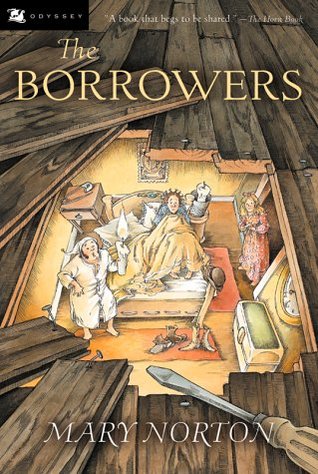
The Borrowers, by Mary Norton. What is it about the idea of little people that's so fascinating?  What makes this story great, other than descriptions of how a family lives under the floorboards of a human house, "borrowing" what they need from the humans, is the cautious friendship between the borrower daughter and a human boy. Just delightful. And if you like books about small people, you should also try The Cricket in Times Square and Stuart Little.

Five Children and It, and everything else by E. Nesbit. Wonderful adventures set in early 20thC England, in which kids get to run around without adult supervision and find wish-granting creatures and get into hilarious magical trouble. And if you like the British period setting, you should also try Edgar Eager's books, which are very similar.

The Chronicles of Prydain, by Lloyd Alexander. Five-book epic fantasy about an assistant pig-keeper, a wizard, a hero, and a princess, fighting the powers of darkness in a mythical version of Wales. You could say it's The Lord of the Rings for the younger set. Or you could just enjoy Taran's adventures as he stumbles his way into heroism. (Princess Eilonwy is the original kick-ass heroine, btw.) And if this stimulates your love for all things wizardly and epic, you might be ready for A Wizard of Earthsea, by Ursula K. Leguin (for a slightly older audience).

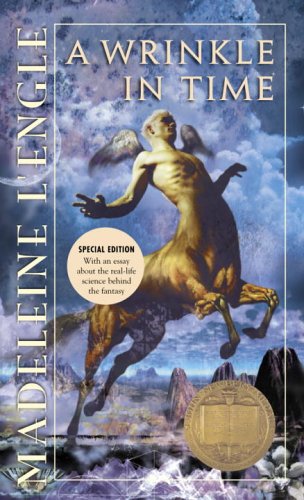
A Wrinkle in Time, by Madeleine L'Engle. Is it fantasy? Is it sci-fi? Is it an amazing book that everyone should read? Yes and yes. A tesseract is a wrinkle in time, and it allows Meg and her precocious younger brother Charles Wallace to travel across the galaxy to rescue their father from IT. Mind-blowing and so convincing to my young self that I half-seriously asked my high school biology teacher if there was such a thing as farandolae (that's actually from the second book of the trilogy, but anyway)(OK, it's a quintet, but the first three books are the best)(IMHO).

Black Beauty, by Anna Sewell. Now we're really getting into classics! I adored this book as a child, read it a million times I swear. It has some pretty sad bits: it's an entirely realistic life story of a horse in Victorian England. But utterly compelling!

The Black Stallion, by Walter Farley. Yes, I went through a horse phase when I was a preteen. There are, maybe 25 books in the Black Stallion series, and I read them all, multiple times. They do get a bit formulaic after a while, but the first book is a truly great read, and if you can't get enough of horses, it's wonderful to have 24 more books ahead of you!

The Chrestomanci books, by Diana Wynne Jones. And then read everything else she wrote! DWJ, as we bloggers affectionately call her, requires several posts of her own to do her justice (if you click on her name in the labels section below, you'll get all the posts I've done about her so far). She is the Grand Lady of British Fantasy—imaginative, deep, compelling, and almost always very, very funny. The Chrestomanci books are about a nine-lived enchanter who has to sort out magical problems in various parallel universes connected to our own. You can start with any of them, but here is a suggested reading order from DWJ's website.


This post is getting so long I decided to deal with more contemporary picks in an entirely separate post. What classics from your childhood should I have added to my list for my 12-year-old nephew?

My sister-in-law and anyone else looking for great reads for kids (or themselves!) should definitely check out Shannon Messenger's awesome blog, for more Middle-Grade recommendations every Monday.

Tuesday, April 26, 2016

In which I discover anime

I didn't know very much about anime (still don't!): I'd seen My Friend Totoro and Howl's Moving Castle, and I'd heard of Sailor Moon (I'm revealing my age here, I know!). People whose taste in books I like often refer to Avatar: The Last Airbender in glowing terms, but the one time I tried watching it I was put off by the stylized way emotions were depicted and didn't get past the first episode.

But I kept seeing intriguing looking titles on Netflix, and I thought (as one does, with Netflix): what the heck, why not try something. So I did, and now I'm hooked. I'm running out of anime on (Canadian) Netflix I want to watch, so I need recommendations of where to go next.

Here's what I've liked so far:

Sword Art Online: I'm a sucker for dark-eyed loners with kind hearts and superior swordsmanship, so online game hero Kirito was the perfect gateway drug for me. I loved the art in this one: the stunning, imaginative online world, and the way the real world was subtly different, depicted in small details (like water dripping from a faucet). The character development kept me interested in the story, in particular the strong female characters. Just don't watch the second plot arc of the first season (starting in episode 16). It's awful. But Sword Art Online II redeemed itself.

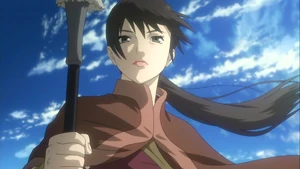
Moribito: Guardian of the Spirit: a beautiful tale about a prince who hosts a water demon and the female bodyguard who swears to protect him until the demon can be born. Everything about this one is lovely: the art, the landscapes and period details, the characters, the gentle humour. Very sweet.


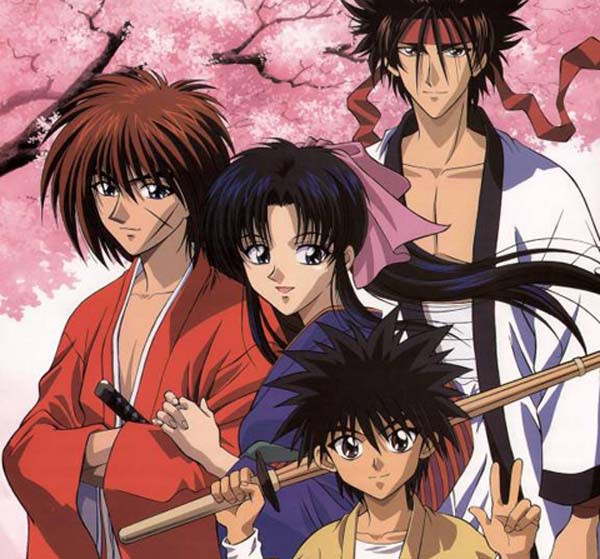
Ruroni Kenshin: a wandering swordsman protects the innocent with his reverse-blade sword, as atonement for the many people he killed during the Meiji Revolution as Battosai the Manslayer. Sounds serious, and there are some nice serious bits to it—mostly centered around Kenshin's struggle not to return to his former violent self—, but this one is mostly light and fun. It has a more "cartoony" art style with the exaggerated facial expressions I originally found annoying (eyes and mouth turn into geometric shapes to show various extreme emotions) but I'm getting used to now. The first season assembles a "team" that gets into various kinds of trouble against all sorts of bad guys. You can't take the plot too seriously, but I love all the character arcs. I also love all the historical references to the Meiji era. Plus, I might even love Kenshin more than I love Kirito ...

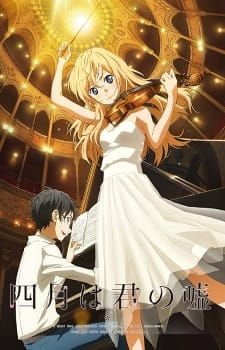
Your Lie in April: contemporary, realistic story about a pianist prodigy who stops playing when his mother dies, and the free-spirited violinist who rekindles his love of music. Gorgeous, gorgeous art, and a spectacular soundtrack. Depicts with grim accuracy the stress of competitions for young musicians, but also beautifully conveys the power of music to heal and transform. Quite impressive.

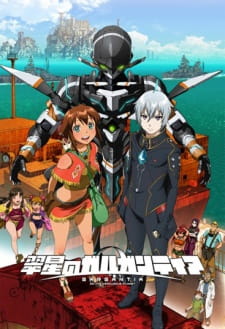
I also tried a couple of "mech-anime" titles, with giant fighting robots (because, giant fighting robots, of course!). I particularly enjoyed the world-building and plot arc of Gargantia on the Verdurous Planet, about a soldier from space who lands on a water-covered Earth and discovers there is more to life than fighting (Don't worry, there's still plenty of fighting. With giant fighting robots, of course. I loved the robot's personality!)


And I really liked the characters in Aldnoah.Zero, though the story of the Martian empire attacking earth was a little far-fetched.


Have you seen any anime shows you've particularly enjoyed? And where else can I go once I've exhausted Netflix's limited offerings?

Saturday, April 23, 2016

The Quick Guide to Some of My Favourite Books

My daughter just got on a plane for a five week trip to South America (am I worried? nah, of course not! what could possibly go wrong!), and so I lent her my Kindle for the ridiculously long plane ride (and all the bus rides etc.). To help her decide what to read, here are quick descriptions of the books on my Kindle I think she might like (in no particular order):

Touchstone series, by Andrea K. Höst
Girl accidentally walks through a portal to another planet. Wilderness survival story until the patrollers from an advanced society rescue her and she discovers—oh, but I don't want to spoil it! Very fun adventure with a bit of intense romance. (I will say nothing about the hot psychic ninja warriors in form-fitting nanotech suits. Ahem.) Easy reading YA.
Queen's Thief series, by Megan Whalen Turner
Eugenides is a thief and a trickster, and if you think you know what he's up to, you're most certainly wrong. The first book is fairly simple (except that you don't even know you don't know what Eugenides is up to), written for a younger audience; then the next books get much more intense and complicated with plots and schemes and politics and the odd intervention of the gods. Vaguely ancient Greece-type setting. Eugenides is one of the best characters ever written. YA-adult.

A Matter of Magic, by Patricia Wrede
She tries to steal from a magician: not a good idea. But he thinks she should become his apprentice. Light-hearted magical adventure in an 18thC England setting: drawing rooms and highwaymen and whatnot. Cute and fun, young YA.


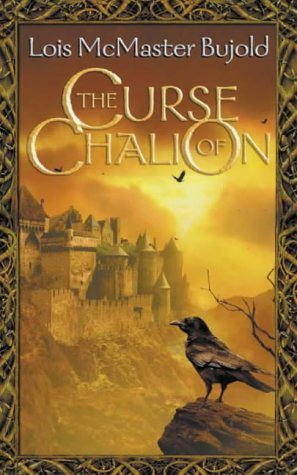
The Curse of Chalion, by Lois McMaster Bujold
A weary soldier returns to the estate he grew up on, hoping to find a place as a servant. Instead he gets involved in royal plots and has to lift the curse on the royal family before the kingdom is ruined. Very well-written, wonderful characters. Gets fairly intense. Adult fantasy.


The Curse Workers series, by Holly Black

What if magic ran in the Mafia family? Twisty plot about a family of con artists, each with different ways of magically affecting people, like persuasion or memory alteration. Cassel's talent is death. His sarcastic narration lightens this dark YA story of manipulation and deceit.


Black Dog series, by Rachel Neumeier
Werewolves, but not like any werewolves you've seen before. Natividad and her two brothers flee to Vermont seeking the help of the formidable Dimilioc clan, knowing they will want Natividad for her Pure magic, but not sure they'll let her brothers live. Great family interactions, interesting pack dynamics: there's lots of fighting and stuff but it's really all about the relationships. Great writing and lots of humour to offset the throats getting ripped out. YA.
 

Thursday, April 21, 2016

Happy Poem in Your Pocket Day!

Did you know it was Poem In Your Pocket Day?

If you have a poem in your pocket today, you can share it with someone who might need a poem. (And we all need a poem every now and again.)

Here's mine:

The Peace of Wild Things

by Wendell Berry


When despair for the world grows in me
and I wake in the night at the least sound
in fear of what my life and my children's lives may be,
I go and lie down where the wood drake
rests in his beauty on the water, and the great heron feeds.
I come into the peace of wild things
who do not tax their lives with forethought
of grief. I come into the presence of still water.
And I feel above me the day-blind stars
waiting with their light. For a time
I rest in the grace of the world and am free.


(Some moments when I have rested in the grace of the world and felt free.)

Monday, April 11, 2016

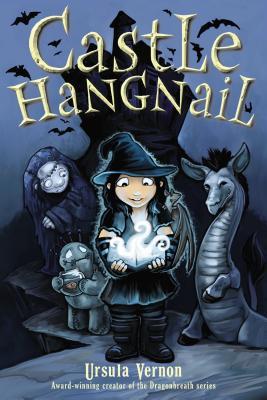
MMGM: Castle Hangnail, and other awesome stuff by Ursula Vernon (who is also T. Kingfisher)

I said I would review the rest of the Cybil's Middle-Grade Spec Fic shortlist, and then I got distracted by other books (there are always other books, aren't there!). But I just read a novella by T. Kingfisher, who, it turns out, is actually Ursula Vernon, when she's writing for adults. Which I didn't know she did. Which is very exciting, because she's an awesome writer! So I decided I needed to do a fangirly squee post about Ursula Vernon. Which will include a review of Castle Hangnail!

Ursula Vernon has definitely inherited the mantle of Eva Ibbotson. Castle Hangnail will thrill anyone who loved Which Witch: it's pretty much a remake of that story (in fact, there are several elements of homage, if you're looking for them, including the bat in Molly's hair): there's a gloomy castle full of quirky minions in need of a wicked master, and a young witch who has the right boots but might not otherwise be as qualified for the position as she claims. I think Ibbotson would be pleased at the way Molly sabotages the evil developer (just the sort of small-minded antagonist Ibbotson loved to defeat) and would cheer the way she gets the bullying sorceress Eudaimonia to defeat herself.

I think Vernon's heroine is a little more complicated and interesting than Ibbotson's straightforward good guys, and her secondary characters are marvelously well-rounded, each with their own little character arc. There's also a significantly darker streak to the magic and the plot—dare I say there's some Diana Wynne Jones going on here, too?

The humour is lovely and multi-layered, as you would expect from the author of Harriet the Invincible (and I've got to read the Dragonbreath books: they look equally brilliant). I'm at the point where I'll buy anything Ursula Vernon publishes: she can draw, she can write wonderful middle-grade novels, she can write humour …

And she does brilliant adult fairy-tale reworkings! Under the name T. Kingfisher (a name she calls "vaguely absurd"!), she has published a number of short stories and several novels. I highly recommend the short stories, which you can find here. Some of them are quite disturbing, some of them are just lovely, and all of them are fascinating and thoughtful, and will change the way you read everything else. ("Elegant and Fine" is the story of Susan from the Narnia chronicles, and it's . . . eye-opening. I liked it a lot.) I particularly loved "The Tomato Thief" (and "Jackalope Wives," which you have to read first).

The novella that I read is Nine Goblins. It started out very fun and spoofy, and then turned into something quite deep. Reviewers have compared it to Terry Pratchett's Discworld stories, and they're not wrong. (Gosh, how many amazing authors can we compare Vernon to?!) I am looking forward to getting my hands on Bryony and Roses—her Beauty and the Beast retelling—, and The Raven and the Reindeer, which is The Snow Queen.

Every Monday you can find more Middle-grade recommendations on Shannon Messenger's blog; there's always something new to discover!

Monday, March 28, 2016

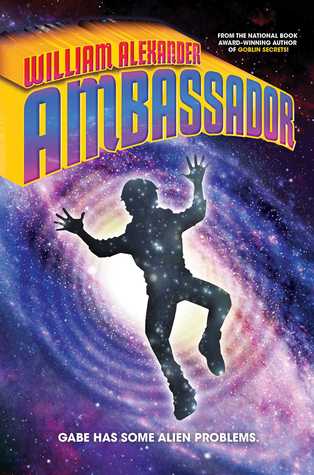
MMGM: Ambassador and Nomad by William Alexander

What do you want from your science fiction? Cool ideas, right? Technological, biological, philosophical—doesn't matter, so long as its stuff you've never thought of before, or never thought of in quite that way. Because otherwise you may just as well read realism.

But the best science fiction uses these cool ideas to say important things about who we are: what makes us human; what we get right sometimes; what we're getting very, very wrong.

William Alexander has written the best kind of science fiction in this duology. I hope they end up getting lots of attention, because they deserve to become well-loved classics.

When I finished Ambassador, my first thought was, "this is a lovely, lovely book," and that's not an adjective I expected to use on a book with that kind of cover, about aliens shooting laser guns from scorpion-like spaceships. The spaceships are pretty awesome, but—true to the title—the book is actually about diplomacy—about the possibility for people completely alien to one another to communicate and find common ground.

Cool idea #1:  Ambassadors are all children, because the young of any species are most flexible and willing to adapt to new circumstances, and interacting with aliens takes a lot of flexibility. (I knew this when I was a kid: I was quite certain that if aliens landed in my backyard, I'd be the perfect person to deal with them!)

Awesome quote: "Juveniles have not yet fixed the boundaries of their social world. They haven't drawn a circle around those worth talking to."

Cool idea #2:  It would be pretty hard for aliens to communicate with each other over the fast distances in the galaxy if there wasn't such a thing as entanglement—which I won't try to explain, but if you've read a sci fi book with an ansible in it, you know the principle. In this book's universe it's possible to entangle your perceptions so you can perceive two locations at the same time, even if you're not physically present.

Awesome quote:
"Did that make sense to you?" the Envoy asked.
"It sounded like it make sense," Gabe said carefully. "I'd like to just pretend that it did and move on. Maybe it'll sink in later." 

Cool idea #3:  The Envoy (awesome character!) builds an entangling device out of the washer and dryer in Gabe's basement.

Awesome quote:
"You can make a black hole in the dryer?"
"Yes," said the Envoy. "Please do not stand too close to it."
 "Can I throw something at it and watch what happens?" Gabe asked.
"No," said the Envoy. "It will be very precisely calibrated."
"Not even little scraps of paper or balls of dryer lint or something like that?"
I could fill several blog posts will cool ideas and awesome quotes, but you should just go read the book. I hope you noticed that it's also a very funny book, mostly because of Gabe.

I love Gabe, love the way he perceives the world, love his interactions with his family, love the way he handles all the sudden things thrown at him. I love all the characters: Alexander has a way of conveying everyone's essence in a very few interactions so that you instantly understand and therefore care about them.

Alexander is just a really really good writer. I savoured his sentences, his characters, his metaphors, his plot.

And Nomad is even better. (I don't have to tell you to read Nomad, because as soon as you get to the end of Ambassador you'll be clamouring for it. It's one of the better cliff-hanger endings out there.)(In fact, make sure Nomad is available before you finish Ambassador!) The plot gets even more fraught and perilous; there are more awesome characters and new cool ideas;  it's just as funny and profound, often at the same time. (I think those are my favourite kinds of books: funny and profound. Truth that makes you smile in recognition.)

Have I mentioned that these are really, really good books? For a food metaphor I should go with something Mexican, for Gabe . . . I don't know how authentic it is, but sweet potato black bean soup is pretty nummy and hearty and nourishing, with a bit of heat but a nice sweetness. Just like these books!


So many Marvelous Middle-Grade books out there, and every Monday you can read about more of them on Shannon Messenger's blog.