Monday, February 24, 2025

Fun and Delightful Light Fantasy

Life Prevents Blogging, 2025 Edition. I haven't even had time to check out the Cybils winners!

Saw this excellent post: 23 Fun and Delightful Light Fantasy Novels 

I've read several and have now added several more to my TBR. And I thought, I could very much make a list of my own, since Fun and Delightful Light Fantasy is pretty much exclusively what I've been reading for a while now (not that I've been reading a lot at all these days, sigh). And a blog post made of cutting and pasting shouldn't take that long, right?

In the order in which I think of them, then, here's my list:

T. Kingfisher's World of the White Rat books. Some horror-adjacent elements (if I can handle them they can't be that horrific!) but tons of belly laughs and nice romance:

The Clocktauer Wars. Duology; romance is a minor element. Seriously awesome, weird world!

Swordheart: A widow inherits a sentient sword. 

The Paladin series: Romances with an overarching slightly creepy mystery.

Some really well-done middle-grade:

The Demon Sword Asperides. This title makes me smile every time. About a sword and a boy.

Accidental Demons, Clare Edge. Diabetic blood-witch can't help conjuring demons. 

Sal and Gabi Break the Universe, by Carlos Hernandez. Title says it all, really. (They do fix it.)

Inkling, by Kenneth Oppel. Sentient splotch of ink befriends a boy.

The Girl Who Could Not Dream, by Sarah Beth Durst. She dreams a Monster. He's awesome.

Ambassador and Nomad by William Alexander. Duology. Alien builds quantum entanglement device in a dryer.

Emily Wilde's Encyclopaedia of Fairies. Curmudgeonly professor of fae studies.

The Legendary Inge, by Kate Stradling. You had me at gender-reversed accidental Beowulf.

Catfishing on CatNet, by Naomi Kritzer. YA, sentient AI wants more pictures of cats.

The Undertaking of Hart and Mercy, Megan Bannan. Undertaker, undead monsters, romance. You know, the usual.

Regency and Victorian Faery Tales series by Olivia Atwater. Short, easy reads, great characters.

Friday, November 15, 2024

MMGM: The Demon Sword Asperides, by Sarah Jean Horowitz

First off, this title is the best, isn't it? The catchy rhythm, the intriguing concept. Who doesn't want to read a story about a demon sword? And Asperides does not disappoint. World-weary, hell-weary, bitter and sarcastic—I loved the voice and perspective of a sword wielded for centuries by power-hungry villains.

Particularly when this sword ends up in the hands of a hapless, naive boy. Nack Furnival is desperate to prove himself to his family of brave knights, but he's really no good at sword fighting. It's easy for Asperides to trick Nack into believing he's an angel sword, and off Nack charges on a quest to right wrongs and save the innocent. Meanwhile an evil sorcerer has been resurrected, and he wants his sword back. Shenanigans ensue.

The Demon Sword Asperides is very funny—lots of snarky commentary from the sword, lots of hilarious juxtapositions of assumptions and intentions along with great slapstick and situational comedy. But it's also very—I want to say sweet, but I don't want you to think it's saccharine. Maple syrup sweet—it has depth and complexity. I'm willing to compare it to Terry Pratchett's humour, because there is real character growth and some pointed commentary about the world underlying the shenanigans.

I don't want to spoil anything, but Asperides has his own character arc. His relationship with Nack is the best kind of starts-off-unequal-with-deception-and-trickery turning into genuine care and each changing the other for the better. Nack learns that the heroes he worshipped might not be worthy of him and gets to choose who and what he values, including valuing himself. Satisfying all around.

I picked this one up from the library while waiting for The Dark Lord Clementine, which I am now even more eager to get my hands on. If you like Ursula Vernon and Eva Ibbotsen, Sarah Jean Horowitz will be right up your alley.

Marvelous Middle-Grade Monday is a long-running feature hosted by Greg Pattrige at Always In The Middle. Be sure to check out all the other great middle-grade recommendations this week! (I know, it's a little early for a Monday post. Time is arbitrary, ok?)

Friday, October 11, 2024

There is a Door in This Darkness, by Kristin Cashore

I was immediately interested in Kristin Cashore's new novel, because she's a wonderful writer,  and I loved her fantasy novels Graceling, Fire and Bitterblue. (I have not yet read the last two in the series, because Bitterblue was a little heavy, and I've been looking for lighter novels for a few years now. Since 2020, in fact.) 

The title of this one gave me pause, and the premise even more so. Was I ready to read a book set during the pandemic? It turns out the answer was yes, if the book was this one.

The blurb for this book is accurate but doesn't in any way do it justice. It's much more than "magic-tinged," and it's a lot more wise, hopeful and whimsical than it sounds. Wilhelmina is such a real, relatable character, and so are all the members of her family and her friends, and their relationships—all the relationships—make this book glow. I use the word deliberately, because light is a theme and a motif running through the book—if there's a door in the darkness, light is what's coming in.

I'm not sure magical realism is quite the right way to categorize this book. In my own less-than-rigorous definition, magical realism doesn't have any explanation for the fantastical elements. In this book, the fantastical is random and quirky, involving birds and doughnuts and obelisks, [ever-so-slightly spoilery] but there is also mention of tarot, and grandparents who are "practitioners of the craft." I wouldn't say this book is about witches or Wicca or any particular mythology or spiritual tradition—more that it recognizes "there are more things in heaven and earth, Horatio," and the fantastical elements are representative metaphors. (Which kind of aligns with magical realism; I think I'll stop trying to define anything!)

However you define it, the magic was fun: it worked as a beautiful metaphor but also to drive the plot in almost a treasure-hunt-y way. 

This is another book with three aunts (see A Sorceress Comes to Call), and I have to say I won't soon tire of this trope! Wilhelmina's aunts were just lovely. The narration alternates between present day (Oct 2020) and childhood summers spent at the aunts' big house in the country, and it really does feel like "her life was a string of lights, one for every summer she'd spent with them." Then there are the friends, Julie and Bee, and what an exquisite and realistic portrayal of friendship! The dips into the past allow us to watch the friendship form and develop and to fall in love with all three children as they grow up. We even get a romance, which I won't spoil! All the kinds of love (there are siblings and parents too) and all the ways love is hard, and rewarding, and all the ways the pandemic made love both harder and more rewarding.

If you think you might be ready to read a book set during the pandemic, at the time of the 2020 election, then this might be a good book to start with. It acknowledges the stress, fear, frustration, loss and utter weirdness of that time, specifically of being a teenager at that time, and it offers a way to process. It's not a particularly subtle book, but I think the theme of finding light in the darkness, of balancing realism with hope, is one we need to be hit over the head with!


Monday, September 30, 2024

The Spellshop, by Sarah Beth Durst

The Spellshop is an utter delight of a sweet, satisfying girl-finds-friendship-love-community-and-magic story—and it is stressful as all heck! Do not be deceived by that warm, glowing cover (what a gorgeous cover!): this book begins with a library on fire, and the tension doesn’t let up. I was seriously worried, ok?  Because Kiela and Caz and the weird and wonderful inhabitants of Caltrey need to be safe and happy and thriving, and it's touch-and-go there for a while. 

Personally, I think Sarah Beth Durst cheated. Knowing that her readers probably like books, she made her main character a librarian saving books from a fire. So we have to like her! Kiela is actually a really interesting character, because, other than saving the books, she's not particularly likeable. Introverted to the point of shunning all human contact, paranoid and suspicious (for very good reasons, yes), she makes things hard for herself by building walls between her and everyone who could help her. The tension of whether and how those walls will be torn down is added to—and gradually supplants—the tension of is she being chased? will they find her? what will they do to her when they do? And once she starts caring about more people the stakes just keep going up, because now it's not just the books and Caz at risk.

Caz might be the best thing about this book. Durst is excellent at creating magical sidekicks, and Caz is fighting with Monster (from The Girl Who Could Not Dream) for first place in my heart. (Might have to reread Dream and get back to you on that.) Caz certainly wins for most unique; also I love that the talking plant created by a rogue librarian is a spider plant—what library would be with out one!

The romance is possibly a little too perfect, but we didn't come to this book looking for realism, did we? We came because we wanted a guy who builds bookshelves and keeps secrets, respects boundaries but is patient enough to coax Kiela out of her thorn-encased heart.

I thought the resolution was interesting and satisfying—I won't spoil anything, but it was nice to see alternate ways of handling conflict.

Sarah Beth Durst is a wonderfully diverse writer—The Spellshop is different again from anything else she's written—and I look forward to seeing what she comes up with next!

Sunday, September 15, 2024

A Sorceress Comes to Call, by T. Kingfisher

T. Kingfisher has written a Regency romance! Well, sort of. As she says in her Afterword, it "isn't technically a Regency, but it's in the same ballpark, right?" Though most Regencies have "fewer reanimated dead horses."

What she's actually done is a complete reimagining of The Goose Girl—which is such an interesting fairy tale! There have been so many versions, from Shannon Hale's The Goose Girl to Intisar Khanani's Thorn, but there seems always to be something new to say about it, and whoo, boy, does Kingfisher find new things to say!

I don't want to say too much about this novel's relationship to the fairy tale, because part of the fun of reading was figuring out which characters were which and how she transformed some core elements to fit into her "Regency" setting. The juxtaposition of rather terrifying sorcery with ladies taking tea was at times hilarious and at times deeply disturbing!

(Kingfisher likes horror, and she seems to be playing a lot more with it these days. I can't read her novels that are actually horror; this one was fine for me, but be warned, it's serious when it says dark. Not YA, or, at least, not for younger or sensitive readers.)

The ladies taking tea: possibly my favourite part of the story was the friendship between Hester, Penelope and Imogene. Three middle-aged women forging three different paths to independence through the ridiculousness of social mores (and, yeah, Kingfisher is no doubt doing something with the three Fates or whatever, but I was just so delighted to have three completely different characters with important plot roles, none of whom played into any of the older woman stereotypes of the genre, that I didn't care if they symbolized anything!) They were so much fun! (There isn't a female version of the word "avuncular" and there should be: these were aunties of the best sort—and they weren't even defined by their relationship to the young protagonist.) 

Hester is a protagonist in her own right, and isn't that another interesting thing: a fairy tale/Regency romance (sort of) with a young woman protagonist and an older woman with equal protagonismos. Hester has a brother who needs rescuing, and she calls in her friends who come at once, no questions asked. And when they realize that Cordelia (the young protagonist) needs rescuing, there is no hesitation from any of them despite the danger. I love these women!

The sorceress of the title is a heartless villain and Cordelia's mother. Great, great opening scene that defines their relationship and the mother's villainy and creates this undercurrent of fear that runs through the whole book. This isn't a villain who can be defied with impunity. (Have I repeated the word villain too many times? Because she's a doozy of one, just saying!) She's also vain, shallow and greedy, and the juxtaposition of her power with her petty desires is, well, terrifying. (IMHO she didn't need any kind of nuanced backstory: she's what you'd get if all of those conspiring side-characters in Regency romances had vast sorcerous power. Shudder!)

Cordelia could be compared easily to the eponymous heroine of Thorn: she is rendered helpless by her circumstances but she finds tiny ways to fight back, especially when she realizes who else is going to suffer from her mother's all-encompassing selfishness. It's lovely to see her recognize selflessness in others and trust in her own empathy as a power that might be greater than sorcery.

Is there romance? There is, in fact, and it's sweet and lovely and not at all the point of the story. The ending is satisfying on many levels, and the romance is sort of the cherry on top!

No one is as wonderfully weird as T. Kingfisher (well, Ursula Vernon probably is, but she manages to rein it in for her younger audiences!) This one is weird, wonderful, terrifying and hilarious, and you will never look at geese (or horses) the same way again!

Wednesday, September 4, 2024

Liberty's Daughter, by Naomi Kritzer

 Hope you all had a marvellous summer! When I wasn't backpacking or hiking or at music camp, I was rereading the Vorkosigan series by Lois McMaster Bujold, following along with this delightful blog. Lois herself is going to appear on the last episode, airing sometime this month!

Naomi Kritzer is becoming an auto-buy author for me. I first encountered her with the short story "Little Free Library," on Tor.com—a delightful, sweet, but also deep and moving story. Then I happened to read Catfishing on CatNet (my review at the link) and its sequel Chaos on CatNet, without realizing it was the same author. Kritzer has this way of seeing our current society with ruthless clarity that she translates into fun, entertaining spec fic with a hidden punch.

Liberty's Daughter is another plausible near-future scenario: what if a bunch of libertarians decided to hook some sea-platforms and old cruise ships together to create a sea-stead in international waters? (It's plausible because people have already tried to do it. Great story!) I love that Kritzer is able to envision all the nitty-gritty logistics of how such a living arrangement would work. Limited availability of just about everything, for example, leading to our MC's part-time job: finding very specific items for people and negotiating trades. Really great world-building here.

Kritzer is also cognizant of all the unpleasant maintenance jobs that someone is going to have to do, and her story hinges on the debt-slavery that is a sadly plausible solution. Beck Garrison is a privileged teenager because of her father's position, and until she's asked to help find someone's missing sister, she is naive about her narrow little world. But when she discovers nefarious dealings, she plows ahead determinedly to investigate the literal and figurative underbelly of the sea-stead. 

Everything about this book is just so interesting. The fast-paced plot pinballs through all sections of the unique setting and society, exploring a raft (get it?) of physical, political and social implications. Kritzer's critique is funny, nuanced and ultimately hopeful. Yes, people can be greedy and selfish and cruel, but they can also pull together and care for each other and stand up for each other. And human ingenuity can solve as many problems as it creates!

Beck might be a bit too confident and capable to be believable, but it sure is fun watching her bulldoze her way through greed, corruption and incompetence. She has some genuine dilemmas; her character growth isn't huge but it's satisfying. The bad guys aren't flatly evil, either. 

Thoroughly enjoyable, and I look forward to seeing what aspect of society Krizter will choose to poke at next! 

You might enjoy her discussion of the genesis of the book on John Scalzi's blog, but be warned, it's fairly spoilery.

Monday, April 22, 2024

MMGM: Duet, by Elise Broach

If you are musical at all, if you like the piano, if you like Chopin—then I have two strong recommendations for you. The first is this wonderful book by Elise Broach about a goldfinch and a young pianist (and a mystery about a piano).

It's been ten years since I posted about the last Elise Broach book I read, Masterpiece, which is about a beetle and a young artist and Albrecht Durer. I was impressed enough by that book that when I saw her name on a book spine at the library, I immediately took it home.


Broach has a wonderful way of introducing young readers to art and music with such compelling storytelling that the reader never realizes how much they are learning! In the case of Duet, we have the characters of Mirabelle, a young goldfinch with a gift for singing, and Michael, a gifted young pianist who doesn't want a new piano teacher. Mirabelle becomes Michael's muse, singing as he plays and inspiring him to play even better. The description of the music is beautiful and inviting: I looked up the Chopin pieces mentioned so that I could hear what they sounded like! Mirabelle and Michael's friendship is believable and sweet—they can't speak to each other, (Mirabelle is a precocious bird, but still just a bird) but they communicate nonetheless, and each fills a void in the other's life

There is a whole cast of engaging supporting characters, both bird and human. Mirabelle's bird family is a delight! Mr. Starek the piano teacher has his own little story arc, and it's lovely to see everyone coming together to help him in different ways. The mystery of a famous lost piano is solved by Mirabelle and her brothers, and Michael has a satisfying journey developing his piano talent.

A beautiful, uplifting story that will send readers out to find out more about Chopin, and might even inspire them to work on their own talent, whatever it is.

Then you can go watch an animated series on Netflix called Forest of Piano. It's the story of two piano students, one privileged and dedicated, the other with a wild, inherent talent but from the wrong side of the tracks. It follows them all the way from boyhood to teenagers competing in the International Chopin competition. It's a story of music, of friendship, of mentorship, of genius, and there is a lot of Chopin music played and explained. It's also a pretty good depiction of the stress of music competitions, which I could relate to! (From Kiwanis Festivals, not Chopin competitions!) The soundtrack was played by Vladimir Ashkenazy, and the animators did a fantastic job of animating the fingers playing the piano!

Marvelous Middle-Grade Monday has been a running feature for more than a decade now, highlighting great middle-grade reads every week. Be sure to head to Greg Pattridge's blog to see this week's collection.


Friday, April 19, 2024

A Year's Worth of Reading

Time to talk about books again! It's not that I haven't been reading at all this past year, but other areas of my life have gotten a lot busier (as often happens when you say yes to opportunities!). April is an odd time to do a Reading Roundup, but time is arbitrary, and here we are. (This is mostly for my own benefit, anyway.) Divided into star ratings but otherwise in no particular order. (I should point out that most of these are adult books; I was in a bit of a children's lit slump the past year, but I am currently rectifying that: stay tuned!)


5 Star Reads (Loved to pieces, would read again)

Scholomance series, Naomi Novik. Y'all were right, it's awsome!

Lessons in Chemistry, Bonnie Garmus. Worth the hype.

Begin Again, When You Get the Chance, Tweet Cute, by Emma Lord. All her romances are the best.


4 Star Reads (Really enjoyed, might read again, will seek out this author)

The Undertaking of Hart and Mercy, Megan Bannan. Unique and fun, with heart (ha ha).

Jennifer Crusie: a whole bunch of her rom-coms; I just love them all.

Olivia Atwater: Regency and Victorian Fairy Tales. I think I've read them all now. They're so much fun!

Brandon Sanderson: The Way of Kings, Tress of the Emerald Sea. Figured I should see what he's all about. Imaginative world-building and propulsive plots—I'll read more.

Map of the Otherlands, Heather Fawcett. A worthy sequel to Emily Wilde's Encyclopaedia of Fairies.

When Women Were Dragons, Kelly Barnhill. Fascinating, angry.

Whispering Woods, Sharon Shinn. Latest in her Elemental Blessings series, which I love.

Kate Stradling: Deathmark, Maid and Minstrel. Fairy tale retellings. I love everything she writes.

Happy City, Charles Montgomery. The one non-fiction on my list. Urban design fascinates me.

Thornhedge, T. Kingfisher. Sleeping beauty remix. Loved the main character.

Gothel and the Maiden Prince, W. R. Gingell. Rapunzel remix, similar in feeling to Thornhedge. My first but not my last by this author.

Annette Marie: The Guild Codex series. Signed up for Kindle Unlimited to get access to the dozens of books in this entertaining urban fantasy series. Bonus: set in Vancouver! Very fun and readable.


3 Star Books (Enjoyed, might read more by the author)

The Invisible Life of Addie LaRue, V. E. Schwab. Interesting and well-written.

The Kiss Quotient, Helen Hoang

The Bodyguard, Karen Center

Ali Hazelwood: Love on the Brain, The Love Hypothesis

Little Thieves, Margaret Owen


Tuesday, June 6, 2023

Emily Wilde's Encylopaedia of Fairies, by Heather Fawcett

Well, this was an utter delight! All the hype I’ve been hearing about Emily Wilde’s Encyclopaedia of Faeries is justified. It’s funny, clever, atmospheric, sweet and beautifully-written. Emily and Wendell are fantastic characters, and their relationship is a treat.

I should start by saying I’m not a huge fan of Faerie. Beautiful but cruel aren’t characteristics I’m interested in, and I find most books about the fae boring or distasteful. Emily’s fairies, though, are fascinating, intriguing, fun—while still often being beautiful and cruel, and fitting in perfectly with familiar legends and lore.

Most of the book’s appeal is down to Emily herself, the “curmudgeonly professor” with her single-minded pursuit of fairy scholarship. I love the idea of “dryadology”! Practical, intelligent, introverted and awkward around people but confident and clever while studying the Fair Folk “in the field,” Emily narrates the story in hilariously academic prose, complete with footnotes. Her ostensibly objective, multisyllabic discourse does nothing to hide her feelings from the reader, however, and she charmed me as completely as she ultimately charms every other character (and, yes, the metaphor of enchantment is intentional!)

Wendell I will not spoil for you; you’ll just have to meet him yourself when he swans in with his minions in tow and upends Emily’s painstaking plans.

I get a grin on my face just thinking about these two and their exasperation with each other!

All the characters jump off the page; every one of the villagers a distinct individual. And the wintry northern landscape is a character in its own right. I am quite convinced that Hrafnsvik is a real place and the Hidden Folk really do live in those mountains.

There's also a great dog!

A satisfying conclusion, with the promise of another book to come. I am hooked on Emily and can’t wait to see what other surprises she has up her sleeve!

Heather Fawcett is Canadian, by the way: I'm happy to claim her as a British Columbian!

Don't forget to tell me about your favourite dragon in the comments on my previous post, and you could win a free e-book. (Contest open until June 30, 2023)


Friday, June 2, 2023

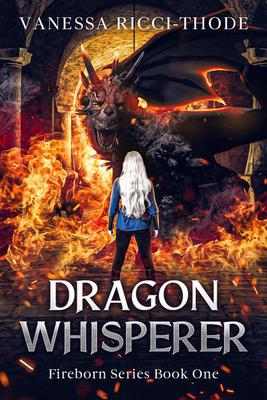
Author Interview and Giveaway: Vanessa Ricci-Thode and the Fireborne series


Vanessa Ricci-Thode has just released the second of four books in a very cool fantasy series (just look at those covers!) It's about three generations of powerful women and the dragon they befriend. I've read Dragon Whisperer, and it's a unique story of a newly married young woman trying to negotiate her new relationship with her husband while learning more about her fire magic; then she has to deal with some truly obnoxious aristocrats who are trying to exploit dragons for their own profit. I love that the romance is the stage after the starry eyes and butterflies, the getting down to how to make a life together. And magic and dragons just complicate things further! 

I had a chance to pick Vanessa's brain about dragons, families, writing a series, and self-publishing:

What/who is your favourite dragon?

You know in Sleeping Beauty where Maleficent turns into a dragon in the final battle? Yeah, probably that. Or Toothless. 

Totally different question: what’s your favourite book/series with dragons in it? 

In the book world, it’s definitely the Enchanted Forest series by Patricia C Wrede! I love what she does with the series, which begins with Dealing With Dragons, and doesn’t take itself too seriously. In wider media, I absolutely adore the How To Train Your Dragon franchise. It’s so much fun!

What do you think is the appeal of dragons?

I think a lot of it is in the impossibility of them. They’re often depicted as incomprehensibly huge. And even when they’re basically just dinosaurs that breathe fire… they breathe fire. Which is immensely cool and deeply terrifying. Flying, sentient, magical flamethrowers. They have the potential to be the ultimate enemies, but also the ultimate allies.

What aspect of dragons appeals most to you?

Definitely all the fire. They’re like flying volcanoes, ha!

Dragon Whisperer was originally written ten years ago. How long have you been playing around in this particular world? Tell us a bit about it: what are some of the fun things you’re exploring (other than dragons)?

I’ve been knocking around in this world since just a little while after Dragon Whisperer was written. I’d never intended for it to be a series, but people started asking when I was going to write the sequel. And it took some noodling to figure out how to keep the worldbuilding but have more adventures. I’ve done a lot to explore family dynamics and also to expand the magic system. I hadn’t actually put much thought into that part when I wrote the first book way back in 2009. Playing around in this world with all the new things I’ve learned as a writer since then has been really fun!

Can you tell us more about the connections between the four books and why you decided to write about multiple generations?

Like I mentioned, I didn’t intend for Dragon Whisperer to be part of a series, and in thinking about a sequel, I was looking for ways to keep as much worldbuilding as possible but to do something new. That was how I came up with multiple generations. Book two features Dionelle’s daughter, Neesha, and book three features Neesha’s daughter. Each of these three books is I guess a coming of age story, each a different generation with different challenges. Dionelle was essentially looking for work-life balance. Neesha is a queer woman struggling to make her way amidst regressive societal norms. Her daughter faces similar issues in book three. Then for book four, I’m bringing them all together because I’m ready for a multi-generational, ass-kicking team up!

Dragons work very well as an Other in your stories: there is prejudice against them, they are misunderstood, treated with hostility and even exploited, despite being very powerful. Was this part of your original intention, or did this theme develop as your stories developed?

While I’d planned for dragons to be misunderstood from the outset with Dragon Whisperer, the hostility was something that developed with the next two books. It became the backdrop required to make those stories work the way I wanted to tell them. 

You also deal a lot with family relationships, which is a little unusual in fantasy stories. In Dragon Whisperer, the main character is recently married, completely upending the Happily Ever After = walking down the aisle trope. How does a fantasy setting help you explore the complexities of a marriage, or parent-child or sibling relationships?

Book one had a lot of exploring the hard work of making that HEA work. I like writing in fantasy settings because I’m not limited by the constrains of reality, which makes it easier to construct different norms that I hope can serve as a roadmap to something more egalitarian for those of us constrained by reality. And then I’m less into traditional romance and like looking for different sources of conflict for subplots. Family has always been very important to me, and also probably the main source of drama too! So it was a natural place to draw from in constructing new stories. There’s plenty of romance out there, I wanted to see and write something a little different.

You’ve been learning-on-the-go how to self-publish. Do you have any advice or words of warning for someone considering that route? 

Haha it’s probably better to figure out more of it before actually getting started. I’ve been doing some building my parachute on the way down sort of stuff and it’s more stressful than it needs to be. It’s a lot of work! Self-publishing is definitely the right option for me at this point, but I wish I’d taken a little more time to work out the marketing side of things before jumping into it.

Giveaway!!

Vanessa has kindly agreed to give a free e-book to the winner of a random draw: to enter, just comment below and tell us your favourite dragon. Contest open until June 30, 2023.

Vanessa is a word sorceress who loves a good story. She’s a NaNoWriMo veteran, a Halloween enthusiast, and a bookish geek who loves dragons, dogs, astronomy, and travel. If she’s not hibernating, she can be found in her butterfly garden, achieving her final form as a forest witch. To learn more, visit her website www.thodestool.ca or follow her on social media @VRicciThode

Newsletter sign up: http://eepurl.com/bqD9gL

Dragon Whisperer buy links: https://books2read.com/u/b5qgYk

Trueflame buy links: https://books2read.com/u/bPL0l7 


Wednesday, May 31, 2023

The Witch King and new Ann Leckie! Plus a few other books I'm looking forward to.

Look what just arrived on my Kindle! Martha Wells' new fantasy. I have no idea what it's about and I don't care!

I've pre-ordered Translation State, by Ann Leckie, an Imperial Radch novel that features a Presgr translator (that culture was so interesting in Ancillary Mercy!) It will drop on June 6.

So I'm going to have a lot to keep me occupied while I travel for the next month! (Yes, I'm travelling again.)


What else is on my Kindle right now? 

A couple of romances:

Lucy Parker, Act Like It

Emma Barry and Genevieve Turner, Star Dust

An East of the Sun, West of the Moon retelling: Troll-Magic, by J.M. Ney-Grimm

Rachel Neumeier's Tarashana, which I've already read; it's in the Tuyo series, which I love.

A couple of famous philosophy books I figure I should read one day.

And some Victoria Goddard short stories.

Here's my Libby app, if we're going to be complete about this:

I'm reading Little Thieves right now, and it's excellent! Sort of a Goose Girl retelling, with a likeable unlikeable heroine (she's the maid!)

The Things We Leave Unfinished is a contemporary romance

Chilbury Ladies' Choir is historical I think

Merci Suarez is middle-grade contemporary

Oh, and C.J. Cherryh's Foreigner, (not in the picture) because I am definitely going to read it this time!
Does anyone else want to post a snapshot of your reading apps right now? Or a photo of the pile on your side-table? I'm curious!


Monday, May 29, 2023

MMGM: The Grace of Wild Things, by Heather Fawcett

The Grace of Wild Things is billed as "a fantastical reimagining of Anne of Green Gables," and that made me jump up and put it on hold at my library immediately. (So: excellent marketing strategy!) But, in retrospect, I wish I hadn't known that going into the story, because it set certain expectations in my mind and then the book kept knocking against those expectations. I would have preferred the experience of reading the book, feeling that it reminded me of something, and then figuring out or finding out at the end that it was Anne of Green Gables with witches.


But if I can get that out of the way, this was a lovely story, a worthy homage to Anne-with-an-E, and an enjoyable read.

I loved Grace: she's proactive, creative, fearless and positive, just like Anne. When she realizes that no one will adopt her because she's a witch, she goes herself to the witch's cottage in the woods and refuses to be intimidated by being shut in the oven.

The witch grew on me, and by the end I was really enjoying her reluctant relationship with Grace. I have a few niggling issues with how she was portrayed: (slight spoiler, you can read it if you highlight it)  I choose to believe she never actually cooked and ate any children, because that seems inconsistent with both her actions in the story and with the way magic seems to work—actually, I think my niggle is that the magic is fun and whimsical but isn't really developed beyond "oh look at all the crazy ingredients we have to gather for this spell."

My favourite part of the book was the friendships, which I don't want to spoil, and I did love the magic and wish there had been more of it. It was quite fun seeing how Fawcett translated many of Anne's escapades into magic spells with unexpected results.

There were a lot of things I wish had been developed further (even though it's a fairly long book), so I felt a little unsatisfied with certain aspects of the plot, but the setting and characters were delightful, and the book has so much heart! The themes of friendship, tolerance, helpfulness and forgiveness—not to mention trusting yourself and a healthy dose of girl power—were true to the spirit of Anne of Green Gables. So for Lucy Maud Montgomery fans, you won't be disappointed. Just check your expectations at the door and let Grace take you into her world.

I would recommend this for an older middle-grade audience, just because of its length and complexity.

Marvelous Middle Grade Monday is hosted by Greg at Always in the Middle, where you can always find great middle-grade recommendations.


If you like dragons, come back this Friday for an interview with the author of Dragon Whisperer, a New Adult book about fire magic, dragons, and work-life balance when your fire magic means you work a lot with dragons! You could win a free e-book copy for yourself!


Monday, May 22, 2023

Recent reads

I had a lot of books on my phone for my recent trip: did I read them all? Did I like them? I have zero memory and must go back to Libby and Kindle and check ...

The Beekeeper's Apprentice, or, the Segregation of the Queen, by Laurie R. King. 

This one was promising, but I just can't do audiobooks. The main character is a precocious teen who befriends Sherlock Holmes, and I think I would have liked her if I had been reading, but on audio she seemed to go on and on about how clever she was, and it started to bore me. I might pick this one up as a book if I'm in the mood for a nice setting and what will probably turn out to be a cozy mystery. Verdict: successfully put me to sleep on the plane!

Castles in Their Bones, by Laura Sebastian.

This was fun, if a little predictable. Three princesses trained to be spies and assassins head to three different kingdoms to marry princes and bring down the kingdoms from within. I didn't end up finishing it because a book on hold arrived on my phone when I was three quarters of the way through this one, and it looked way more interesting. Verdict: if you like the idea of assassin princesses, this fits the bill. An easy read, suitable for the end of a long flight.


This was the way-more-interesting-looking book. And it was! I was a little afraid that a book mashing demons with aliens and a donut shop might be trying too hard, or being too obvious in its metaphors, treating the spec fic elements as cute props. But I thought it was all handled quite deftly; it was funny and heartfelt. Gorgeous writing. Verdict: Compelling enough to blot out several hours of travel.

Republic of Dirt, by Susan Juby.

This contemporary humour novel set on a BC island was as funny as expected. A mule provided much hilarity. Themes of responsibility, parenting and found family were explored with some truly endearing characters. Verdict: Juby never disappoints. Excellent laugh-out-loud-so-the-people-on-the-airplane-look-at-you-strangely choice.

Chalice, by Robin McKinley.

An easy re-read. Not my favourite by her, but the bees and honey magic are lovely. Verdict: Robin McKinley can always take me out of whatever tedious circumstances I'm in and send me to a beautiful place. Great for delayed flights.


This was exactly as advertised: lots of detailed engineer-solves-problems-while-enemies-shoot-things scenes, and a very snarky, self-hating, unreliable narrator to tell us what's what (except that he never tells us what's truly important: we have to figure that out.) Not sure how I feel about the ending. Verdict: highly entertaining, and I probably would have got more out of it if it wasn't being read in little snippets here and there.

Strong Wine, by A. J. Demas

I think I finished this one before I even got on the plane. This is the most feel-good series ever! Romance, family dynamics, kidnappings: it has it all, in an awesome fantasy-Mediterranean world. Verdict: Makes any situation better. Must always have all three Sword Dance novellas
available on my phone.

That's not the total list: stay tuned for more!

Also stay tuned for another author interview, with dragons!

One of the Louis Vuitton stores in Paris:

Wednesday, April 12, 2023

Unraveller, by Frances Hardinge

My hold on the newest Frances Hardinge came in! [Insert more gushing about the wonders of libraries.] I shall settle in my chair with it and not come back to reality for a good, lovely while.

...

I don't even know why I try to review Frances Hardinge's books. They are so hard to describe. And also, you should just read them because they are always brilliant and wise and will wind their tendrils around your heart and into your brain and leave you feeling like the world is more magical and people are more multi-dimensional than you had ever understood.

Unraveller is about curses and hatred and despair, and loyalty, healing and love, and how all those things can exist within one human heart, and that's what makes us human and worth the time and effort and love it takes to understand and heal us.

"I'm good at hate. I'm better at it than anything else I've ever done! This is the only power I've ever had!"

Every Hardinge book is completely different from every other Hardinge book (I'm pretty sure I say this in every review, but it's important to remember), but Unravelled reminds me most of Cuckoo Song. It has the same creepiness, and the inhabitants of the Wilds have a lot in common with the Besiders. Hardinge is wonderful at taking folktales and teasing out the logic behind all the weirdness to create a coherent, shiver-down-the-spine otherworld with its own terrifyingly logical rules. The Wilds are a swamp-forest, spooky and dripping with menace, inhabited by beautiful and terrifying monsters that are almost familiar.

As I was reading, I found a scrap of paper and wrote down "wildly inventive" and "stunningly coherent," because I think those are the best ways to describe a Hardinge novel. The curses in this book are folktale weird, like being turned into a tree that's then cut down and made into planks which are made into a boat. Kellen is the unraveller, because he can sense the nature and origin of a curse and unravel it, transforming even the planks in a boat back into a person. He is travelling with Nettle, who is having trouble readjusting to being herself again after Kellen unravelled her curse. (No, she wasn't the boat. I won't spoil the reveal of her curse.)

At first it seems the novel will be about Kellen and Nettle finding cursed people and learning their stories so Kellen can fix them. But it turns out that people, and curses, are a little more complicated than that, and so is the novel. But it all makes so much sense—that's what I mean by coherent. It's quite delicious and satisfying the way everything comes around in the end. You recognize the character and story elements because you've seen them in folktales, but also because you've seen them in yourself and the people you know. Everything is a brilliant metaphor for the workings of the human heart. Anger and trauma and patience and forgiveness.

Hardinge's books have a darkness in them, because she doesn't shy away from the hard things in people's souls; she sees them so clearly; but she sees them with deep compassion. She's a lot like T. Kingfisher that way. That's what keeps me eagerly waiting for the next Hardinge novel; her ruthless compassion, and her brilliant writing.

I do not like humans. Your hearts smell of earth and sweat. you miss notes when you sing. You bleed too easily. You walk in with stories tangled around you like briars and do not notice. You trip over everything and break it. You are too real, and it is wasted on you. I lose patience.

Friday, April 7, 2023

Author Interview: Michael Roth and River's New Friend

I'm excited for you all to meet Michael Roth, picture book author! I met Michael at a writer's conference, and I've been privileged to watch the development of his very cute book, River's New Friend. Michael kindly agreed to answer a few questions about dogs, llamas and writing picture books.

Did you grow up owning dogs? Do you have a favourite childhood memory of a dog?

As a kid, I had asthma and a dog allergy. As a result, I grew up afraid of dogs. 

Then, one summer, when I was 16, my father (who also did not like dogs) and I took a trip out of town together. While we were gone, the rest of the family held a vote and with the two dissenting votes absent, unanimously decided to get a dog. When we returned home, we were greeted by the new family dog, a miniature schnauzer named Hans Von Schnauzer.

It took me a while to warm up to Hans. Fortunately, schnauzers were a breed of dog that I was less allergic to. Somehow, I was appointed the head dog trainer of the family, which helped me get over my fear and discomfort with dogs. By the time I left for University, I had grown to love Hans quite a lot.

At the time, the moment of getting out of a car and being greeted by a surprise puppy was upsetting, but now looking back and thinking of the good times I had with Hans and with all the dogs in my life that he paved the way for me to love, my first meeting with Hans is now one of my favourite childhood dog memories.

I understand this story was inspired by your own dogs. Tell us about the real River and Willow. How much of your story was based on Willow's actual behaviour?


River (age 7) and Willow (age 4) are both 65-pound goldendoodles. They are half-sisters, so they share many of the same physical features and mannerisms, but at the same time manage to be completely different dogs. 

River is calmer, more dignified (a bit uppity even), loves people but is “meh” about other dogs, and enjoys sitting outside in the yard for hours watching the birds. Willow is a mischief maker, loves sneaking food from countertops and hunting for used Kleenex tissues in the trash, is over-eager and a bit anxious, and loves all the attention.

In the story, “River’s New Friend”, River is excited when Mom and Dad bring home a new sister, but very quickly realizes that sisters can be challenging when they eat your food, play with your toys, make messes, and take away from your time with Mom and Dad. This is all true to what happened in real life. River was initially very excited, but then learned that having a puppy disrupted her routines and meant sharing food, toys, and attention, which she was displeased with to say the least.

Four years later, River and Willow aren’t really what I would call friends, but they peacefully coexist. They play together occasionally and every once and a while I will even catch them snuggling. To me, they are a good representation of many human sibling relationships where there is “love” but not always “like”. 

Part of my inspiration for writing the story was to present a sincere and honest look at this type of sibling relationship and let kids know that the mixed feelings they may have for a sibling are normal and that they are not “bad” for feeling sad, frustrated, or lonely when a new sibling arrives.

Do you have siblings? Are any of them monsters?
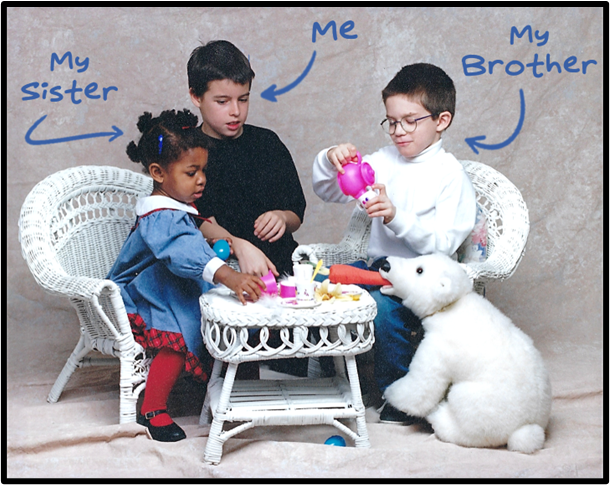
I have two, a younger brother and a younger sister. In the story of “River’s New Friend”, River describes Willow as a monster because Willow steals food and toys and takes away from River’s time with her parents. Based on this definition, yes, my siblings were both monsters. My brother especially, who is the older of my siblings and four years younger than me, struggled with health issues and learning disabilities, which meant he required a significant amount of my parents’ attention as a child. This was a difficult adjustment for me.

Funny enough, even though “River’s New Friend” is all about the challenges involved with the arrival of a new sibling, my own experience as an older brother and my relationship with my siblings never once crossed my mind as I was writing it. This was a story about River and Willow, not me. It was only as the story was nearly finished that I realized I had written a story that spoke to many of my own struggles and feelings as a child. This discovery was strangely cathartic and actually helped me process some of my childhood experiences in a new way.

I think that is the cool thing about art, whether we recognize it or not, we are pouring ourselves into it and it becomes a reflection of us. It is one of the reasons I am not overly concerned about artificial intelligence replacing artists as storytellers.

Have you ever met a llama?

I have! My wife had a coworker who lived on a llama farm. Every year, they would throw a giant party called “Llamapalooza”, where you could come and hang out with the llamas. We attended one year and met many llamas.

Did you have any idea how hard it is to write a picture book when you started? How long did this one take you, from first concept to finished book?

I wrote the first draft of “River’s New Friend” in an afternoon. I shared it with a few family members and friends who said, “hey, this is pretty good!” I could have stopped there and said I had written a picture book. Based on my experience reading many self-published picture books, I think this is where a good number of people fall into the trap of calling the book “done” and move ahead with publishing. But I wasn’t happy with it yet. 

After writing the first draft, I decided I wanted to improve as a writer before continuing, so I started taking online writing classes, reading books on craft, and watching countless YouTube videos on how to write. I joined a critique group to get honest, unbiased feedback on my writing. I revised the story again and again. Hired a professional editor and revised it some more. By the time the story was finished, I had been working on it for a year and a half, not including the year off I took to level up as a writer.

Did you write stories when you were a kid? What were your favourite kids books?

Nope. Not at all. I didn’t start writing until I was 34 years old, which makes me quite an outlier as a professional writer.

My favorite kid’s books were a series of middle grade sports mysteries written by Matt Christopher. The protagonists were always some young athlete investigating a strange happening that was impacting their team. Sometimes the stories were even a bit supernatural, like a magic goal-scoring hockey stick or a batter who could only hit home runs. As a kid who loved sports, I read these books over and over again.

What's one thing you wished you had known before you started the self-publishing process?

Don’t worry so much about social media. I spent a year trying to develop Instagram and TikTok accounts in advance of my book launch, hoping it would be helpful in marketing the book. But social media algorithms are fickle, the sites are unreliable ways to reach your target audience, and just because you have “followers” it doesn’t mean you have potential customers. 

At this point, after a year of work and the lucky break of having a video go viral, I have 4,200 Instagram followers. But I can only point to a couple of book sales that have come from my Instagram marketing.

If you enjoy social media and do it well, then by all means, lean into it and use it to your advantage. But if it isn’t something you enjoy or that comes naturally to you, your time and energy will be better spent writing books than composing social media posts. And most importantly, never feel guilty for not doing social media if it isn’t something you want to do, your writing career will go on just fine without it, I promise.

Why do you think llamas are so appealing?

First of all, they are fluffy and humans, in general, are a big fan of fluffiness. Second, they have a comical appearance. They look like sheep doing a giraffe impression. And their faces have a dopey cuteness that makes them look like they are perpetually in a state of having just woken up from a nap. Third, we have all fallen for the pro-llama propaganda pushed on us by Disney’s “Emperor’s New Groove” which depicts llamas as a vehicle for spiritual redemption of the morally bankrupt, when in reality, not a single Incan emperor was ever redeemed through llama transformation (a seldom known fact).

What did you love most about the whole writing-publishing process? What was the hardest thing?

There were several moments in the writing and illustration process where things felt like they just clicked into place. During writing, my story was feeling broken, but then I tried moving a piece from the end to the beginning and suddenly everything worked. That shift from “it’s not working” to “that’s it!” was the coolest moment of my writing career to date. There were similar moments during illustration where my illustrator, Zoe, would send me a character sketch or an storyboard for a page and I would have a sense of, “yep, that’s exactly it.” Those were the moments I loved the most.

The hardest thing about publishing was overcoming some of the self-doubt, much of which is tied to my decision to self-publish the book. When you traditionally publish a book, your work passes through several gatekeepers: a literary agent, editor, the publisher’s internal marketing team, etc. and each time you pass one of these gatekeepers, it can serve as a validation of your writing. An industry expert gave it their stamp of approval as being “good enough”. But when you are self-publishing, you don’t receive that same validation. To compensate, I surrounded myself with critique partners, beta readers, and a professional editor so that I would receive honest feedback and hopefully, once the book was good enough, validation that it was ready for publishing. 

Honestly, even now with the book completed, I still struggle with self-doubt. I worry if the story is good enough and how readers will respond. But I tell myself that I put in the work, listened to and incorporated feedback from smart and knowledgeable sources, and made the best book I could make, and I can feel proud of what I created.

Would you consider writing a spin-off series starring Rhama the llama?

One of the things that has surprised me about the early response to the picture book is the degree to which readers are enthralled with River’s friends in the story. The list of friends includes Basanti the shy bunny, Kameko the hungry cat, Earl the overwhelmed squirrel, Gustavo the grumpy goose, and Rhama the sleepy llama. Already, I have had requests for spinoff stories about the goose, the squirrel, and the llama. Spin-off books were never a consideration when I was writing the story, and the fact that people are asking for them (even if jokingly) is a testament to the incredible job my illustrator did bringing these side characters to life. Who knows, in the future there may be an extended River-verse with spinoff stories for everyone, including the llama.

Michael currently has a Kickstarter running to fund publishing River's New Friend. If you're interested in the book, or just interested in what a picture book Kickstarter looks like, check it out here. (It ends on April 15, so you have a week left!)

As part of the Kickstarter, Michael has organized a book donation drive to get donated copies of "River's New Friend" into the hands of kids and teachers in low-income communities. In addition to being able to pre-order a copy of "River's New Friend" for yourself, there is an option on the Kickstarter page to purchase copies of the book when will then be donated to a preschool or childcare center. If you would like to contribute, look for reward tiers on the Kickstarter page that mention a "Donation Book" in the description."

Monday, April 3, 2023

MMGM: The School Between Winter and Fairyland, by Heather Fawcett

I heard of Heather Fawcett because a lot of people are talking about her latest book for adults, Emily Wilde's Encyclopaedia of Fairies. While putting that one on hold at my library, I noticed that she has a number of books for younger readers that were available to borrow. 

The School Between Winter and Fairyland is blurbed as "a fresh and exciting twist on magical boarding schools," and that it certainly is. I love that our protagonist isn't a student at Inglewood School: she's a beastkeeper. It's definitely a callout to Hagrid from Harry Potter, and anyone who has always wanted to spend more time with him and his magical beasts will love this novel.

I love that Autumn is part of a family, and that families are central to the plot and theme of the novel. Gran is the chief beastkeeper, and assigns chores to Autumn and her three brothers—and if you make Gran mad you'll be deworming the gwarthegs! I love the unique versions of mythical monsters Fawcett comes up with, and how they are all dangerous, but, like any wild animal, if you understand them and treat them properly you don't have to be afraid of them.

The plot was twisty and engrossing, with a real sense of peril but also lots of humorous and heartwarming moments. Autumn's love for her missing brother is a powerful thread driving all her actions; her reluctant friendship with Cai is beautifully developed. The boggart is another great character, loyal and frightening, and then there's Choo the relentlessly friendly dog.

This book was similar to The Phoenix Feather in the way it played with the trope of the Chosen One and notions of heroism. If the world isn't divided into people and monsters, us and them, good guys and bad guys, then a dragon-slaying hero isn't going to be much use. But there are still things that need fighting, and friendship, trust and understanding will be much more effective than swords.

Knowing that Fawcett is such a good writer, I'm now very impatient for my hold on Encyclopaedia of Fairies to come up! I've also put The Grace of Wild Things on hold: a fantasy retelling of Anne of Green Gables! And Fawcett is Canadian; she lives on Vancouver Island, not very far from where I am!

The Marvellous Middle-Grade Monday crew hangs out at Greg Pattridge's blog, Always in the Middle. You can always find great Middle-Grade picks, every Monday.

This Friday, I will be back with a fun author interview! Michael Roth will talk about dogs, llamas and picture books, and give a little insight into his self-publishing journey. Hope you can join us!

Tuesday, March 28, 2023

Loading my phone with books before a trip!

Heading to France this Friday (bad time to be heading to France, but we didn't know that when we booked the trip, did we!), so, assuming the plane and trains aren't on strike, I've been looking for things to have available to read.

Here's what I've got on Libby:

The Best Science Fiction and Fantasy of the Year (2014): short stories are a good bet when you're hanging about at airports and train stations. And who knows: maybe I'll discover a new author I like!

The Beekeeper's Apprentice, or, the Segregation of the Queen, by Laurie R. King. This one's an audiobook. Always good to have something to listen to, though I usually pick something I think will be boring so it puts me to sleep on the plane (not that I can sleep on the plane, but one lives in hope). This doesn't sound boring: it's a teenage detective who befriends an old Sherlock Holmes, first in a series. 

My Latest Grievance, by Elinor Lipman. She's a contemporary fiction author that's been recommended to me, and this was the only book of hers available to borrow. So we'll see if I like it. Not a romance: sounds like a coming-of-age, parent-daughter relationship kind of book.

Castles in Their Bones, by Laura Sebastian. This was on my Goodreads TBR and it was available. I can't remember why it's on my TBR; it sounds like a fairly typical YA fantasy with a very typical cover. Princessess, saving the kingdom, assassinations I think. The great thing about library books is that if you don't like them you can just give them back! 

Foreigner, by C. J. Cherryh. This isn't the first time I've borrowed this book for a trip, and a trip is probably not the time to be getting into this long and much-loved sci-fi series, because apparently it's slow to get started, and I'm slightly intimidated by it. But I do want to read it! So here it is. Maybe a three-hour train ride will be the right time to dive in. (Assuming the trains are running! I hope the trains are running next week!)

Republic of Dirt, by Susan Juby. This is the sequel to the hilariously funny Woefield Poultry Collective. Girl inherits a farm on an island and has to figure out farming, and islanders, and life in general. Juby is a delight, and I'm sure this one will get read.

A Master of Djinn, by P. Djèli Clark. I thought I had started this one and given up, but when I opened the sample I didn't recognize the scene, so maybe I'm mixing it up with another book about Djinn. This one comes highly recommended by many, and sounds pretty cool.

Libby has a seven-book limit, so until I return one of those, that's all I can have. (My hold on Nicola Griffiths' Spear came up but I had to delay delivery. Not sure that one is a travel read, anyway.)

On my Kindle, here are the new books I've purchased:

Chalice, by Robin McKinley. Read this decades ago and figured it was time to read it again. I remember it being slow and quiet, so it might be the book to get me to sleep!

Dragon Whisperer, by Vanessa Ricci-Thode. An alternate world with cool-sounding elemental magic and complicated human-dragon relationships. I supported her Kickstarter, so I will ultimately get three more books in the series. Love the covers.

Strong Wine, by A. J. Demas. Third in the Sword Dance series, the sweetest imaginable romance between a retired soldier and a dancer in an imaginary ancient-Mediterranean-style world.

Sixteen Ways to Defend a Walled City, by K. J. Parker, which I purchased on the strength of a short story in the above-mentioned sci-fi anthology, and because it's been on my TBR for a while and it doesn't look like my libraries will ever get it. (Is it self-published? Not sure.) Dry humour and an unconventional hero (an engineer). Sounds fun.